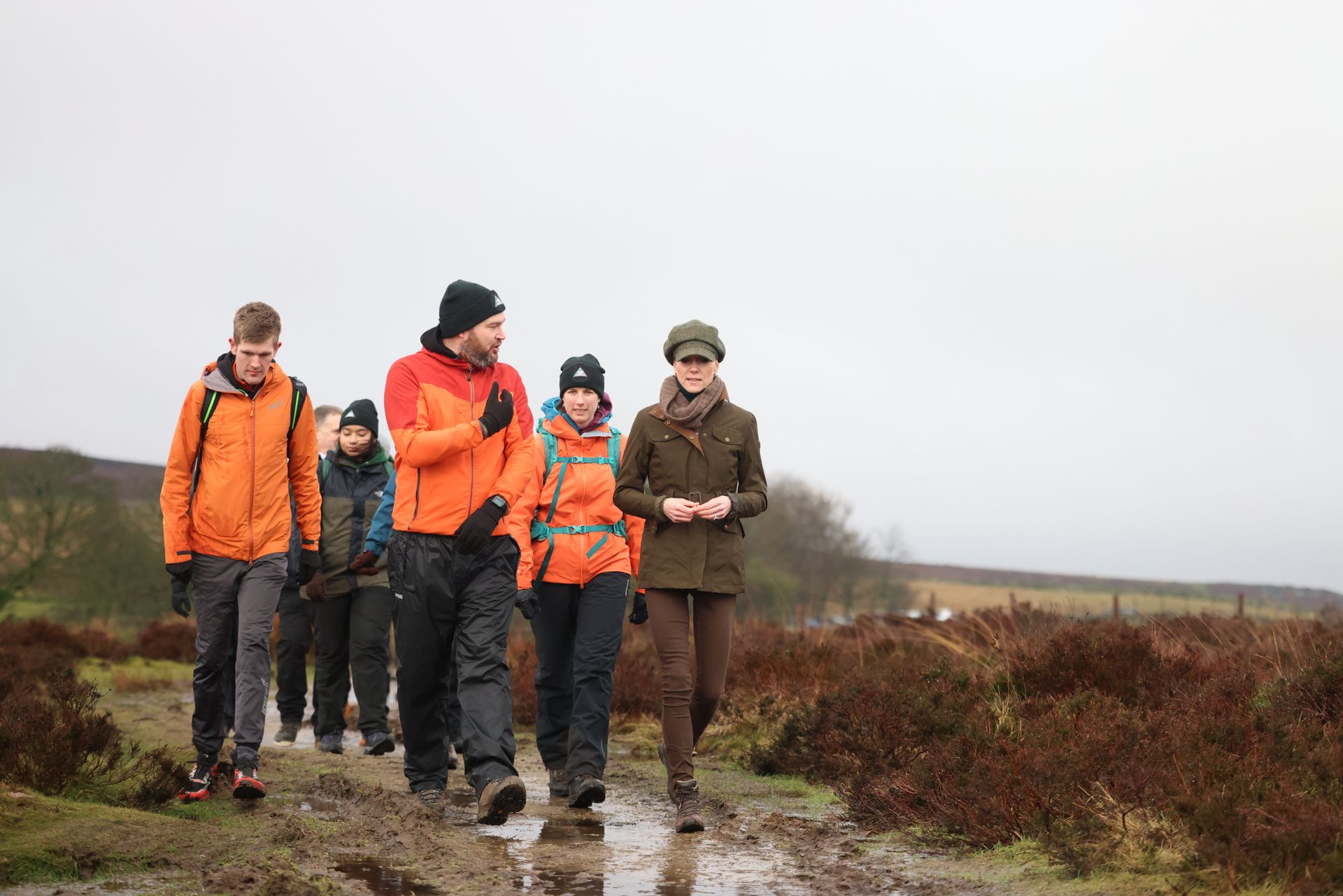
There is a particular kind of strength that does not announce itself, and the Princess of Wales embodies it with every quiet step she takes back into public life. Her recent unannounced visit to Dose of Nature, where she spoke of her own healing journey through cancer treatment, was not a performance of resilience but a quiet acknowledgment of vulnerability. We think this is the most honest form of leadership we have seen from the monarchy in years, and it is one rooted not in duty alone, but in a deliberate, self-aware choice to heal holistically. For our readers, this is a masterclass in how to reclaim agency when life removes all control, a lesson in finding purpose not despite the uncertainty, but within it.
The Princess's words, that nature connection has been "so healing" and that it provides "that sense of purpose and meaning, and belonging," carry a weight that feels entirely earned. This is not a royal soundbite; it is a personal philosophy. It echoes the very foundation of how she was raised, a quiet strength that biographers have long noted was instilled in her from childhood, a trait that allows her to endure public scrutiny with composure rather than defensiveness. Her ability to hold space for her own journey while simultaneously championing a charity that offers "Nature Prescriptions" to others is a form of soft confidence that does not need to shout. It is the same quiet grace we have seen in her husband, Prince William, as he navigates his own long-overdue honors, and it is the same deliberate softness she applies to the boundaries around her young children, reminding us that they are small humans, not public property. She is weaving her personal recovery into her public purpose, and the result is a narrative that feels less like a royal comeback and more like a profound personal evolution.
What is most striking is how she is translating her private experience into a concrete, institutional legacy. By steering The Centre for Early Childhood toward nature-based research, she is not just speaking about the benefits of the outdoors; she is funding the evidence to prove it. Her statement that "nature is such an extraordinary environment for us all" in this "tech-driven, digital age" is a direct challenge to the pace of modern life. This is where the practical takeaway lies for our audience: the Princess is not selling a lifestyle of leisure, but a methodology of restoration. She is telling us that the answer to overwhelm is not more productivity, but more presence, and that the path to coping with the unknown is to find interconnection with the world around us.
The specific consequence to watch is whether this research translates into policy and accessibility, moving nature from a privilege for those with gardens to a prescribed right for every family. If the Princess can leverage her platform to make "Nature Prescriptions" as standard as a GP visit, she will have achieved something far more enduring than a successful public appearance. She will have redefined what healing looks like for a generation, proving that the quietest paths often lead to the most profound recoveries. Her journey is not a spectacle; it is an invitation to look inward, and that is the most powerful message she could possibly offer.