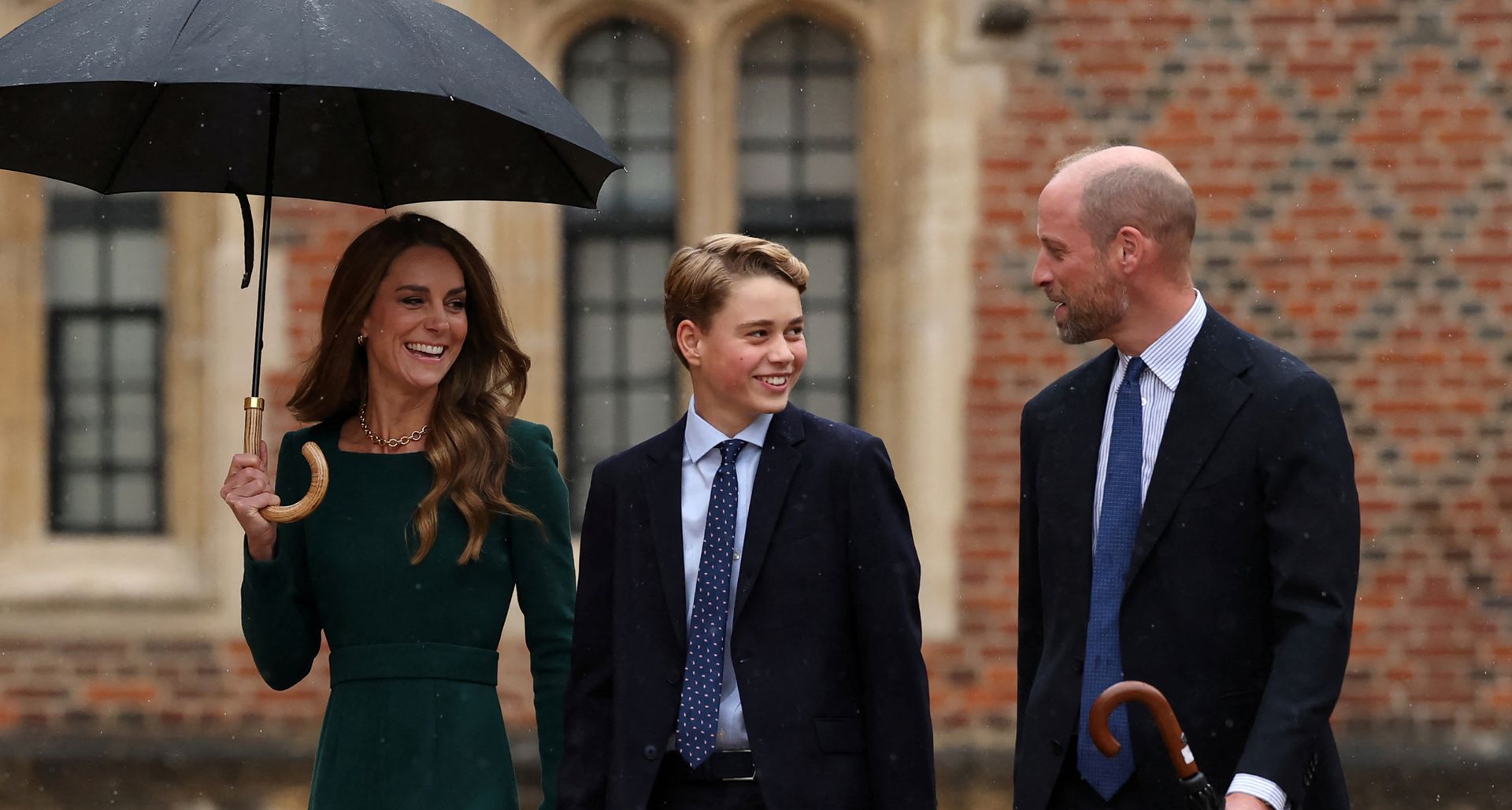
There is something quietly radical in the way the Princess of Wales speaks about the upcoming half-term break: not as a logistical puzzle to solve, but as a return to herself. When she told a volunteer at East Anglia's Children's Hospices that she "can't wait to have them all home," she offered a rare glimpse into the emotional texture of royal motherhood, one that feels less about duty and more about deliberate presence. This is a woman who has worn her tiara with quiet intent and held her composure through Windsor's quiet chaos, and now she is simply looking forward to the sound of three children under one roof.
The detail that lingers is George's absence. He has been at Eton since September, and while the school is only a short drive from Windsor, boarding school creates a different kind of distance. This half-term marks the longest stretch he will have been home in nearly two months. Kate's comment that she has "missed him" is not a throwaway line; it is the honest admission of a mother recalibrating to a new rhythm. Charlotte and Louis still attend Lambrook as day students, so the household has been operating in a split reality. The half-term holiday is not just a pause in the calendar, it is a re-centering. The princess also mentioned that her parents, Carole and Michael Middleton, are looking forward to the break, suggesting a multi-generational gathering that reinforces the quiet, grounded family life she has always prioritized.
This domestic update arrived during a visit to one of Kate's earliest patronages, East Anglia's Children's Hospices. She toured the Treehouse hospice, donned a hard hat to view its expansion, and participated in therapy sessions with children and families. The juxtaposition is striking: on the same day she discussed her own children's holiday, she was surrounded by families facing life-limiting conditions. She did not draw attention to the contrast; she simply moved through both worlds with the same calm, intentional energy. The hospice's expansion, adding a hydrotherapy pool, a dedicated teenage area, and new treatment rooms, will not be complete until 2028. That is a long horizon for a project rooted in urgent need, and it is worth watching how the Princess of Wales continues to lend her presence to institutions that ask for long-term commitment rather than quick headlines.
The takeaway here is not that Kate is a relatable mother, though she is. It is that she understands something many public figures forget: that presence, whether with her children or with a charity she first supported fourteen years ago, is its own form of power. She does not need to announce her values; she demonstrates them through the choices she makes visible. The half-term break will pass quietly, and that is precisely the point. The most telling detail to watch is not where the family might go, but how Kate describes the time afterward. If her tone remains as grounded and unhurried as it was in that hospice shop, she will have proven that the most luxurious thing a royal can possess is the space to simply be present.