King Charles "Doesn’t Feel the Need to Perform Anymore" In His Public Role, Says Royal Expert
Our take
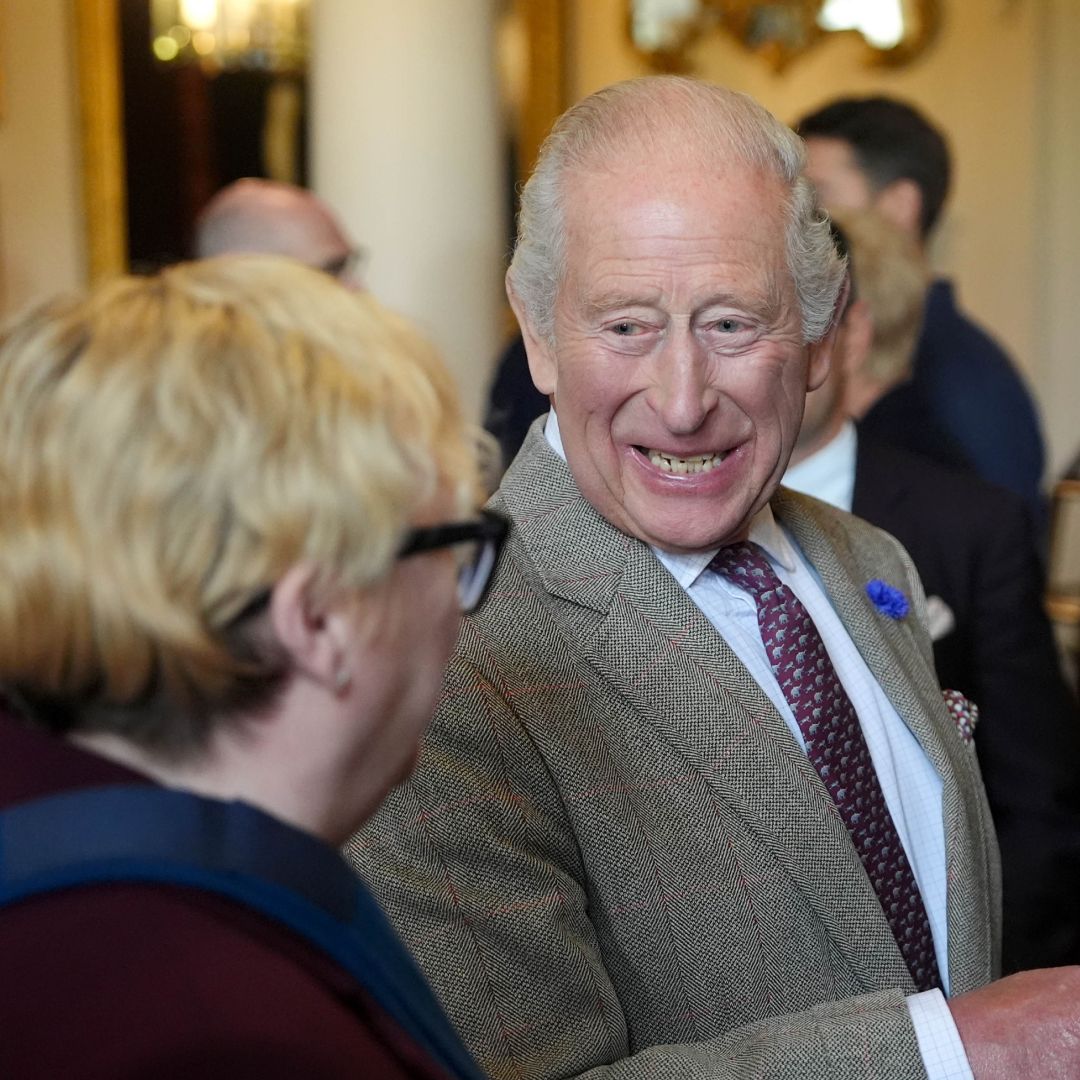
The observation that King Charles "doesn’t feel the need to perform anymore" resonates deeply within the evolving landscape of royal visibility and public perception. It's a subtle but significant shift, especially when considered alongside the ongoing discussions around the monarchy’s relevance and adaptation in the 21st century. Darren Stanton's assessment, noting a "genuine sense of peace" in Charles' demeanor, speaks to a potential shedding of the weight of expectation that has historically defined the role. This is further complicated by recent events, including the ongoing, and rather public, disagreement with his brother-in-law, Earl Spencer, as detailed in King Charles might be in a war of words – a situation highlighting the complexities of familial relationships even within the gilded walls of the royal family. The quiet confidence Stanton describes feels like a deliberate move away from the more theatrical displays of royal duty we've come to anticipate, and perhaps a recognition that authenticity, even a measured version, holds greater sway with a modern audience. It’s interesting to consider this in contrast to Prince William’s calculated efforts to connect with the public, as explored in Prince William Has Borrowed One Subtle Gesture, demonstrating different approaches to cultivating public favor.
The significance of this shift extends beyond mere personal demeanor. It speaks to a broader recalibration within the monarchy itself. For decades, the royal family operated under a model of meticulous presentation, where every appearance was carefully orchestrated to project an image of unwavering strength and tradition. However, the scandals and changing societal values have challenged that model. Charles, having waited his lifetime to ascend the throne, may feel less compelled to adhere to the rigid protocols of the past. The recent focus on streamlining the monarchy and reducing expenses suggests a desire to appear more relatable and financially responsible. This “peace” Stanton observes might be the byproduct of a monarch finally feeling free to inhabit the role on his own terms, unburdened by the pressure to constantly prove his worthiness. Even the ongoing tension with Earl Spencer, concerning the latter's new book, as reported in Princess Diana's Brother Has Experienced an "Unprecedented Incident", arguably doesn't detract from this sense of calm, instead highlighting a willingness to allow personal matters to unfold without necessarily demanding a performative response.
What’s particularly compelling is the potential impact on the monarchy’s brand. For years, the royal family has struggled to maintain relevance in an era of social media and instant access. The relentless scrutiny has often amplified negative narratives and eroded public trust. A shift towards authenticity, even a carefully cultivated one, could be a powerful antidote. This isn't to say Charles is abandoning duty; rather, he appears to be prioritizing a more understated and considered approach. The focus is less on the outward display of power and more on the quiet embodiment of duty. It's a subtle but profound distinction, one that aligns more closely with the sensibilities of a generation that values genuine connection over manufactured spectacle. This mirrors the broader cultural trend toward "quiet luxury" - a preference for understated elegance and intrinsic quality over ostentatious displays of wealth. It’s a far cry from the flamboyant displays of previous generations, and a potentially shrewd adaptation to the current cultural climate.
Looking ahead, the question becomes: can this newfound sense of peace and intentionality translate into sustained public trust and renewed relevance? The monarchy faces numerous challenges, from navigating the complexities of a post-Brexit Britain to addressing questions of colonial legacy. Charles’ ability to project a sense of calm authority, rooted in genuine conviction rather than performative duty, will be crucial in guiding the institution through these turbulent times. Ultimately, the success of this shift hinges on the public’s willingness to embrace a more understated and introspective royal presence – a presence that prioritizes substance over spectacle, and quiet strength over theatrical displays. Will this approach prove to be the key to securing the monarchy's future, or will the public demand a more vibrant and engaging display of royal life?
King Charles might be in a war of words with Princess Diana's brother, Earl Spencer, but the monarch appeared in good spirits as he visited Cairngorms National Park on September 16. The King honored firefighters and volunteers for their efforts during the devastating wildfire that swept through Scotland in July, and he looked to be “in his happy place” while experiencing the park’s natural beauty.
Speaking on behalf of BetfairCasino, body language expert Darren Stanton notes that the monarch looked “very relaxed” as he interacted with people in the woods. “What really stands out to me is how completely at ease The King appears to be when he’s out in nature,” Stanton says.
The body language expert compares The King’s connection to nature to how his younger sister, Princess Anne, and niece Zara Tindall are relaxed “when they’re around horses.”
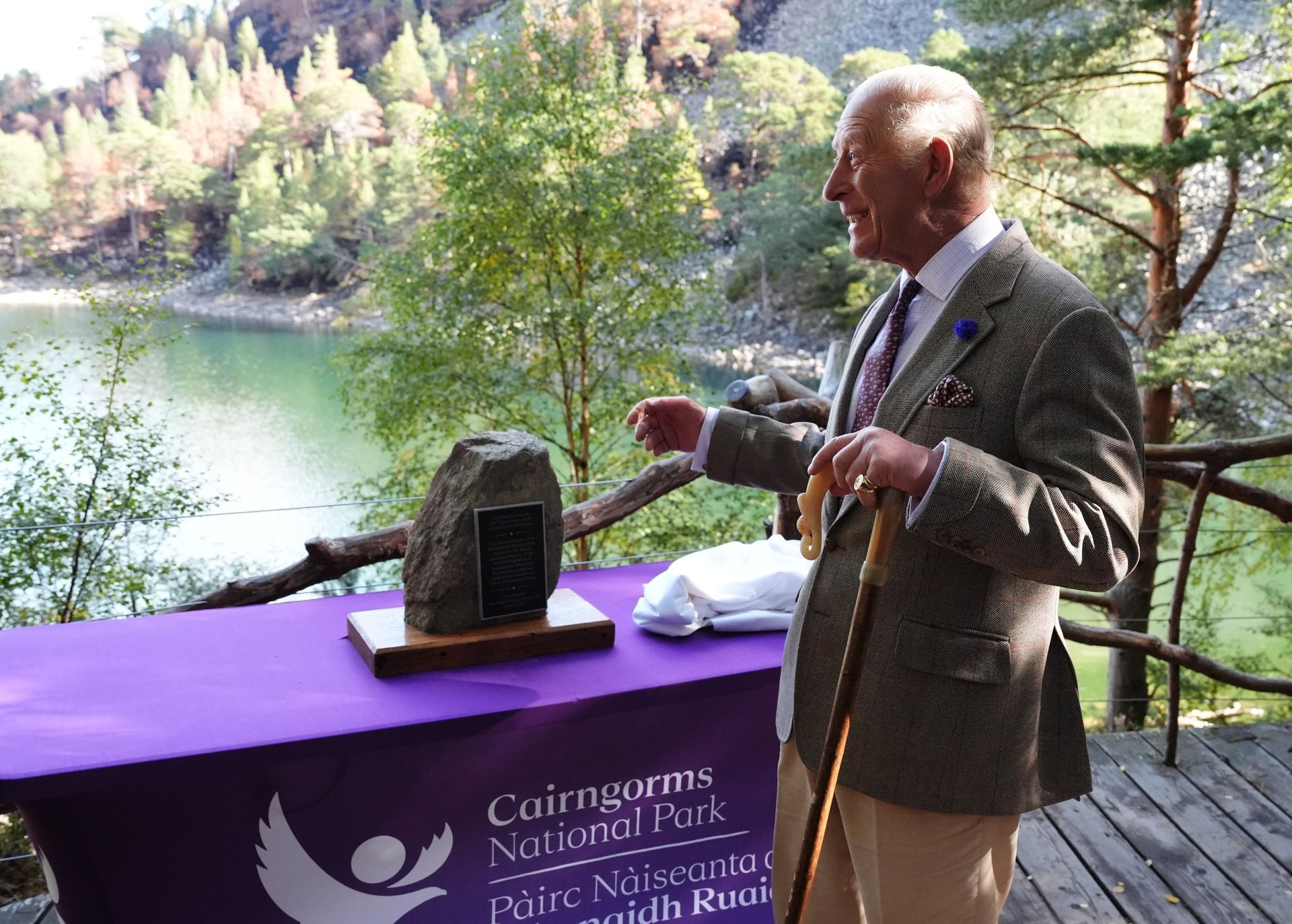
“We know how much he loves nature and ecology, and you can really see that reflected in his body language,” Stanton says. “There’s a genuine sense of peace about him, as though he’s in an environment where he feels completely comfortable and able to just be himself.”
During his visit, King Charles beamed widely as he unveiled a granite stone marking the twinning between the mountains in the Scottish Highlands and Shenandoah National Park in Virginia.
The stone celebrates the two parks' shared geological heritage, since the mountains of Scotland and Appalachia formed part of the same ancient mountain range before geological forces separated them across the Atlantic Ocean.
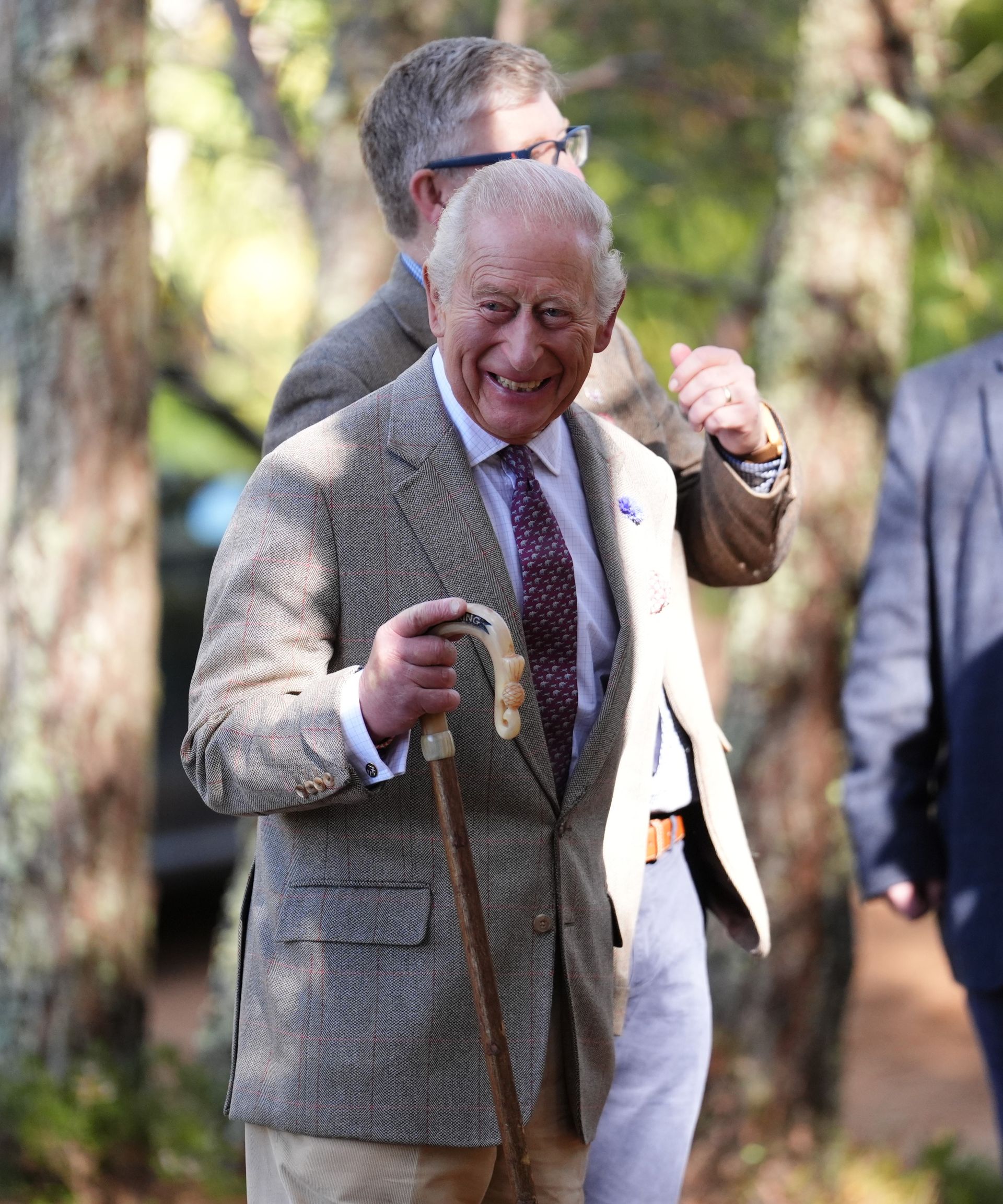
Stanton shares that The King didn't show any of the "self-reassuring gestures we may have seen from him in the past" during his visit to the park.
"There’s almost a sense that he doesn’t feel the need to perform or justify himself anymore," Stanton says. "When he’s in an environment he loves, particularly surrounded by nature, he can simply be himself."
Read on the original site
Open the publisher's page for the full experience