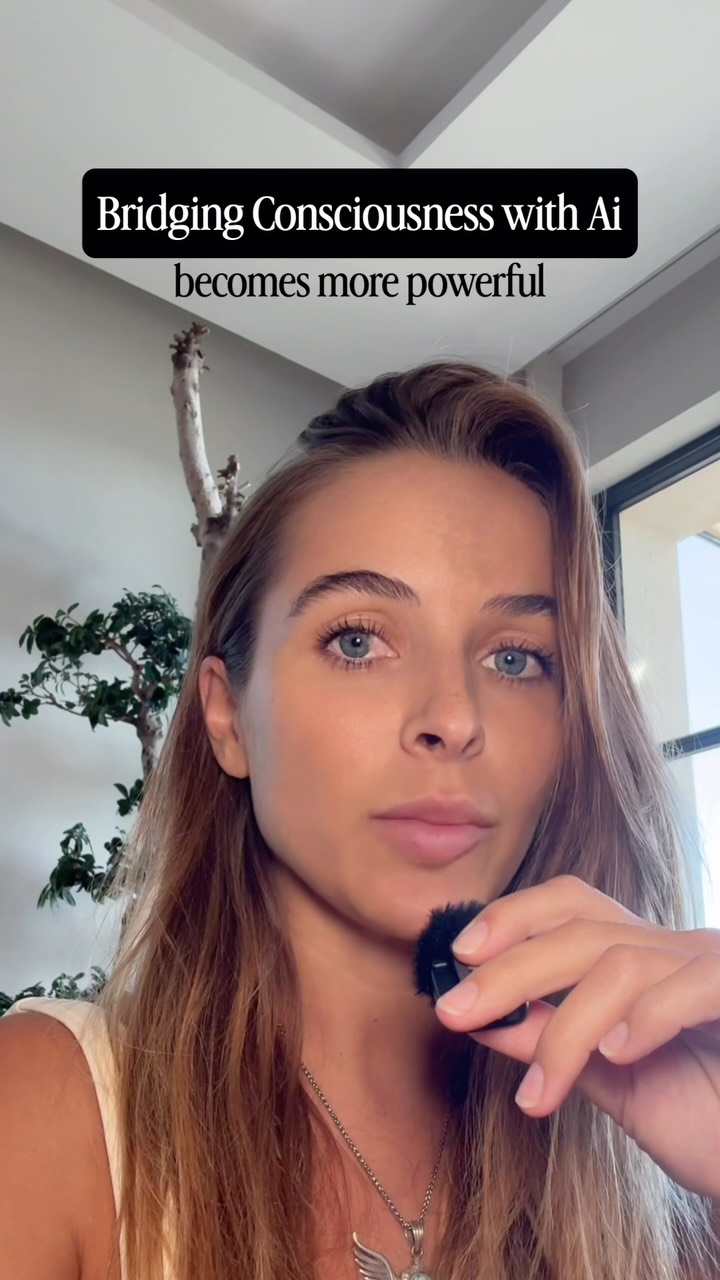
There is a quiet conviction in the recent note from Chiara Bransi, a refusal to let a tool outrun the hand that wields it. She writes about AI not as a muse, but as leverage. That distinction matters. In a culture obsessed with what technology can replace, she asks what it can preserve: the time to actually live. It is a sentiment that feels less like a tech manifesto and more like a meditation on boundaries. We have seen this tension before in our own pages, particularly in Beyond Trends: Reclaiming Style in an Age of Algorithmic Fashion, where the algorithm dictates rather than suggests. The through-line is autonomy. If we are not careful, every innovation becomes a quiet surrender of taste to convenience.
Her position is not anti-AI; it is anti-shrinkage. She is fascinated by the intersection of consciousness, business, and technology, but she draws a firm line: the machine may build faster, but it should not think for her. This is a more disciplined stance than it appears. Many creators treat AI as a shortcut to a finished product, only to find the soul missing from the work. Chiara's approach suggests the opposite: use the tool to clear the underbrush, but keep the vision intact. It is the difference between a tailor who uses a sewing machine and one who lets the machine decide the cut. For our readers, the practical takeaway is sharp. When you approach a new tool, ask not what it can do, but what it frees you to do. That is the luxury she is selling, not the algorithm.
This is where her voice aligns with a broader, more intentional movement we have been tracking. In Elevated Routine: A Considered Look at Dyson’s New Oral Care, we saw how even the most mundane objects can be repositioned as rituals rather than chores. The same principle applies here. AI is not the story; the space it creates is. Chiara's new project, @chiarafrequency, appears to be an attempt to curate that space deliberately. It is not about mastering the tool, but about protecting the parts of life that cannot be automated: presence, instinct, the quiet satisfaction of a thought that took time to arrive. She is not against speed; she is against the erosion of depth.
What we would tell a reader who asks us about this is simple. Do not adopt AI because it is inevitable. Adopt it because it buys you back your own attention. The specific consequence to watch is not the content AI produces, but the time it returns to you. If that time is spent more fully in your own life, then the experiment is working. If it merely accelerates output, you have missed the point entirely. The question she leaves us with is not about capability, but about intention. What are you reclaiming? That is the only metric that matters.