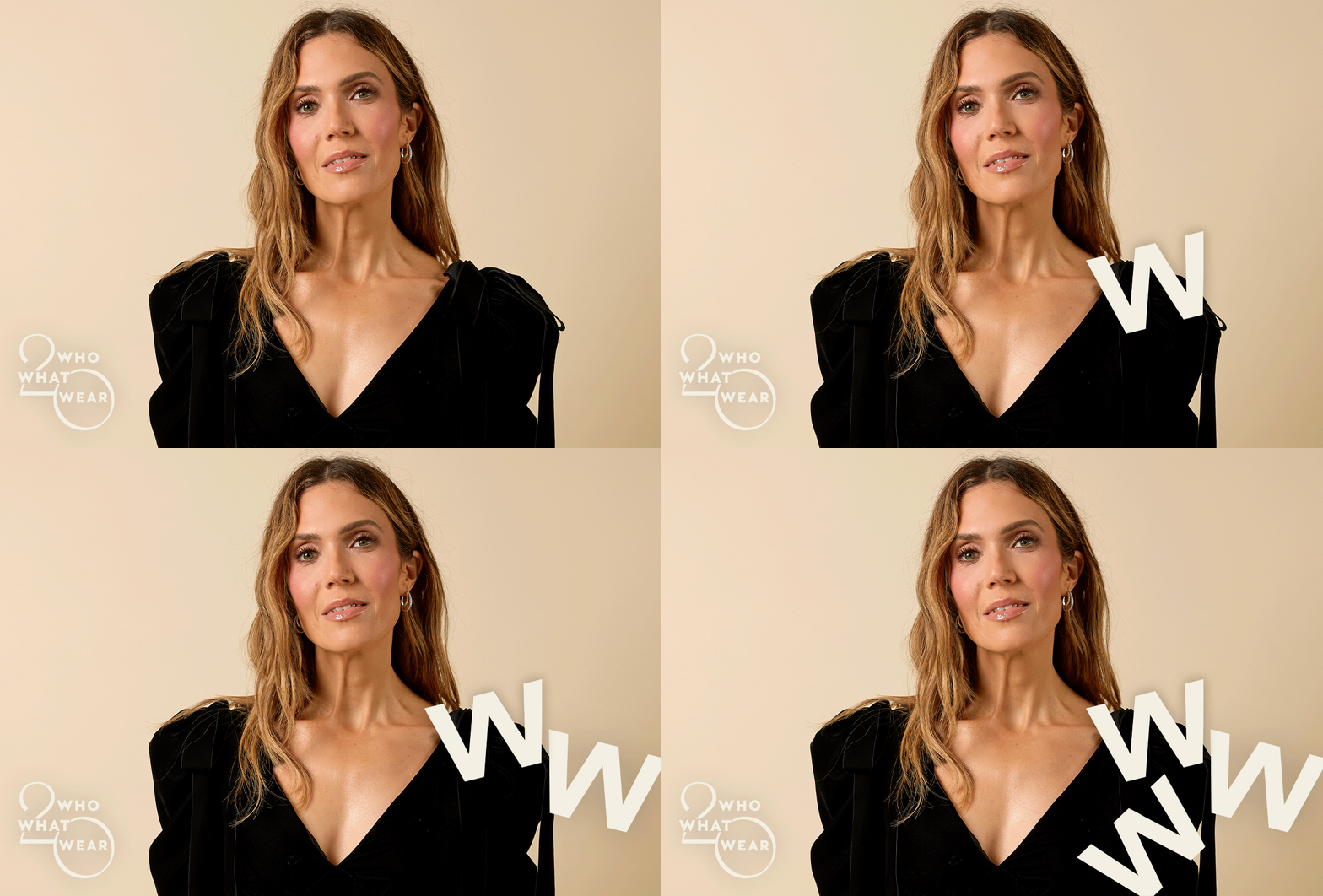
There is something quietly radical about Mandy Moore's twenty-year arc, and it is not the kind of radical that demands applause. It is the slow, unforced evolution of a woman who learned early that presence matters more than performance. In her recent conversation with Who What Wear, Moore reflects on her journey from a fourteen-year-old singing the national anthem at Orlando hockey games to becoming the kind of actress and mother who now reaches for a Jamie Haller button-down and calls it a uniform. That shift, from acid-wash denim suits to quiet, considered dressing, is not merely a wardrobe update. It is the visual language of a woman who has stopped trying to prove anything. We see this same sensibility echoed in COS's Quiet Luxe Arrives in Draped Silks, Furry Jackets, and Croc Leather, where refinement is implied through texture and cut rather than logos. Moore's story is not about reinvention; it is about becoming more of herself, and that is a far more compelling narrative.
What strikes us most is the ease with which she describes her own early fame. She was a dorky theater kid who signed a record deal before she had ever French-kissed a boy, singing songs she had no reference for. There is no bitterness in her telling, no need to distance herself from the teen-pop machine that launched her. Instead, she treats that version of herself with a kind of affectionate clarity, the same clarity that allowed her to transition from blonde pop star to brunette lead in *A Walk to Remember* without forcing the narrative. She understood, even then, that her relative anonymity was an asset. "I wasn't as famous," she says, "and so therefore I was able to maybe disappear into a role." That self-awareness is rare, and it is precisely the quality that separates a career built on momentum from one built on intention. It aligns with the emotional territory explored in Where the Line Blurs Between Aesthetic and Persona, where the distinction between who we are and how we present becomes less rigid over time.
The fashion moments she recalls are telling. The denim suit at *The Princess Diaries* premiere, low-rise, pale, paired with sneaker pumps, she calls "a choice," but she does not disown it. The Chanel dress she wore for *A Walk to Remember*, with its peach chiffon and pearl kitten heels, felt like borrowing from the women she put on pedestals. Now she wears Jamie Haller, a designer who makes clothes for women in their thirties and forties who want to feel put together without trying too hard. This is not a rejection of her past; it is a quiet accumulation of taste. She has moved from dressing for the role to dressing for the life she actually lives. The specific takeaway here is that style authority does not arrive with a single perfect look. It arrives when you stop performing for an imagined audience and begin dressing for the woman you already are. That is the lesson Moore offers, and it is worth sitting with.