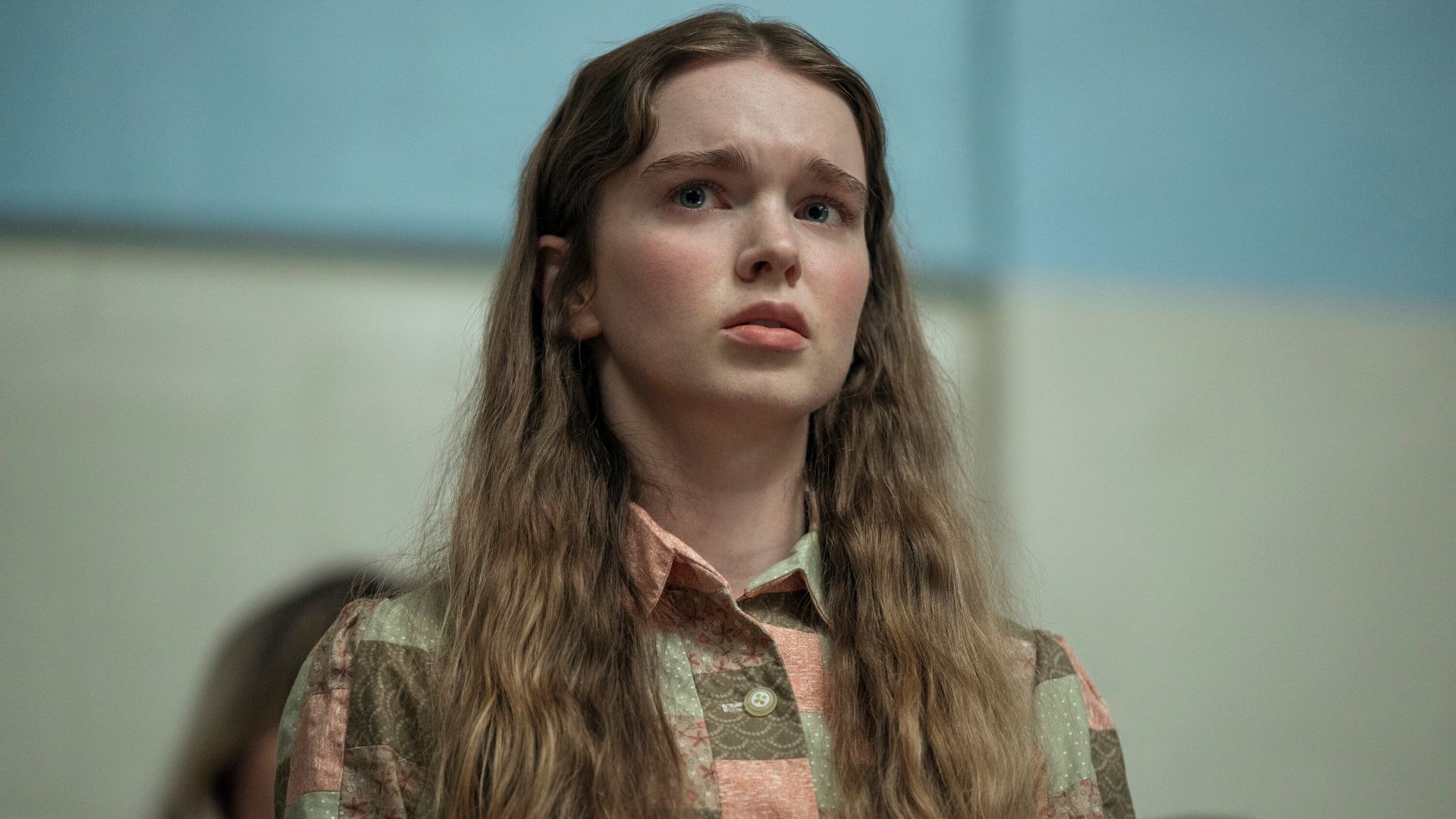
There is something quietly radical about Mike Flanagan refusing to let Carrie White die. For fifty years, the tragedy of Stephen King's telekinetic teenager has been defined by its finality, the blood, the fire, the house collapsing around a girl who never had a chance to become anything else. Flanagan's new adaptation for Prime Video keeps the terror intact, but it makes one essential change: Carrie survives. That single narrative choice transforms her story from a closed loop of suffering into something far more interesting, an opening. Where Brian De Palma gave us an icon of destruction, Flanagan gives us a survivor with a future, and that future, he has said, could stretch across three seasons. For those of us who have always felt that horror's most compelling victims deserve more than a single night of revenge, this is the adaptation we did not know we were waiting for.
The series follows the familiar beats, the fanatical mother, the cruel classmates, the pig's blood at prom, but it reorients everything around a quiet, almost tender question: what happens to the girl who walks away? In Flanagan's telling, Carrie (Summer H. Howell) escapes Chamberlain with Emaline, another young woman who can astral project, and the finale introduces a shadowy group of women with supernatural abilities led by Adelaide (Kate Siegel). This is not a sequel hook so much as a recontextualization. Carrie was never alone; she was always part of a larger world of women whose gifts were hidden, suppressed, or weaponized against them. Flanagan has hinted that the mythology could connect to other corners of King's universe, the mention of "the shine" is not accidental, but the real draw is watching a scream queen become something else entirely. Summer H. Howell delivers a performance rooted in quiet terror rather than explosive rage, and in doing so, she joins a lineage of actresses who understand that horror's most powerful moments are often the ones that go unspoken. For a deeper look at her performance, our review of Carrie's Summer Howell Delivers Quiet Terror as a New Scream Queen examines how she redefines the archetype.
What makes this expansion feel earned rather than opportunistic is Flanagan's restraint. He has described the eight-episode first season as a complete arc, satisfying on its own, and that matters. The door is open, not pried apart. If a second season arrives, it will invent a future that King never wrote, following Carrie and Emaline into uncharted territory alongside Adelaide's organization. The obvious risk is that a story so defined by its ending loses its power when the ending is postponed. But Flanagan has always been a horror humanist, his work in *The Haunting of Hill House* and *Midnight Mass* proves he is less interested in scares than in the emotional architecture of people who have been broken and must decide what to do next. Carrie White, alive and driving away from the wreckage of her past, is exactly the kind of character he was made to follow. The parallel to Zoe Kazan's recent *East of Eden* miniseries is striking: both adaptations take a canonical story of female suffering and quietly reframe the silence, the rage, the supernatural gift, as something that can be reclaimed rather than punished. We explored how Kazan reframes Cathy's silence into power in Zoe Kazan's East of Eden reframes Cathy's silence into power, and the same instinct pulses through Flanagan's *Carrie*.
The practical question for viewers is simple: we are being asked to trust a horror auteur with a character whose story has been considered complete for half a century. The answer, for now, is that the trust feels warranted. Flanagan has built a world that feels larger than one prom night, and he has populated it with women, Howell, Siegel, Thalia Dudek, Siena Agudong, who carry their power like a held breath. What we are watching is the quiet luxury of a horror story that refuses to end in tragedy. The specific detail to watch is Adelaide's organization: who they are, how they find their own, and whether they protect or control the girls they gather. That answer will determine whether *Carrie* becomes a saga of liberation or another cage.