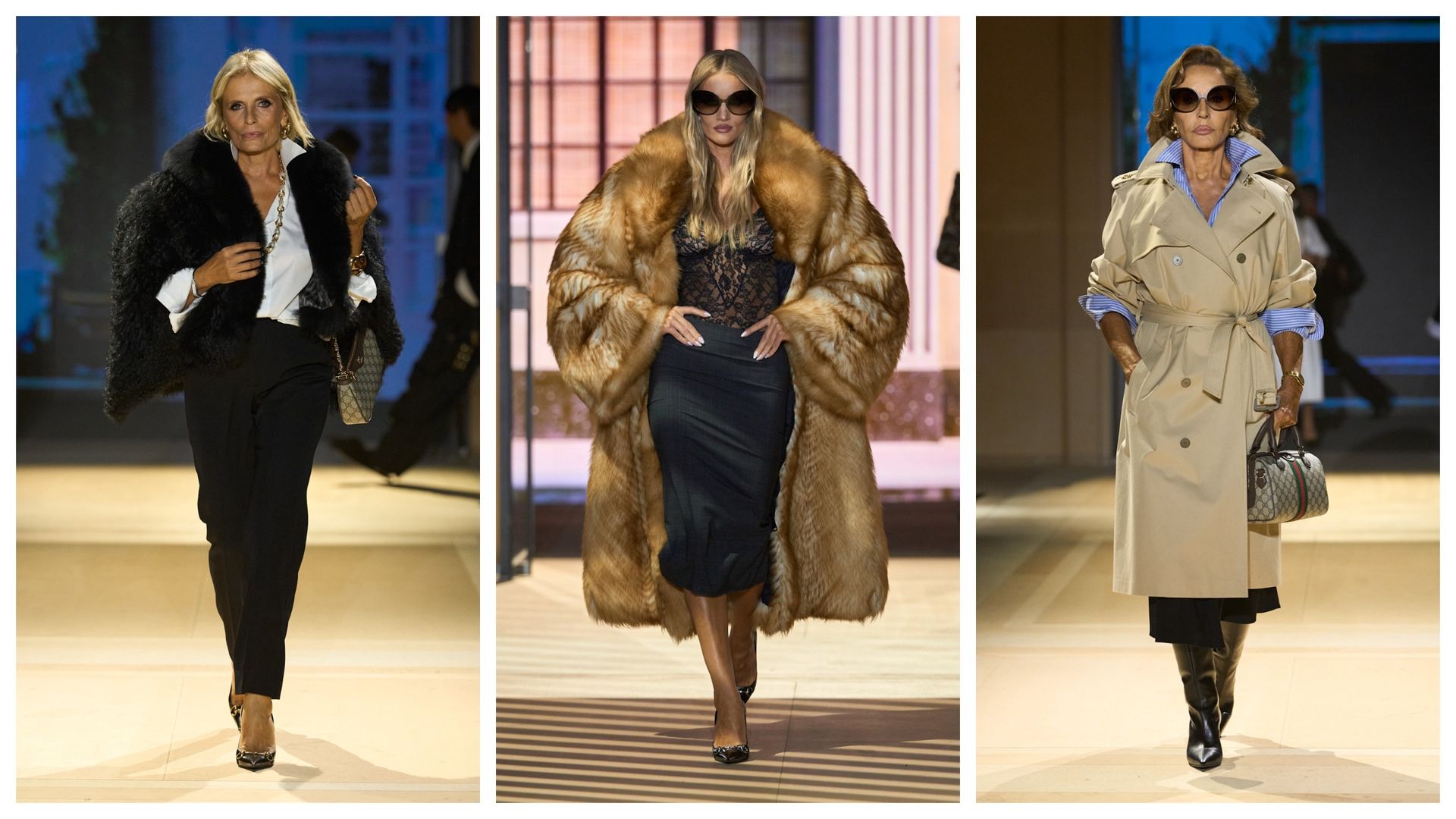
## Our Take: Milan's Quiet Confidence and the Reimagining of Glamour
Demna’s Spring 2027 Gucci collection, as reported by Marie Claire, isn’t just about oversized sunglasses and statement coats—it’s a deliberate recalibration of what it means to embody Milanese style, and, by extension, a broader shift in the perception of luxury and glamour. The collection’s nods to Gucci's heritage, from equestrian references to the indelible mark of Tom Ford, feel less like a nostalgic exercise and more like a grounding point from which to launch a new, subtly powerful aesthetic. This move away from overt branding and relentless trend-chasing aligns perfectly with the current consumer desire for enduring style and considered consumption. It's a fascinating counterpoint to the often-frenzied pace of the fashion world, echoing a sensibility we’ve explored before in our piece on [Intentional Rituals: A Quiet Approach to Fall Wellness], where a mindful, deliberate approach to self-care and lifestyle choices is prized above all else. Furthermore, the focus on Milanese style—a city often associated with understated elegance—highlights a move towards a more nuanced understanding of luxury, one that prioritizes quality, craftsmanship, and personal expression over fleeting trends.
The resurgence of "Milanese woman" as a style archetype is particularly significant. It isn't about mimicking a celebrity or a fleeting influencer; it's about capturing a feeling, an attitude—a quiet confidence born from a deep appreciation for quality and a sophisticated understanding of personal style. This echoes the ethos of brands like NABA Clothing, whose journey from an emerging Nigerian label to an international presence demonstrates the power of authentic storytelling and a focus on craftsmanship to resonate with a global audience, as detailed in [Nigerian Design House NABA Finds Global Spotlight Through Emerging Media]. The key difference, however, lies in NABA's overt celebration of cultural heritage, whereas Gucci’s approach is more subtle, weaving a sense of timelessness and effortless chic into its designs. Both, however, demonstrate a shift away from purely Western-centric fashion narratives and towards a more inclusive and globally-inspired aesthetic. The "more-is-more" glamour Demna introduces feels less like a chaotic maximalism and more like a deliberate layering of luxurious textures and silhouettes—a confident declaration of personal style rather than a desperate plea for attention.
This shift towards quiet confidence isn't merely a stylistic trend; it's a reflection of a broader cultural shift. Consumers, particularly those who identify with a refined, aspirational lifestyle, are increasingly seeking brands that offer substance and authenticity alongside aesthetic appeal. The emphasis on inner states and emotional connection, which we’ve previously explored in relation to wellness practices, translates seamlessly to the realm of fashion. A garment isn't simply an object to be consumed; it's an extension of one's identity, a tool for self-expression, and a reflection of one's inner world. This is precisely why Gucci’s focus on the feeling of being a “Milanese woman” – a feeling of effortless elegance and self-assuredness – resonates so deeply. The collection’s success hinges not on the garments themselves, but on the emotional landscape they evoke. Even the rise of new physical challenges like those highlighted in [Strength. Spirit. Mexico. A New Physical Challenge Emerges] underscores this desire for experiences and self-discovery that feed into a broader sense of empowerment and self-assuredness.
Ultimately, Demna’s Gucci collection signals a fascinating evolution in the concept of glamour. It's a move away from the performative and the overtly ostentatious, and towards a more understated, self-assured elegance. This "quiet confidence" isn’t about hiding; it’s about expressing power through intentionality and refinement. The question now is: will this shift towards quiet luxury become a defining characteristic of the fashion landscape, or will it be fleeting? And, more importantly, how will brands continue to navigate the tension between aspiration and accessibility in a world increasingly wary of conspicuous consumption?