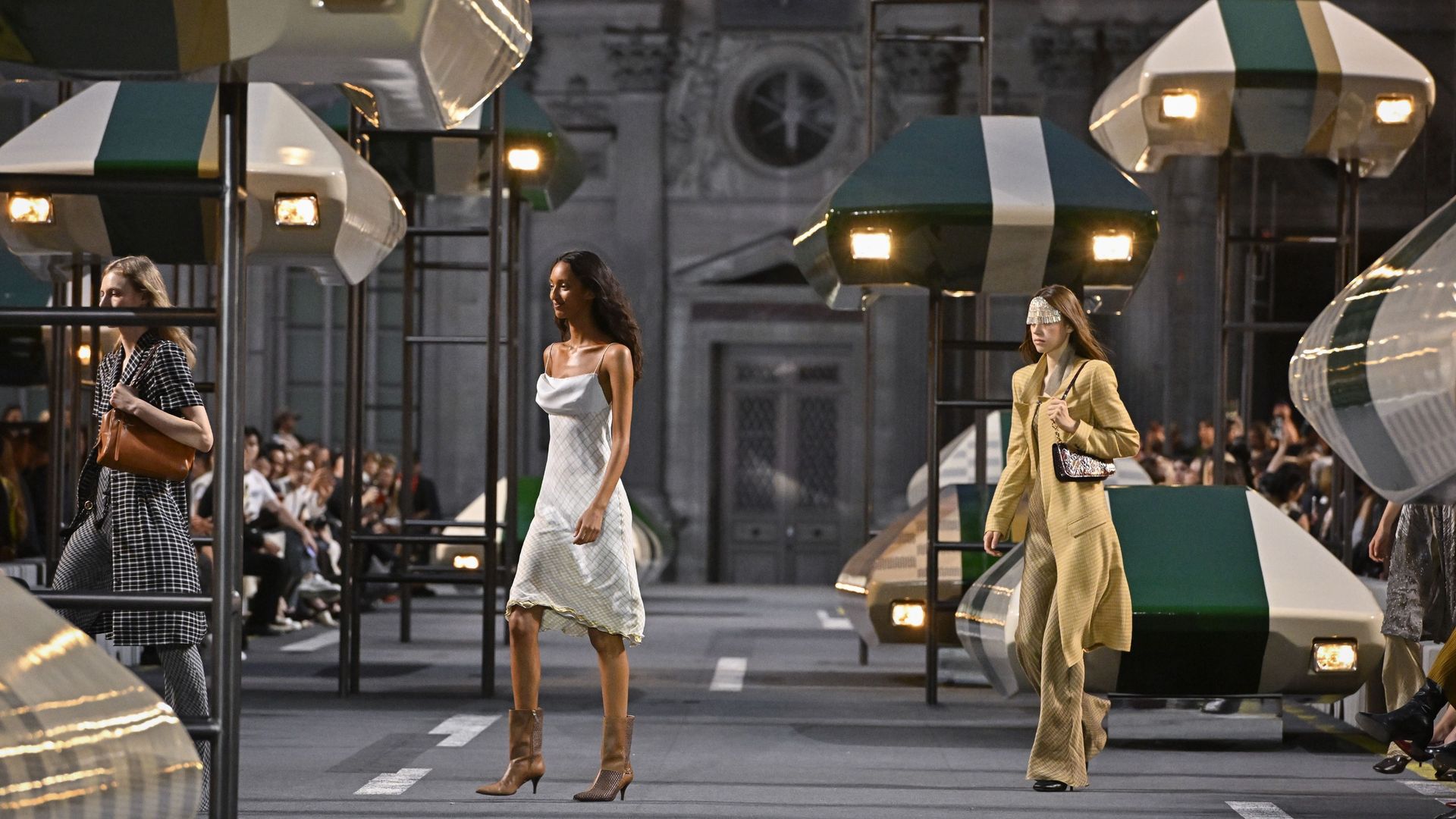
Somewhere between a whisper and a command, Nicolas Ghesquière has found a new language for Louis Vuitton. His spring/summer 2027 collection, built around the concept of ergonomics, was not a spectacle designed to impress from a distance, it was an invitation to feel. And that, I think, is where its quiet power lives. While the front row buzzed with Zendaya, Emma Stone, Lisa, and Felix, the real conversation happened in the construction itself: clothing that moves with the body rather than reshaping it. This is not a small distinction. It is the difference between wearing an outfit and inhabiting it. For anyone who has ever felt constricted by fashion's more rigid structures, this collection offered a release. It reminded me of the way a well-cut blazer can anchor an entire look without demanding attention, a theme we explored in The quiet power of a blazer, heel, and skirt in one refined hue, where confidence comes from ease, not effort. Ghesquière simply applied that same philosophy to every layer.
What struck me most was the restraint. The fabrics, double- and triple-layer chiffon, silk carrés, silk-cashmere scarves, were impossibly light, almost weightless on the body. Even the tailoring was stripped of its internal scaffolding, so jackets sat like a second skin rather than a protective shell. This is luxury as feeling, not as display. It aligns with the sensibility we admired in The Statement Jacket That Anchors a Parisian Classic, where a single piece can define a look through its presence, not its volume. Here, Ghesquière took that idea further by removing the volume entirely. The result was a collection that felt less like fashion and more like a state of being, fluid, intentional, and deeply personal. The tops that nearly swept the floor, layered over pants, were the most wearable expression of this: a proportion play that felt fresh precisely because it asked nothing of the wearer except to move.
Then there were the visors. Crystal-embellished, catching the light with every step, they introduced a futuristic gleam that could have felt jarring against all that softness. Instead, they grounded the collection in a different kind of reality, one where protection and transparency coexist. It was the boldest swing, and the one I keep returning to, because it suggests that quiet power does not mean the absence of risk. It means knowing exactly where to place it.
The practical takeaway for anyone watching is this: the most confident thing you can wear is clothing that does not fight you. Whether it is a longline tunic over straight-leg trousers or a silk scarf tied with intention, the goal is the same, to move through your day as though your clothes are an extension of your breath, not a constraint. Ghesquière gave us permission to stop performing and start living in our clothes. The question now is whether the rest of fashion will follow.