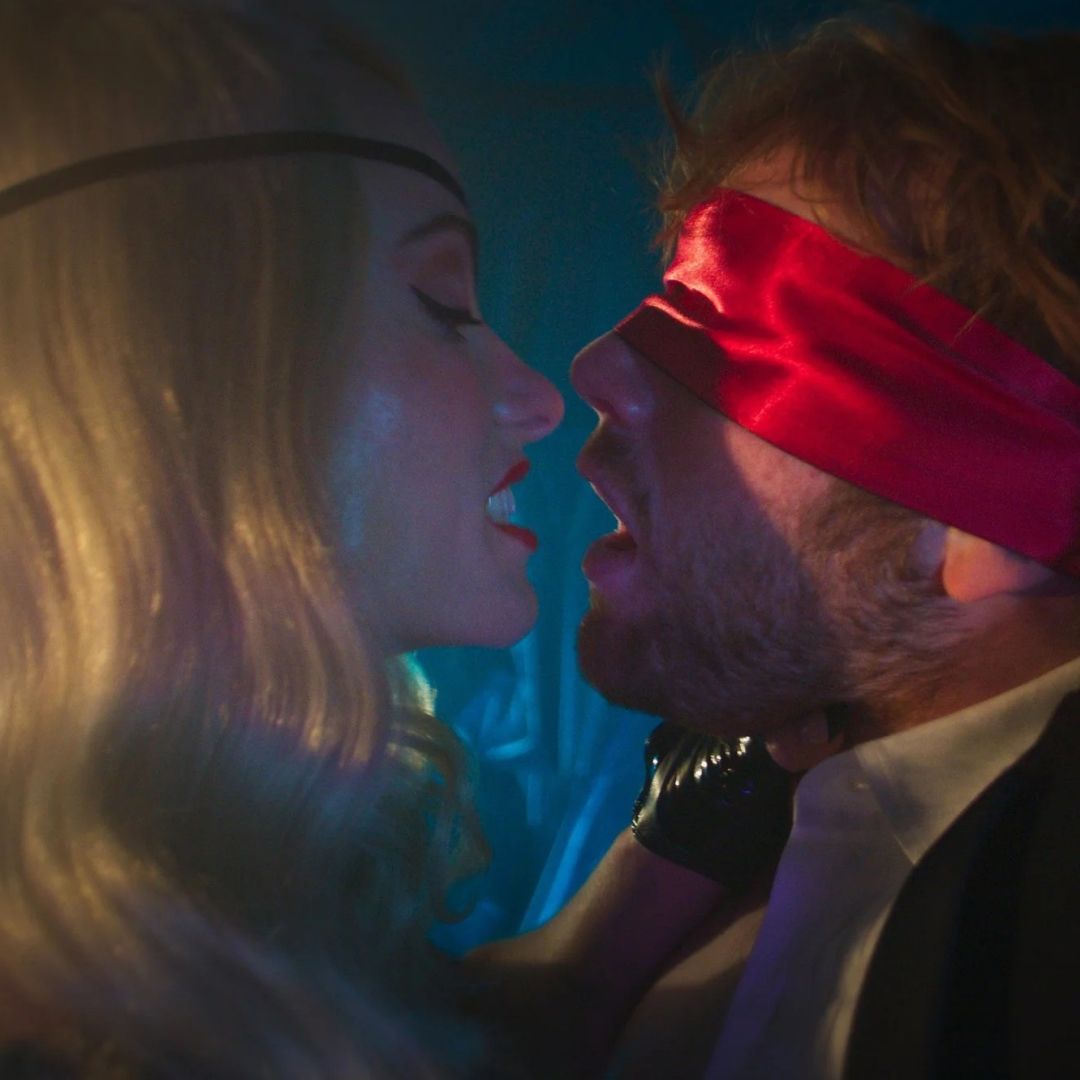
Gregg Araki has always understood that desire is a language spoken in glances, in pauses, in the space between words. His return with *I Want Your Sex* arrives at a curious cultural moment, one where the very idea of on-screen intimacy has become a topic of formal study, a craft in its own right. The collaboration between Olivia Wilde, Cooper Hoffman, and intimacy coordinator Yehuda Duenyas signals something more than a production detail; it points to a quiet evolution in how we approach the art of the scene. For those of us who follow the rhythms of style and self-expression, this is not merely a behind-the-scenes footnote. It is a reflection of a broader cultural recalibration, one that echoes the same principles of intentionality we admire in a perfectly considered aesthetic: nothing is accidental, everything is felt.
The conversation around intimacy coordination has matured considerably in recent years, moving from a necessary corrective to a creative discipline in its own right. What Duenyas brings to Araki's set is not a set of rigid protocols but a vocabulary for navigating vulnerability with precision and grace. This is where the story resonates on a deeper level, particularly for those who appreciate the art of subtlety. Just as the Short nails, elevated style: Fall's manicure mood demonstrates how restraint can be more striking than excess, the work of an intimacy coordinator is fundamentally about understanding the power of a deliberate gesture. It is not about censoring desire but about choreographing it so that its expression feels both authentic and safe. In this sense, the practice mirrors the Quiet Confidence: The Most Elegant Celebrity Pixie Cuts we admire: a form that appears effortless because of the care behind it.
Our take is that this represents a genuine shift in how we value the emotional labor embedded in performance. For the audience, the result is not a less provocative film but a more honest one. When actors are given the space to articulate boundaries and co-create the physical narrative, the tension on screen becomes layered rather than performative. It is the difference between watching a scene and sensing a truth. The practical implication for our readers, who curate their own lives with an eye for authenticity, is this: consent is not the enemy of spontaneity; it is the foundation upon which true freedom is built. We would tell anyone who wonders if this process diminishes the art to consider how the most elegant style choices are often the most considered. The same logic applies here.
As Araki's film prepares to reintroduce his distinctive voice to a new generation, the open question is not whether intimacy coordination will become standard practice, but how it will evolve as a creative tool. The detail to watch is how the collaboration between Duenyas, Wilde, and Hoffman translates into performances that feel both daring and deliberate. For those of us who believe that true confidence is quiet, this is the most compelling kind of cinema. The takeaway, succinctly put: the most powerful scenes are not the ones that show everything, but the ones that make you feel the weight of what is being revealed. That is a principle that applies as much to a film set as it does to the way we present ourselves to the world, a lesson in Elevated Fall Style: Subtle Shifts for Lasting Impact. The real story here is not about rules; it is about the artistry of respect.