Half an hour into Jane Schoenbrun's viscous new film *Teenage Sex and Death at Camp Miasma*, the slasher send-up that has quietly become the season's most talked-about meditation on desire, I found myself holding my breath. The premise is deceptively simple: a rising filmmaker, played with coiled restraint by Hannah Einbinder, attends a queer summer camp where the boundaries between creative longing, physical craving, and genuine human connection blur into something almost unbearable. Schoenbrun directs with a wet, dreamlike precision, and the result is less a horror movie than a mirror held up to a generation that has learned to narrate its own loneliness in real time. This is not a film about sex, exactly, nor is it purely about death, though both loom large. It is about the space between wanting and being wanted, and how that space has grown both more crowded and more hollow in an era of curated intimacy. We have written before about the pull of Vintage Romance, Reimagined: For Love & Lemons Fall Bridal, where nostalgia softens the edges of modern love, and about Five Couples, One Island: Finding Romance in Puerto Rico, where real-life partners prove that connection still thrives off-screen. Schoenbrun's film sits uneasily beside those stories, not as a contradiction, but as a shadow they cannot outrun. We are tired of pretending that the so-called intimacy recession is a problem of technology alone. Schoenbrun understands this better than most. The film's queasiness does not come from jump scares or gore, but from the unbearable tension of watching people try to touch each other through layers of performance, irony, and self-protection. Einbinder's Kris is not a victim of the modern world; she is a participant in it, capturing her own desires on camera even as she fails to feel them. The film's brilliance is that it refuses to offer catharsis. There is no climactic embrace, no tearful confession. Instead, there is the slow, uncomfortable recognition that intimacy often fails not because we do not care, but because we care so much that we build elaborate traps for it. This is what we would tell a reader who asks us whether the film is worth the emotional weight: yes, but only if you are willing to sit with the fact that the weight is yours too. It is a film that asks you to stop performing desire long enough to notice what you actually want. What makes *Camp Miasma* feel essential rather than merely timely is how it refuses to moralize. Schoenbrun does not offer a solution to the recession, and that restraint is the point. The film's quietest scenes, the ones where characters simply exist in the same frame without speaking, carry more tension than any chase sequence. It reminded me of the way we approach style and self-presentation in our own world: the goal is never to scream louder, but to make the silence feel intentional. The same philosophy applies to connection. We have spent years curating our lives, our feeds, our bridal edits and island romances, as if enough beauty could protect us from the mess of actually being seen. Schoenbrun's film suggests the opposite: that the mess is the only thing worth reaching for. The takeaway, if we had to distill it into something quotable, is this: intimacy is not something you curate, it is something you risk. And the risk is not in the grand gesture, but in the mundane, terrifying choice to stay present when everything in you wants to cut the scene. What we will be watching for, as the conversation around this film grows, is whether we can hold two truths at once: that the world is more connected than ever, and that we have never felt more alone. Schoenbrun leaves us with an image that lingers long after the credits roll, one that suggests the real horror is not the killer at camp, but the possibility that we have become so good at performing connection that we no longer recognize its absence. For our readers, the question is not whether to see the film, but what you are willing to let it show you about yourself.
Gen Z
Navigating Intimacy: A New Generation's Complex Landscape.
Jane Schoenbrun doesn't flinch.
4 min read Latest from Marie Claire
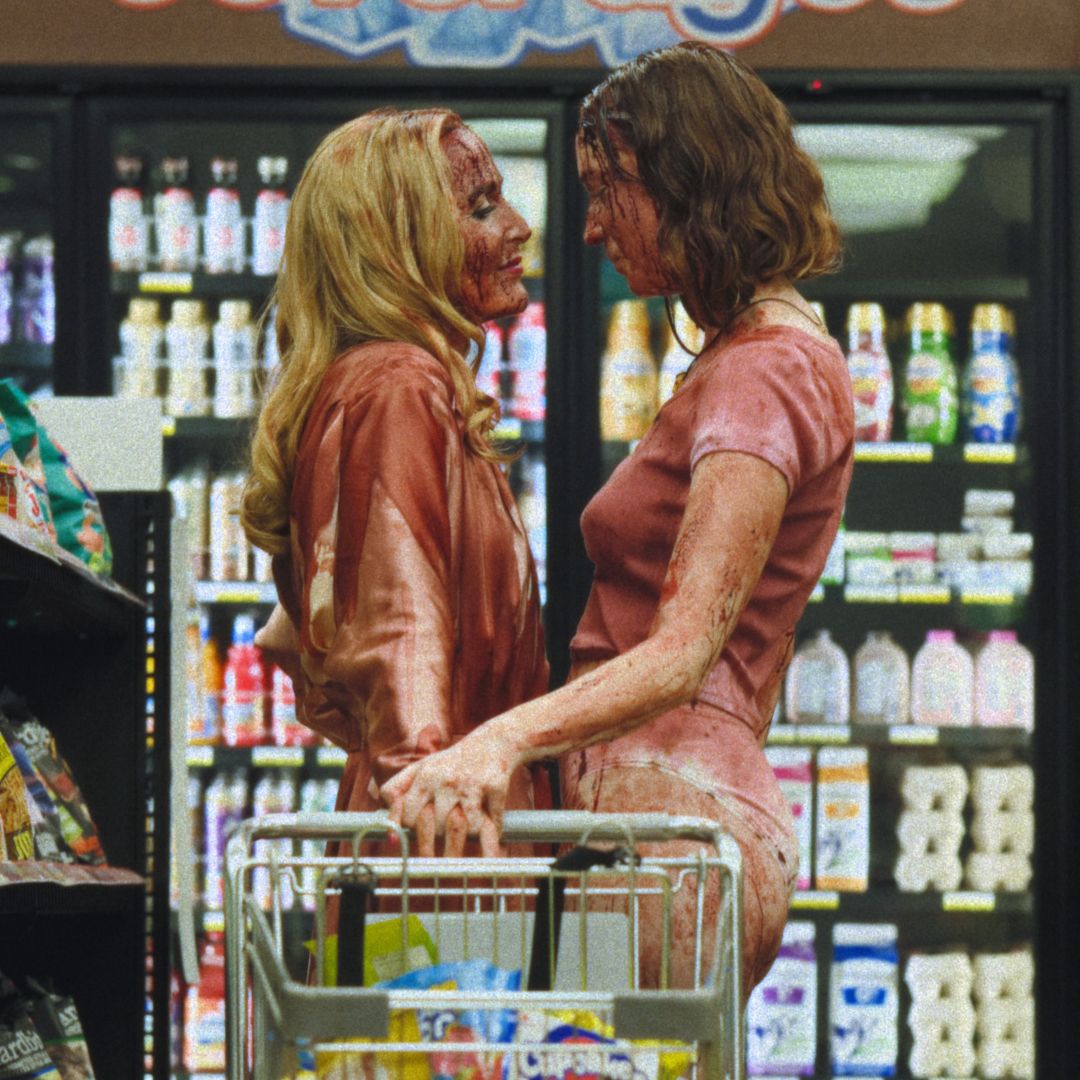
This essay contains spoilers about Teenage Sex and Death at Camp Miasma. Half an hour into Jane Schoenbrun’s viscous new film Teenage Sex and Death at Camp Miasma, I saw my own psyche on screen. While rising filmmaker Kris Williams (Hannah Einbinder) sits across from Billy Presley (Gillian Anderson), the final girl from the ‘80s slasher B-movie she hopes to reboot, she unpacks her tendency to intellectualize art that evokes deep feeling within her. Billy implies that Kris’ rumination is a means of avoiding said feeling—something I’ve been known to do, too, and I think a fair share of people…