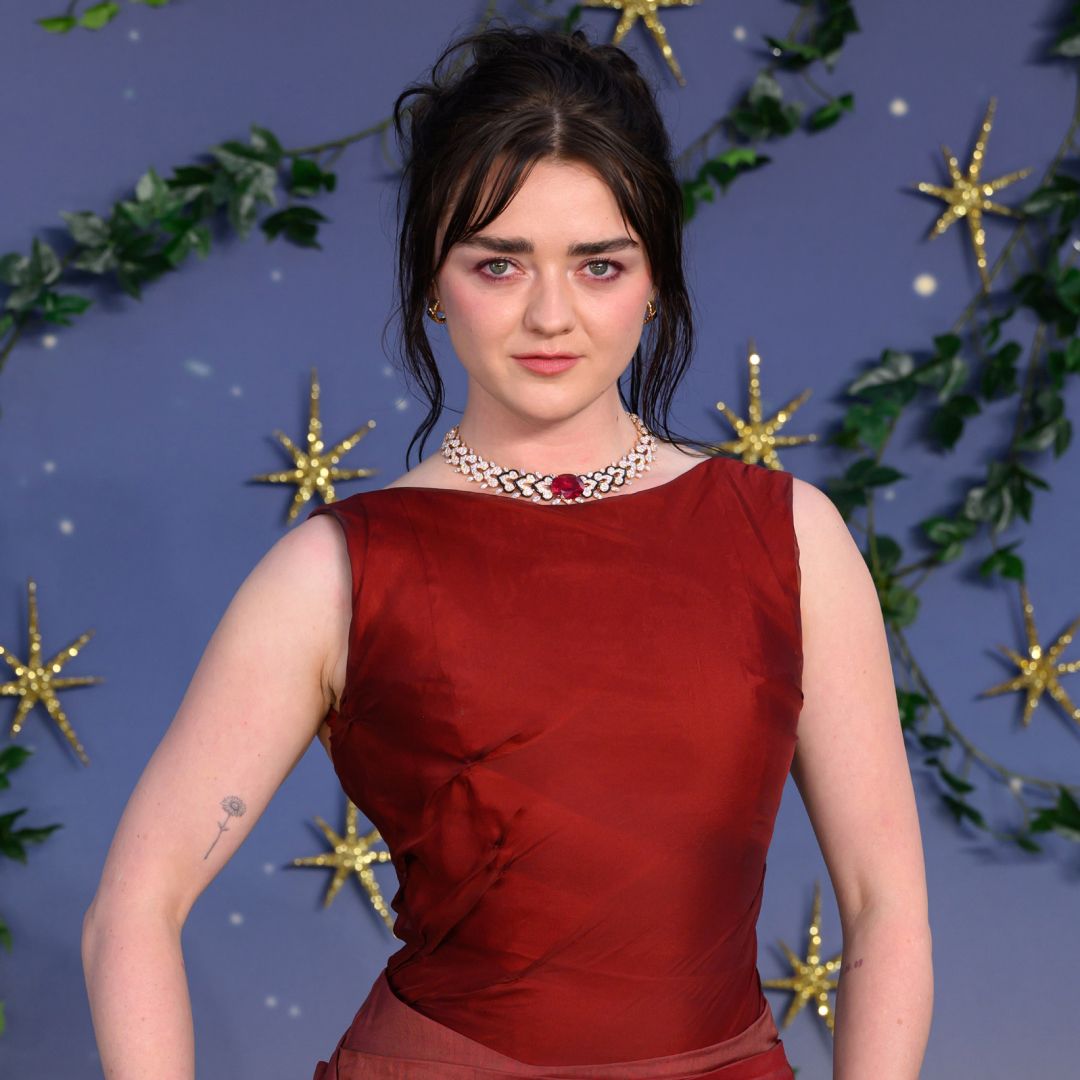
There is a particular kind of confidence that arrives when you stop trying to prove you belong in a room and simply exist within it. Maisie Williams, channeling Sandra Bullock for the *Practical Magic* sequel, embodies that energy. She is not doing a cosplay tribute or a costume parade; she is stepping into a mood that feels both borrowed and entirely her own. The reference is unmissable, yet the execution is distinctly modern. That is the quiet magic of elevated nostalgia. It does not shout, "Look at me in the past." It whispers, "I have always been this." This is the same instinct we see in the season's elevated footwear, where classic silhouettes are revived not for the sake of memory, but for the texture they add to the present.
There is a lesson here in how we dress, and how we move through our own lives. The pull of a reference point is not about imitation; it is about transference. Williams is not trying to be Bullock. She is using Bullock as a lens to focus her own light. Pulling a look together, as she puts it, "felt like winning the Oscar." That sentiment is not arrogance. It is the pleasure of alignment, when the external finally mirrors the internal. For our readers, the takeaway is practical: your wardrobe is a form of self-connection. When you borrow from the past, you are not hiding behind it. You are curating a language that feels both familiar and forward. That is why we see the same philosophy in the short nails, elevated style trend, where the choice is not about being demure, but about the confidence of restraint.
What strikes us most is the emotional maturity in this styling choice. It would be easy to lean into the obvious spectacle of a sequel, to amplify the glamour to match the nostalgia. Instead, Williams leans into the restraint. She understands that true power is not in the volume of the statement, but in the precision of it. This is the same spirit we see in the way lingerie as layers redefines modern sensuality, where the most alluring detail is the one that is hinted at, not announced. It is a masterclass in self-assurance. She is comfortable enough to stand in the shadow of a legend because she knows her own light is steady. That is not a performance; it is a state of being.
If you are looking for a single note to carry with you, let it be this: style is not about the era you reference, but the intention you bring to it. The question is not "Does this look like someone else?" but "Does this feel like me?" Williams answered that question with a resounding yes. We should all be so lucky to find a version of that certainty. The specific consequence to watch here is how this aesthetic ripples into the wider culture. If a sequel can feel this considered, what does that suggest about the rest of our choices? We are watching a shift toward a more thoughtful form of expression, one where the past is not a costume, but a foundation. The detail to watch is the confidence. It is soft, it is assured, and it is entirely her own.