Olivia Rodrigo's Polka-Dotted Dress & Green Vest Felt Like A '60s Fever Dream
Our take
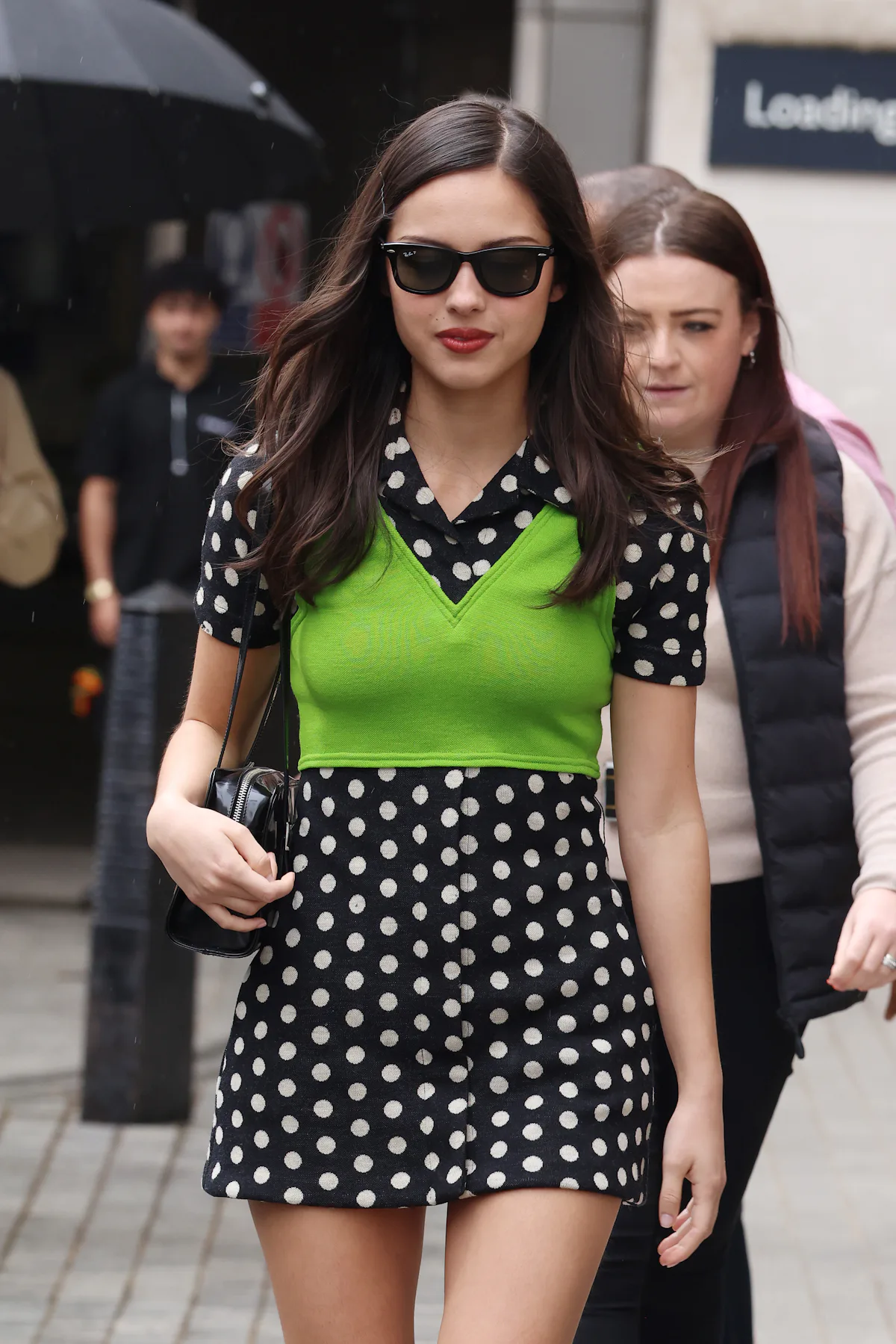
Olivia Rodrigo’s recent London appearance, sporting a vintage Rudi Gernreich polka-dotted dress and electric green vest, isn't merely a stylish outing; it’s a deliberate signal of evolving aesthetic sensibilities and a savvy understanding of the cyclical nature of fashion. The choice of Gernreich, a designer known for his boundary-pushing designs and exploration of androgyny and liberation in the 1960s, positions Rodrigo within a lineage of artists who use clothing to communicate something beyond the surface. This feels particularly relevant given the anticipation surrounding her new album, *you seem pretty sad for a girl so in love*, and its potential exploration of complex emotional terrain. It's a move that sits comfortably alongside our recent exploration of [10 Celebrity "Wet-Look" Hairstyles To Try This Summer], demonstrating a broader trend of celebrities drawing inspiration from distinct historical moments to craft personal narratives through style. The boldness of the look, the unexpected pairing of the classic polka dots with a jarringly modern green, echoes a playful irreverence that feels increasingly aligned with Gen Z’s approach to fashion – borrowing, remixing, and ultimately rejecting rigid categorization. Further illustrating this playful spirit, our readers might also enjoy [Hands Down, The 65 Weirdest, Most Clever Clothes & Accessories On Amazon], which spotlights the embrace of the unconventional within contemporary style.
The resurgence of vintage, particularly archival pieces, is a significant development within the fashion landscape. It speaks to a growing awareness of sustainability and a desire to move away from the relentless cycle of fast fashion. More than that, though, it represents a rejection of the purely aspirational, often unattainable, world of high fashion. Rodrigo’s choice feels deeply personal, a curated expression of her own style rather than a dictated trend. Gernreich's designs, with their focus on challenging societal norms and celebrating individuality, resonate with Rodrigo's own artistic journey and her ability to connect with a generation grappling with identity and authenticity. This isn’t about simply wearing a designer name; it’s about embodying a philosophy, a moment in time, and translating that into a contemporary statement. The electric green vest, in particular, is a striking element – a vibrant pop of color that injects a sense of energy and defiance into the otherwise classic silhouette of the polka-dot dress. It’s a visual representation of the tension between nostalgia and modernity, a hallmark of contemporary style.
The broader significance of this look lies in its demonstration of how celebrity style can function as a subtle form of cultural commentary. Rodrigo isn't just promoting her album; she's engaging in a conversation about fashion history, gender expression, and the power of personal style. She’s presenting a vision of femininity that isn’t about conforming to expectations but about embracing individuality and challenging conventions. This aligns with the ongoing shift in our understanding of power dressing, moving away from overtly masculine styles towards a more nuanced and fluid expression of confidence. It’s a quiet assertion of self, a statement made not through ostentation but through thoughtful curation. The impact ripples beyond Rodrigo herself, influencing how her followers perceive and engage with fashion – encouraging a more conscious and considered approach to personal style.
Looking ahead, it will be fascinating to observe how Rodrigo continues to utilize fashion as a tool for self-expression and storytelling. Will she continue to champion vintage and archival pieces, or will she explore other avenues of stylistic exploration? The cyclical nature of fashion guarantees that elements of the '60s will continue to resurface, but Rodrigo's ability to interpret and reimagine these influences in a distinctly modern context will be key to maintaining her status as a style icon. Ultimately, the question becomes: how will she leverage this platform to encourage her audience to embrace their own unique style narratives, fostering a sense of individual confidence and creative expression?
Ahead of her forthcoming record release later this month, Olivia Rodrigo stopped by BBC Radio One in London on June 4 to promote the newest release titled, you seem pretty sad for a girl so in love. In honor of her third studio album, Rodrigo opted to wear an archival black and white polka-dotted mini dress designed with a cropped green vest over it. At first glance, it may have seemed like an intentional layering move on Rodrigo’s part, but upon further investigation, it turns out to be an original design by late avant-garde, Austrian fashion designer, Rudi Gernreich.
Ironically, Gernreich is best known for creating the very first topless bathing suit, dubbed as the “monokini,” in 1964. Beyond his unisex designs and thong-friendly swimsuits that were way ahead of their time — Gernreich pushed boundaries with shorter hemlines as well. Although it was far from topless, Rodrigo’s polka dotted mini still had its distinctive electric green vest detail, making it perfect for the English occasion.
The ’60s-era silhouette is said to have originally belonged to Gernreich’s longtime friend, collaborator, model, and muse, Peggy Moffitt. According to Vogue, Moffitt’s items, including the Rodrigo polka-dot dress, were auctioned off after his 2024 passing by Kerry Taylor.
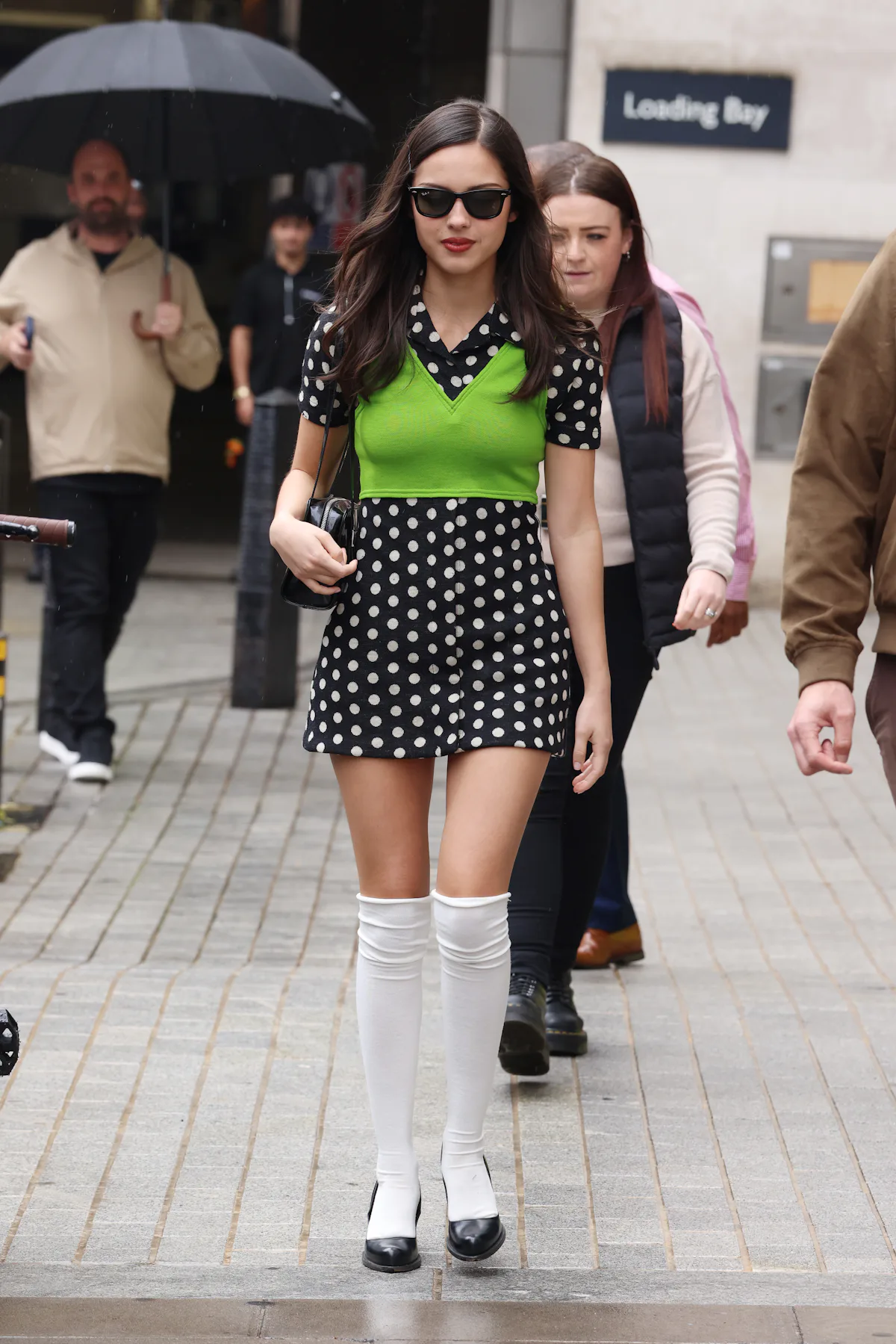
True to Rodrigo form, the singer-songwriter put her own contemporary spin on the modish look with a pair of white knee socks and chunky Prada leather pumps. She finished the look with classic Ray Ban Wayfarer sunglasses and the black Cayetano shoulder bag by Paloma Wool.
Read on the original site
Open the publisher's page for the full experience