There is something quietly commanding about a woman who knows her own rituals, and the recent conversation with Rebecca Donaldson and Lily Muni He in Austin reveals a truth we have long suspected: the most compelling style is rooted in self-awareness, not spectacle. At a Clarins soirée ahead of the United States Grand Prix, these two women offered a masterclass in paddock poise that felt less like performance and more like an extension of who they already are. That distinction matters. It is the same quiet authority we observed when Katie Holmes at JFK confirms winter travel's quiet luxury piece, the idea that true refinement never announces itself. Donaldson and He do not dress for the cameras; they dress for their own sense of occasion, and that subtle shift in intention changes everything.
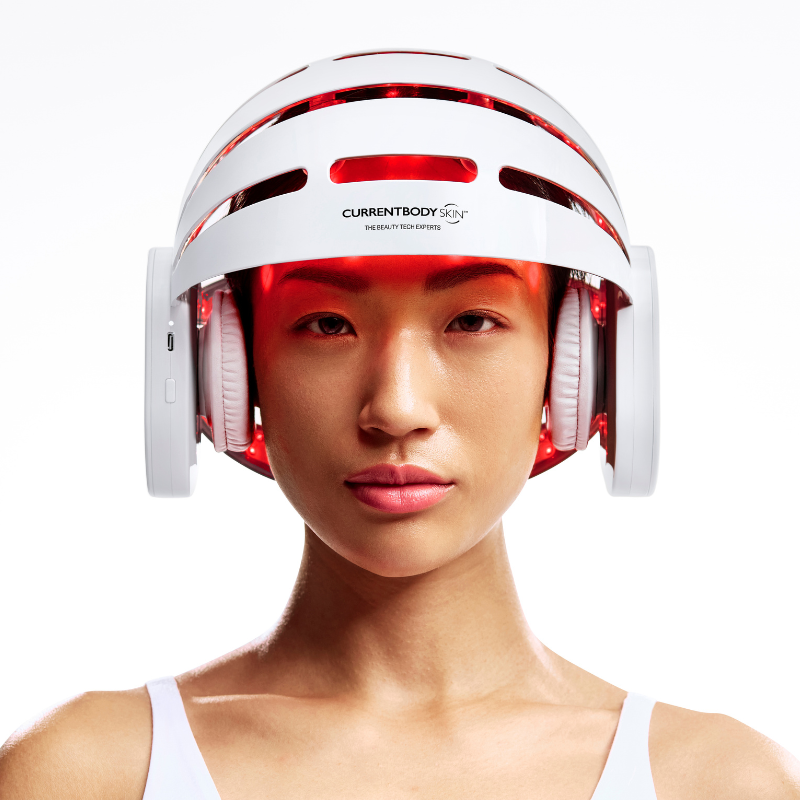
What struck us most was the honesty in their race-day rituals. Donaldson rises early, treating preparation as a deliberate act of care, while He admits she struggles to leave the bed. Neither posture feels curated. One reaches for an LED mask and a hair-growth helmet; the other relies on a single lip tint that lasts an entire round of golf. There is no competition here, only two women who have learned exactly what their bodies and schedules require. This is the essence of modern femininity as Chiara Bransi's voice understands it: power that does not need to prove itself. He's admission that she wears more makeup for her own tournaments than for race weekends is particularly telling, her game-day face is for performance, while the paddock is for presence. It is a distinction that echoes the off-duty ease we admired in The Off-Duty Model Returns in Bella Hadid's Quiet '90s Denim, where confidence comes from knowing when to hold back.
Their approach to Austin style reinforces this same intentionality. He identified the city's mood as "very Prada, Miu Miu", a reference that landed with precision when she appeared in a vintage Prada skirt once worn by Charlotte York on *Sex and the City*. It was not a costume; it was a nod to a shared cultural vocabulary, delivered with the lightness of someone who understands that fashion is a language, not a uniform. Donaldson, meanwhile, described Austin as more casual, and adjusted accordingly with Khaite layers and classic denim. Neither woman forced the cowboy-boot cliché. Instead, they listened to the place and responded with ease. This is the kind of refined adaptability that defines The Accessories That Will Define Quiet Luxury in 2027, pieces that serve the woman, not the other way around.
The most revealing detail, however, came when He described preseason training with Alex Albon. She borrows his performance coach; he joins her for golf rounds for fun. There is a mutual respect in that exchange, a cross-training of disciplines that mirrors how these women move through the paddock itself, athletes in their own right, supporting partners who are athletes too, without losing their own identity. It leaves us with a specific question worth watching: as more women in the F1 orbit carve out their own professional and stylistic lanes, will the paddock finally be seen as a space of personal expression rather than mere accompaniment? If He and Donaldson are any indication, the answer is already yes, and they are not asking for permission.