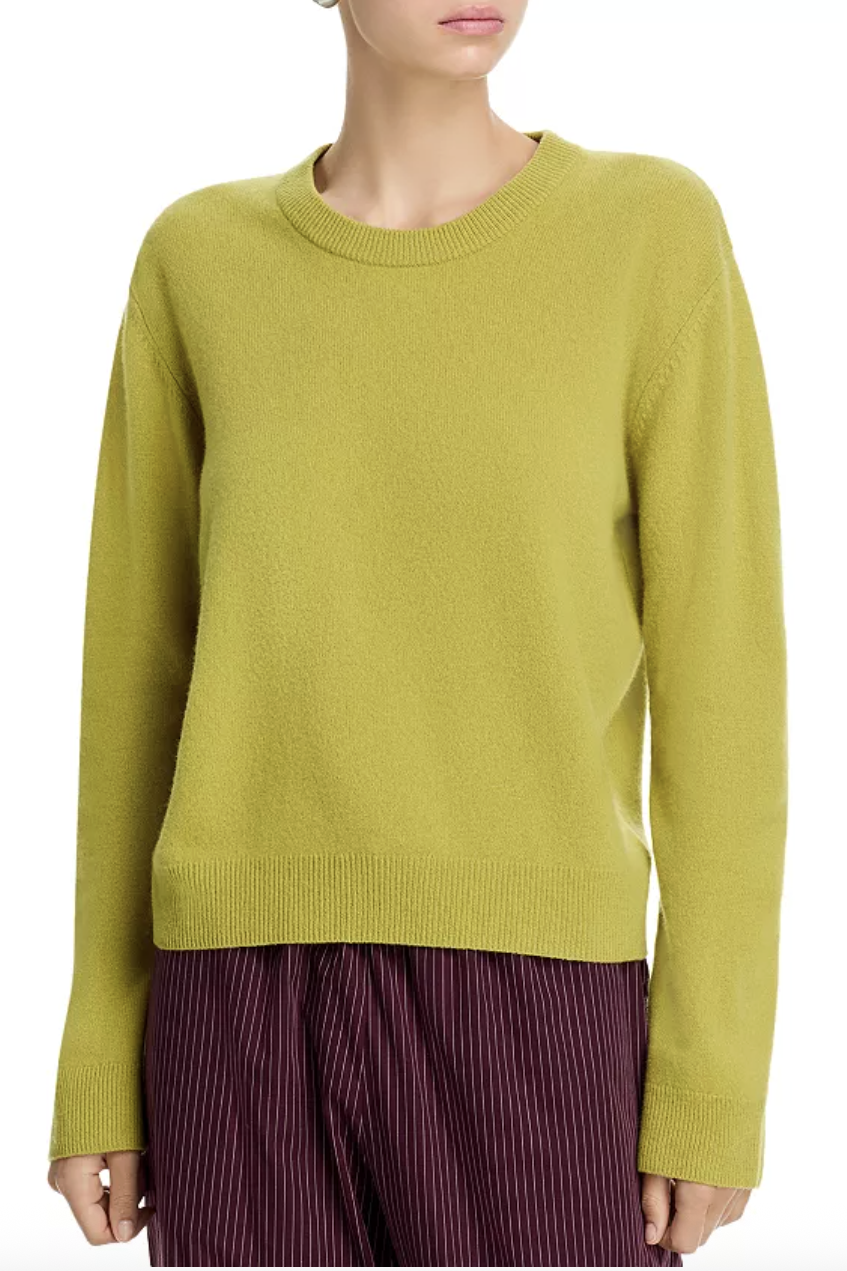
There is a particular pleasure in watching a woman who knows herself decide to become someone slightly different. The article's author begins with a confession many of us will recognize: a wardrobe anchored in cream sweaters and chocolate suede, a uniform of quiet reliability. But the pull toward saturated hues is not really about color. It is about the self stepping out from behind its own carefully arranged curtain. To experiment with vibrancy is to say, without shouting, that you are ready to be seen a little more clearly. That is not a trend. That is a quiet revolution, and it is the most elegant kind of confidence we know.
We have long admired the discipline of a restrained palette, the kind of style that whispers rather than announces. Yet there is a difference between minimalism as a choice and minimalism as a hiding place. The author's impulse to rebrand, to introduce a jolt of energy into her daily uniform, feels less like a flight of fancy and more like an internal alignment. It echoes the spirit we see in Quiet Confidence: The Most Elegant Celebrity Pixie Cuts, where a dramatic change is not about seeking attention, but about stripping away the unnecessary to reveal a sharper, more honest version of oneself. Similarly, Short nails, elevated style: Fall's manicure mood proves that chic often lives in the details, in the deliberate choice to refine rather than decorate. Color, like a fresh cut or a clean nail, is simply another form of self-respect.
Our practical take for the reader who is contemplating their own palette shift is this: start with the piece you reach for without thinking. The author mentions a beloved sweater or coat because those are the anchors of our identity. Introduce a saturated hue in that familiar silhouette, and you have created a bridge between who you are and who you are becoming. You do not need a head-to-toe transformation. You need one piece that makes you feel like the day has more possibility in it. That is the point of this article, and it is a good one. It is not about discarding your neutrals; it is about letting them share the stage.
The most compelling detail here is the author's own admission that she is "intrigued." Not committed, not converted, but intrigued. That is the exact right energy. It suggests a soft authority, a woman who is comfortable enough to change her mind without making a spectacle of it. We would tell any reader who asks: do not force the vibrancy. Let it find you. Wear a single bold piece with your usual ease, and notice how it changes your posture before it changes your reflection. The promise of spring is not that everything becomes bright; it is that you finally allow yourself to be a little less invisible. Watch for the moment you stop reaching for the same neutral and start reaching for the color. That is the moment the palette stops being a trend and becomes a language.