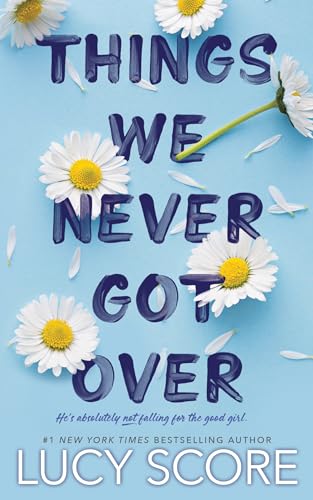
Prime Video's adaptation of Lucy Score's *Knockemout* series feels less like a trend and more like a quiet confirmation of something we've long sensed: romance, when done with intention, is one of the most compelling storytelling forms of our moment. The announcement that *Things We Never Got Over* will become a television series is not surprising, it follows a steady stream of BookTok adaptations, but it does feel significant. This is a story built on small-town texture, layered character dynamics, and a slow-burn emotional arc that rewards patience. In an era of rapid content consumption, that restraint is its own kind of luxury, much like The Quiet Art of Layering This Week's Most Refined Looks or the understated beauty of Autumn's quiet ritual begins with coffee-toned nails in warm brown and beige.
What makes this adaptation worth watching is not the star power or the production timeline, though both are compelling. It is the creative team's stated commitment to preserving the novel's core: the banter, the community, the emotional honesty that made readers fall in love with Knockemout in the first place. Showrunners Eric Charmelo and Nicole Snyder, who previously navigated twin narratives on *Ringer*, understand the complexity of dual roles, Molly Griggs will play both Naomi and her estranged twin Tina, a casting choice that demands nuance rather than spectacle. Lucy Score herself has joined as executive producer, and her public remarks reveal a writer who values interpretation over fidelity. She wants to see what others bring to her world. That openness suggests a collaboration, not a corporate adaptation.
For our readers, the practical takeaway is this: the romance genre is no longer a guilty pleasure whispered about in private. It is being treated with the same creative rigor once reserved for prestige drama. The casting of Jennifer Morrison to direct the first two episodes signals a visual sensibility that prioritizes atmosphere over flash. And the choice to film in Vancouver, with its muted light and natural textures, aligns with the aesthetic we have always championed, refined, grounded, emotionally resonant. The question is not whether the series will succeed, but whether it will honor the quiet intimacy that made the book feel like a secret worth sharing. We will be watching, not for the drama, but for the moments in between.