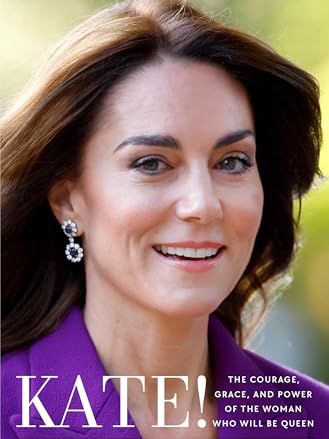
There is something profoundly moving about watching a woman who has carried the weight of an institution, a cancer diagnosis, and a very public recovery be undone by the tender words of a seven-year-old. When Prince Louis told his mother, "Remember, I'm always in your heart with you," he gave us a glimpse not of royal protocol but of raw, unguarded love. The moment is striking because it strips away the polished veneer of duty and reveals what actually sustains a person through a 24-hour, 10,000-foot climb: the quiet knowledge that someone small is thinking of you, tracking your steps, willing you upward.
This is not the first time we have seen this particular Princess of Wales in a state of emotional exposure. In her own words, she has described feeling The Quiet Shock of Being Made to Feel Alien in Your Own Life, stark, alien, stripped back. The Three Peaks Challenge documentary offers a counterpoint to that isolation. Here, she is not stripped back by circumstance but by joy. Her brother James, working in concert with Prince William, orchestrated a moment of intentional intimacy: video messages from children who see her not as a future queen but as a mother who looks strong and should keep going. Prince George's suggestion that he was tracking her on Flightradar is the kind of detail that feels almost unbearably sweet, a young boy translating love into logistics, checking her coordinates because that is how he knows she is safe.
What makes this footage resonate beyond the usual royal soft-focus is the emotional architecture beneath it. The children were prepared. Their messages were specific, not generic. Charlotte named the challenge, George praised her strength, and Louis, in a cascade of repetition that only a child can deliver without irony, told her he loves her "really lots and lots." This is not accidental. In a family where public emotion is often managed into stillness, someone took the time to coach these children not in formality but in sincerity. The result is a woman crying before she has even seen the footage, because she already knows what it will contain.
We should watch this moment carefully, because it tells us something about the future of the monarchy that is rarely discussed in strategic terms. Prince William's vision for the institution has been described as one that risks leaving the monarchy skeletal. But here, we see a different kind of thinning, not of substance, but of armor. Kate's willingness to let the cameras catch her tears, to let her children's voices fill a documentary, suggests a monarchy that is not smaller but softer. The question is whether that softness can coexist with the rigidity the crown still requires. For now, the takeaway is specific and concrete: the most powerful thing Prince Louis said was not a rehearsed line about duty. It was the promise that he would be following behind her back, always with her. That is the kind of loyalty no institution can manufacture, and it is the only kind that actually gets a woman up a mountain.