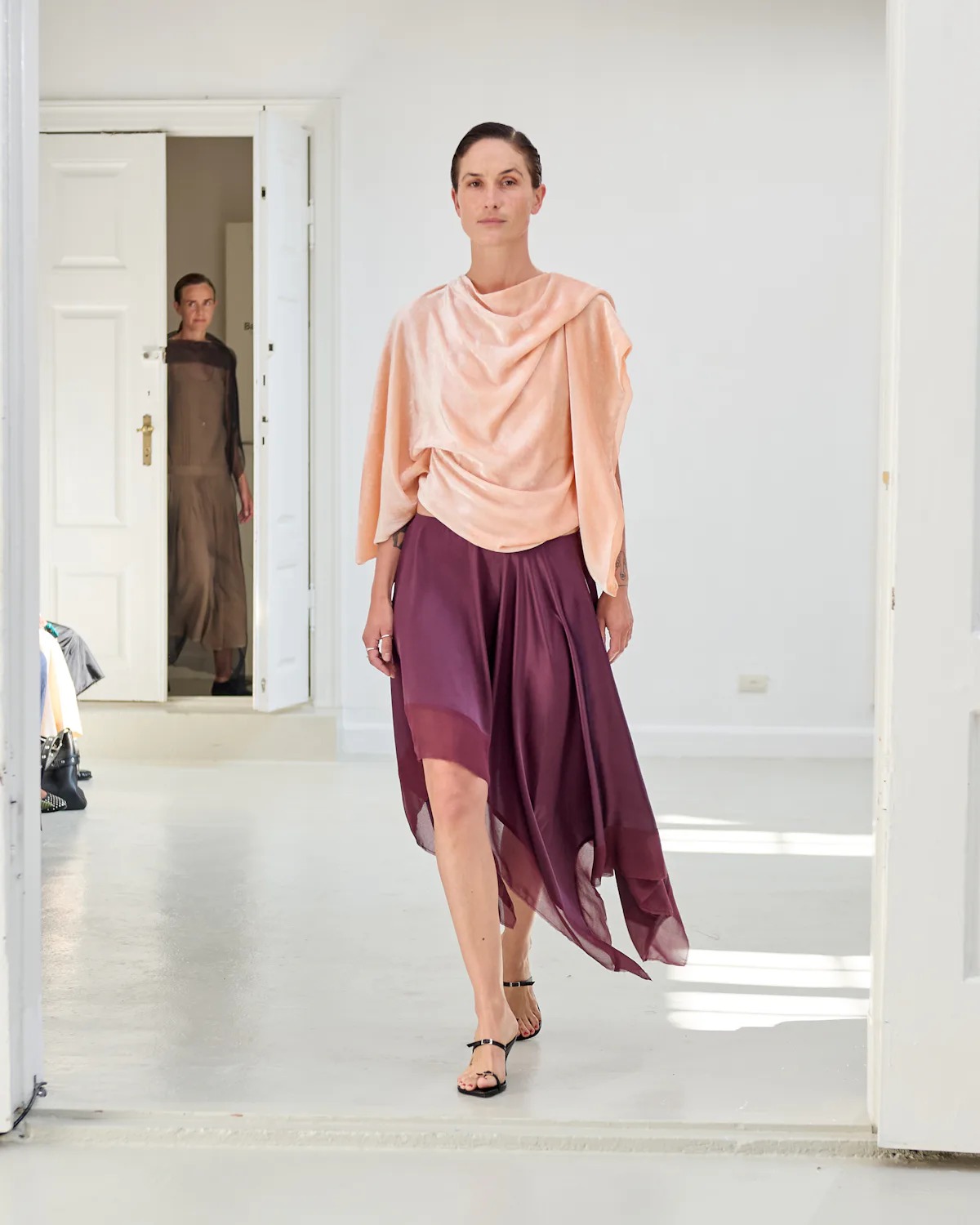
Twenty years of Copenhagen Fashion Week, and the city has finally stopped shouting. For those of us who have watched the Scandi aesthetic ricochet between sugary prints and sculptural silhouettes, the arrival of a staid minimalism feels less like a trend cycle correction and more like a quiet exhale. The Ganni era, with its bright colors and bold prints, served its purpose as an entry point, but the Spring/Summer 2027 runways suggest a maturation. This is not the stark, cold minimalism of the past; it is a softer, more intentional quiet. It is a reflection of a broader cultural appetite for clothes that don't demand attention, but rather hold space for the person wearing them. For our reader, this is a permission slip to edit, to curate, and to let the fabric do the talking.
This shift toward restraint is not happening in a vacuum. It mirrors a larger movement we are seeing across the fashion capitals, where the loudest statement is often the one left unspoken. We recently noted how J.Lo trades her signature bodysuit for tailored ease in Milan, a move that speaks to the same desire for a more grounded, powerful form of dressing. Similarly, our own coverage of The quiet-luxury shade replacing the classic neutrals you own points to a growing fascination with nuance over noise. This is not about erasing personality; it is about refining it. The Copenhagen woman is not fading into the background; she is simply no longer performing for it. She is comfortable, confident, and entirely self-possessed, which is the most modern expression of power we can think of.
For the woman building her uniform, this means the rules of engagement have changed. It is no longer about the most eye-catching piece in the room, but the most considered one. The practical takeaway is a shift in focus from acquiring new things to evaluating the integrity of what you already own. We would tell a reader that if she is feeling overwhelmed by the noise, this is her moment to step back. Look at the structure of a shoulder, the weight of a linen, the way a neutral tone interacts with her skin. The pieces that feel the most like a second skin are the ones that will carry her through the season and beyond. This is not about a uniform that erases, but a wardrobe that communicates a deep sense of self-awareness. It is the difference between dressing for a reaction and dressing for the life you are actually living.
The specific detail to watch as this aesthetic solidifies is the materiality. The article highlights the anniversary, but the real story is in the touch. As the prints recede, the quality of the weave, the drape of a cut, and the subtle interplay of textures become the new signatures. The question we are left with is whether the global consumer will follow Copenhagen's lead in trading the fleeting thrill of a print for the enduring satisfaction of a fabric that feels like a quiet luxury. The answer will be in the clothes we choose to live in. The takeaway is simple: invest in clothes that feel like an extension of your own calm, not a costume for someone else's idea of style.