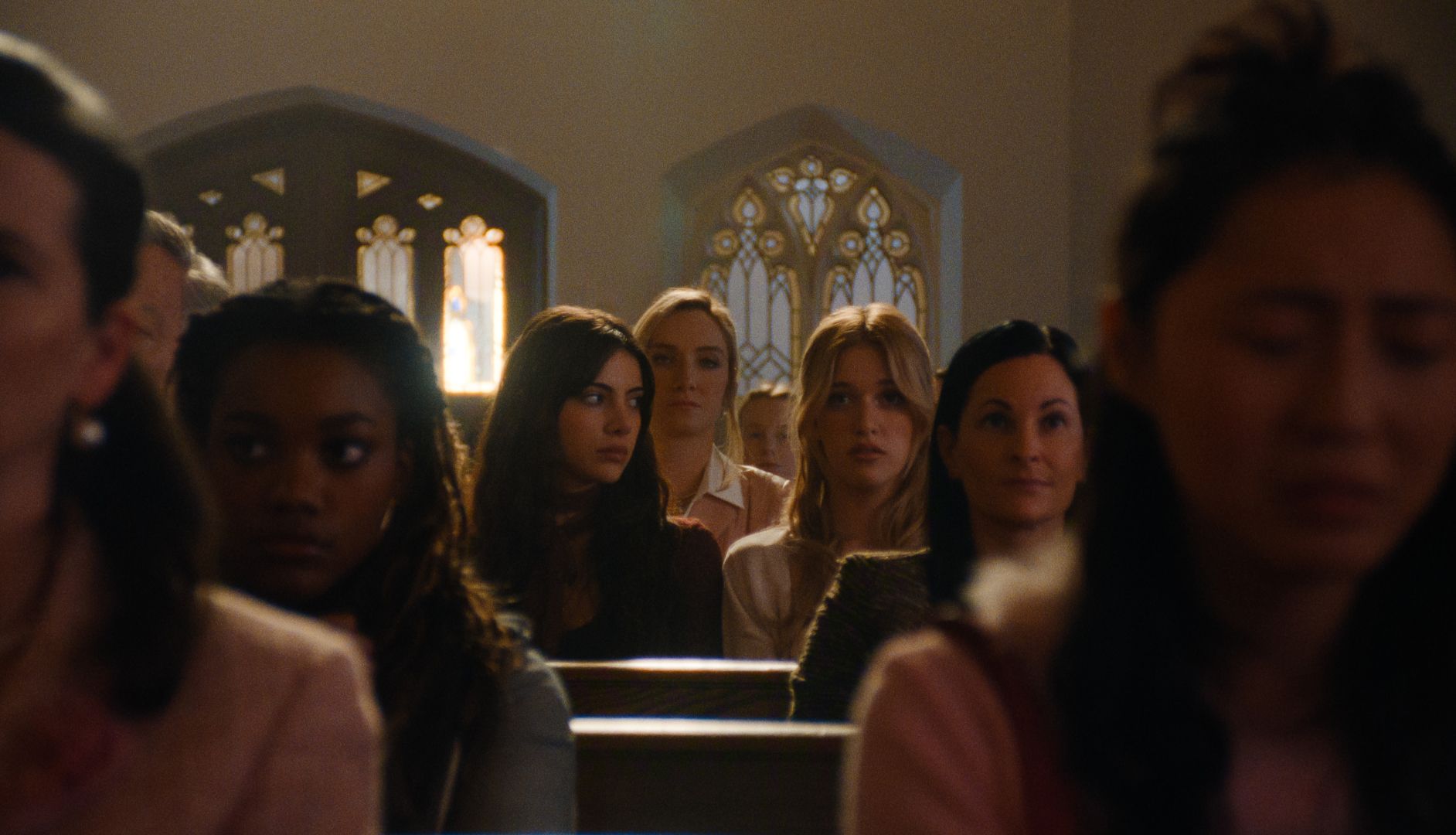
There is something deeply compelling about an artist who refuses to abandon the obsessions of her teenage self. Quinn Shephard, creator of the new Netflix series *The Body*, has done exactly that, and the result is a show that feels both like a time capsule and a confession. Her mood boards, pulled from a Tumblr she logged into for the first time in years, are not mere nostalgia; they are the foundational text of her creative identity. Shephard has built a Catholic-horror teen drama from the same raw material that shaped her as a young woman: religious paintings of biblical women, stills from *Carrie*, and the choreographed chaos of *Donnie Darko*. This is not a director pandering to a trend; this is a woman trusting the instincts she had before the industry told her what to sell. It is a quiet, confident act of self-preservation that mirrors the emotional honesty we recently explored with Slovak Pop's Rising Star Finds Her Rhythm in Quiet Power, where the artist's power came not from chasing the moment but from returning to her own core.
For Shephard, the return to 2004 is not accidental. She notes that the culture of that year, the beauty standards, the political tensions, the re-election of a contested president, mirrors our present moment with unsettling precision. But rather than use this parallel as a blunt instrument, she weaves it through the show's fabric of dance team rivalries, AIM conversations, and Juicy Couture. The result is a story that uses the trappings of a familiar era to examine something timeless: the human compulsion to believe, and the ease with which that belief can be exploited. Shephard is not interested in a simple critique of religion or groupthink; she is interested in the shame and ecstasy that live at the intersection of girlhood and faith. She describes *The Crucible* and *Equus* as formative texts, not because they offer answers, but because they dramatize the tension between personal revelation and social condemnation, a tension she now recognizes as a perfect metaphor for the queer experience she was navigating as a teenager. This layered introspection gives the show a texture that camp alone could never achieve. It is the difference between a costume and a uniform, a distinction we touched on in The Unfinished Details That Make an Outfit Memorable, where the power of an outfit lies not in its completeness but in the story it tells about the person wearing it.
What makes *The Body* feel like more than a well-executed genre piece is Shephard's refusal to separate the fun from the serious. She speaks of watching *Mean Girls* and *Legally Blonde* with her co-showrunner, asking what would happen if the actors treated those playful scenes with the gravity of a drama. That tension, between camp and earnestness, between the absurd and the high-stakes, is the show's signature. It allows her to explore sexual awakenings, complicated female friendships, and the destructive power of shame without losing the energy that makes a teen drama watchable. Shephard herself calls the process of making the show "incredibly freeing and healing," a chance to laugh at things that once felt unbearably serious. That is the note we should hold onto. She is not merely revisiting her Tumblr for aesthetic pleasure; she is reclaiming the parts of herself that were once sources of confusion and pain, and she is inviting the "Tumblr Era girls" to do the same. The season's deepest hues, as we noted in The Season's Deepest Hues Are a Quiet Statement of Taste, often carry the most meaning. Shephard has taken the dark, saturated palette of her teenage obsessions and turned it into a coherent, confident statement. The question *The Body* leaves us with is not whether the show will find its audience, but whether we are brave enough to revisit our own mood boards and admit they were telling us the truth all along.