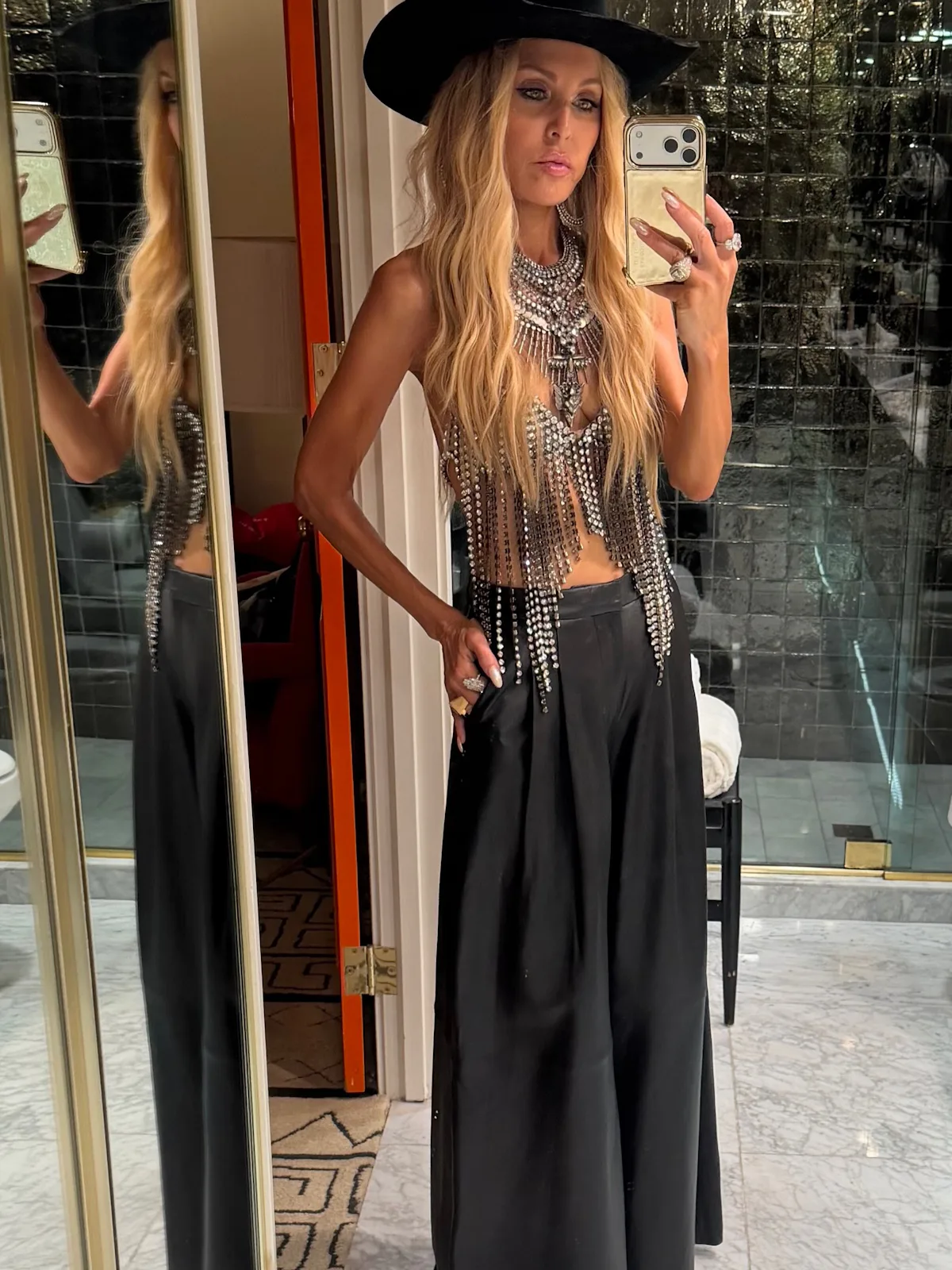
There is something quietly radical about treating a holiday wardrobe not as a performance but as a practice in self-knowledge. Rachel Zoe's recent collaboration with ChatGPT, in which she demonstrated how to build intentional outfits from what already hangs in the closet, resonated with us precisely because it bypasses the usual frenzy of seasonal shopping. Instead of another round of frantic acquisition, she offered something far more luxurious: permission to pause, to look at the pieces we own with fresh eyes, and to ask a simple but rarely posed question, what do I actually need this week? It is the kind of calm, considered approach that aligns with the shift we have been tracking elsewhere this season, from the return of the kitten heel as a quieter alternative to the ubiquitous Mary Jane to the way winter's pedicure palette has moved from deep cocoa to frosted ivory, favoring mood over volume. For the Woman in Her 30s, the Kitten Heel Replaces the Mary Jane and Winter's Pedicure Palette Shifts From Deep Cocoa to Frosted Ivory both point toward the same truth: refinement is not about having more but about choosing better.
What made Zoe's presentation feel genuinely useful, rather than aspirational in the abstract, was the specificity. She did not simply suggest "dress for the occasion." She listed every item in an imagined Aspen suitcase, cream cashmere sweater, leather flares, faux-fur coat, and then asked for four distinct outfits. Shopping, lunch, après-ski drinks, dancing: each received its own brief, with texture as the guiding principle. That level of detail transforms styling from a vague source of anxiety into a manageable, almost meditative exercise. For the woman staring at a full closet on Christmas Eve, the takeaway is refreshingly concrete: list what you have, name where you are going, and let the constraints do the work. The same logic applied to her black-dress challenge, where a single silhouette became three entirely different statements through outerwear and jewelry alone. A vintage beaded jacket for friends, a long faux-fur coat for family, a sequin blazer for a fashion party, gold, silver, crystal, or pearl depending on the room. It is a masterclass in editing, and it reminds us that the most elegant tool in any wardrobe is intention.
This is not about replacing the stylist's eye with a chatbot. It is about using a prompt to surface what we already know but rarely articulate: the difference between dressing for obligation and dressing for self. Zoe's prompts asked for hair, makeup, shoes, and bags alongside the clothes, treating the whole look as a cohesive expression rather than a collection of separate decisions. That holistic approach is the same sensibility we admired in The winter coats I'd choose without a second thought, where the selection was not about trends but about instinct, coats you reach for because they feel like you. The most striking detail from Zoe's evening was her St. Barths New Year's Eve brief: sequins and a standout piece, but anchored by comfort at home with deep hues and vintage jewelry. It acknowledged that the same woman might need to be party-ready and deeply relaxed within the same 48 hours.
What we are left with is a practical question worth carrying into every December invitation: if you had to describe your holiday in three dress codes, could you name them without opening your closet? The answer, once you write it down, makes everything else simpler.