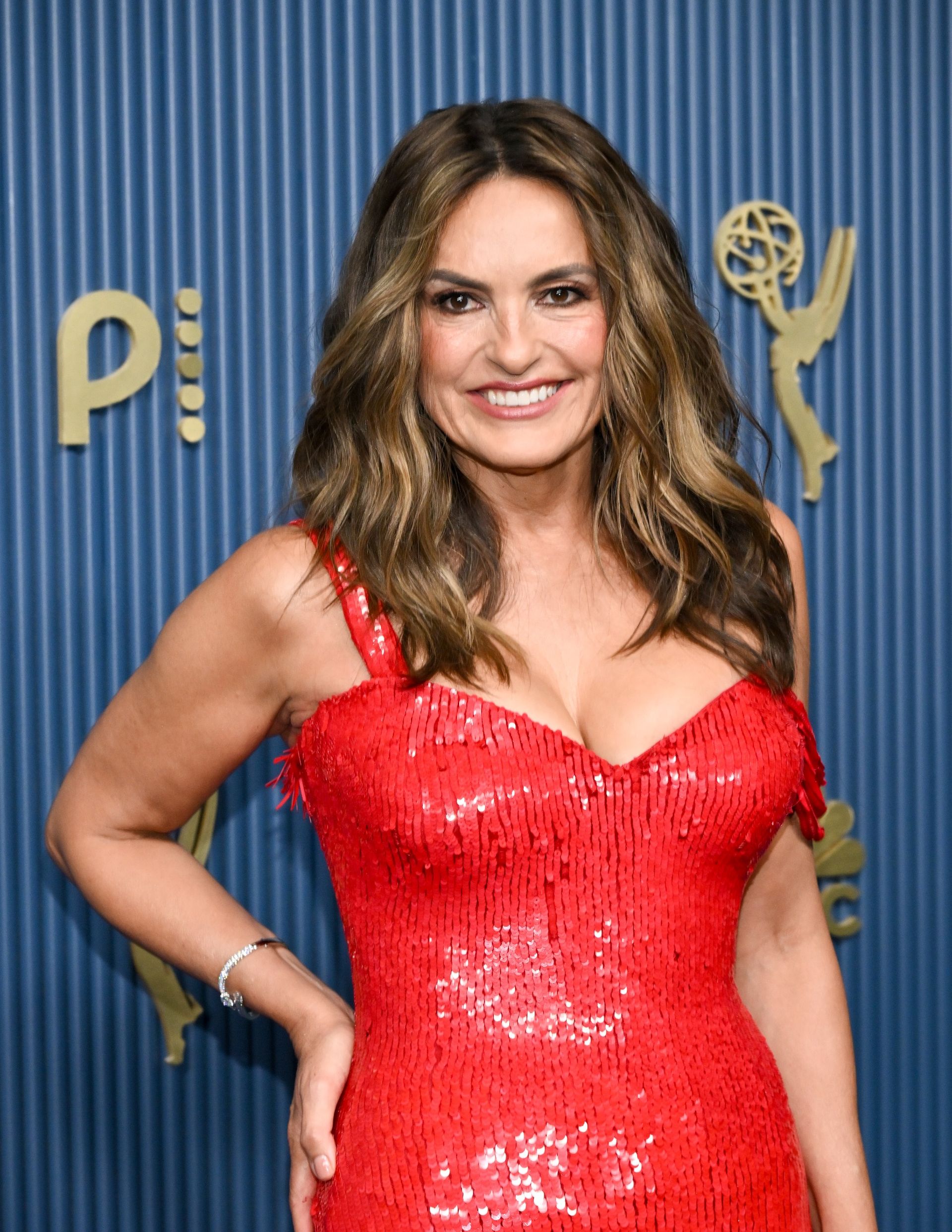
There is a particular kind of confidence that arrives when a woman stops performing for the room and simply occupies it. Mariska Hargitay's red carpet presence at the Emmys embodies this exact energy, and it is a masterclass in restraint. She has walked this carpet twelve times over the years, a veteran of the nomination circuit, yet her glow never feels rehearsed or desperate for approval. It feels like a quiet statement of self-possession, a visual reminder that true allure is not about chasing the light but about carrying your own. For our readers, the takeaway is direct: the most memorable style is not the loudest, but the most settled. It is the difference between asking for attention and simply knowing you are worth the gaze.
This is where the editorial voice of our publication finds its footing, drawing a parallel to the beauty moments we have recently covered. Just as Dakota Johnson's VMAs Look Channels Three Defining Hair Moments relied on a glossy, nineties blowout to evoke an era of understated glamour, Hargitay's look is about the weight of a single, deliberate choice. She is a lady in red, and that simplicity is the point. It is a lesson in editing, a reminder that a single strong element, a color, a cut, a mood, can carry an entire narrative. We saw this same principle at play in The 2026 VMAs Beauty Moments Outshine the Fashion, where the most compelling statements were not the most complicated, but the most intentional. Hargitay's look is not about the dress alone; it is about the woman who wears it with the ease of someone who has nothing to prove.
There is a deeper resonance here, one that speaks to the introspective confidence we champion. Hargitay's career, anchored by decades as Olivia Benson, is a testament to longevity built on substance, not noise. Her presence on the carpet is a reflection of that internal foundation. She is not a newcomer chasing a moment; she is a muse who has become the moment through sheer consistency. This is the "founder-as-muse" energy we admire, where the external presentation is simply an extension of an internal state of grace. It is not about the feature of the gown or the specific shade of red; it is about the identity it projects. For our audience, the practical application is to ask not "what should I wear?" but "who do I want to be?" The answer, as Hargitay demonstrates, is a woman who is comfortable enough to let the clothes whisper rather than shout.
As we look toward the next season of red carpets, the question is not whether boldness has a place, but whether it can be executed with this level of calm authority. Watch for the women who move like Hargitay, who understand that the camera captures more than the outfit; it captures the state of mind. The specific consequence of her approach is that it resets the standard, making the frantic, trend-chasing energy we often see feel hollow by comparison. The concrete detail to watch is her posture, the ease in her shoulders, the knowing look in her eye. That is the true accessory, and it is the only one that cannot be replicated.