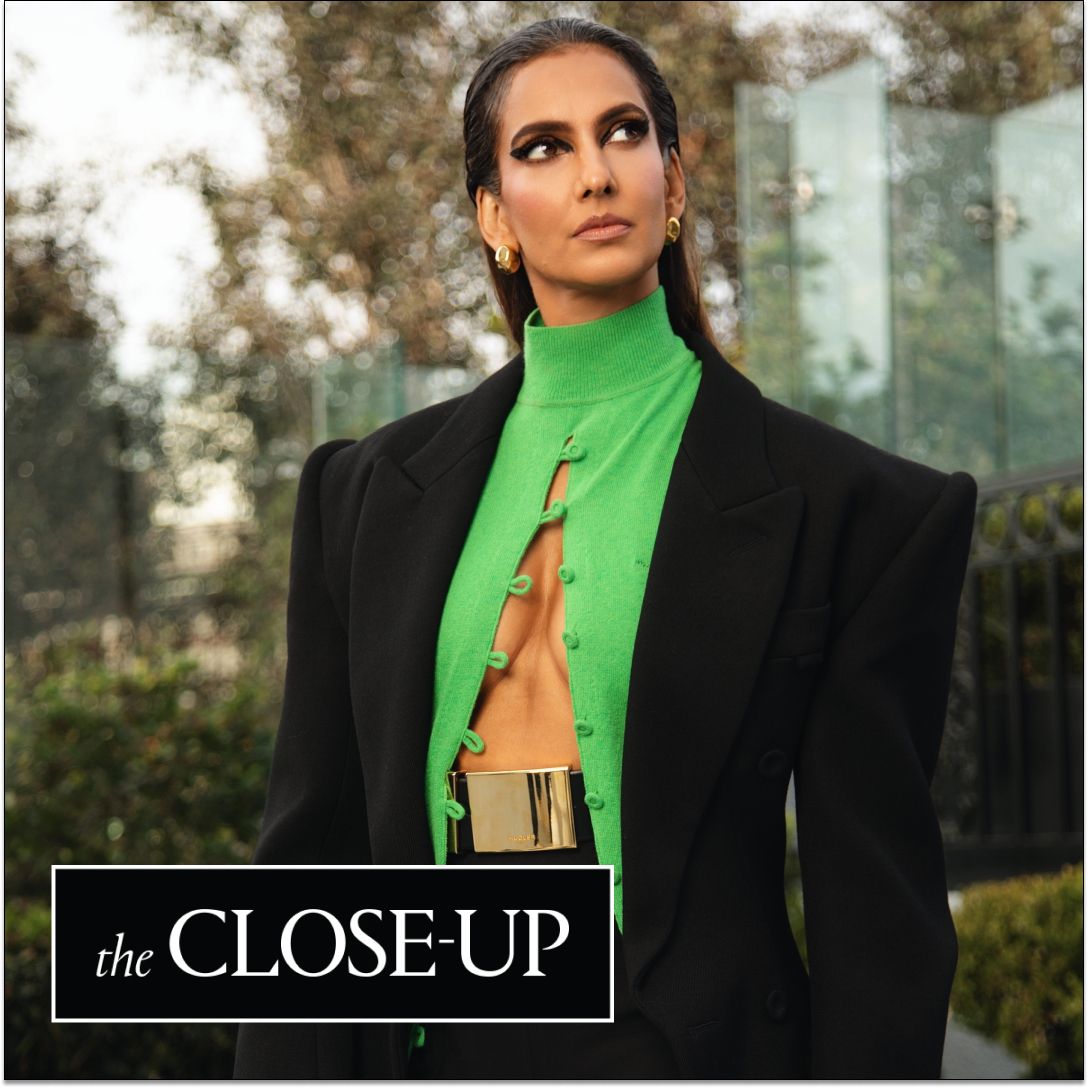
There is a specific moment in every woman's style evolution when she stops dressing for the person she was and starts dressing for the person she is becoming. Poorna Jagannathan's red carpet shift, trading her signature flowy silhouettes for the sharp, sculptural power shoulders of Mugler, feels like one of those moments. According to the feature, her wardrobe is now cleanly divided into "pre-*Deli Boys*" and "post-*Deli Boys*" eras, and that distinction is telling. This is not merely a change in fabric or cut; it is a public declaration of internal recalibration. For our readers who are navigating their own quiet reinventions, this is a masterclass in using clothing as a tool for psychological transition, not just aesthetic expression.
We are particularly drawn to the restraint of this transformation. In an era where celebrity style often screams for attention, Jagannathan's move is confident precisely because it is so deliberate. She has not adopted a uniform of aggressive trend-following; she has embraced a new language of power that feels grounded in self-assurance rather than the need for external validation. This aligns beautifully with the current conversation around The Quiet Edit: 26 Pieces Our Editors Are Wearing Now, where the focus is on investment and longevity over novelty. Similarly, her shift echoes the sentiment behind Elevated Footwear: Defining Fall's Quietly Stylish Sneaker Selection, which champions a refined, understated approach to even the most casual pieces. It is not about the logo; it is about the attitude you bring to the garment.
Our honest take is that this story is less about Mugler's tailoring and more about the liberation of shedding a former self. For the woman reading this, the takeaway is not that you need a new designer. It is that you have permission to let your external presentation catch up to your internal growth. How often do we hold onto a certain aesthetic because it feels safe, or because it is what people expect? Jagannathan's evolution is a reminder that style is a living, breathing thing, and it should change as you do. If you are feeling the pull toward a more structured, confident version of yourself, we would tell you to listen to that. Start with one sharp-shouldered blazer, or a single column of black. See how it makes you stand a little taller. See how it changes the way you walk into a room.
What we will be watching for is how this new silhouette translates beyond the red carpet, into her everyday life and future roles. Will the power shoulder become a recurring character in her style narrative, or was it a specific mood for a specific moment? The most compelling question, however, is what comes next. She has proven she can make a statement. The more interesting challenge is maintaining that sense of bold clarity when the cameras are off. That is where true style lives, and we suspect that is a chapter worth waiting for.