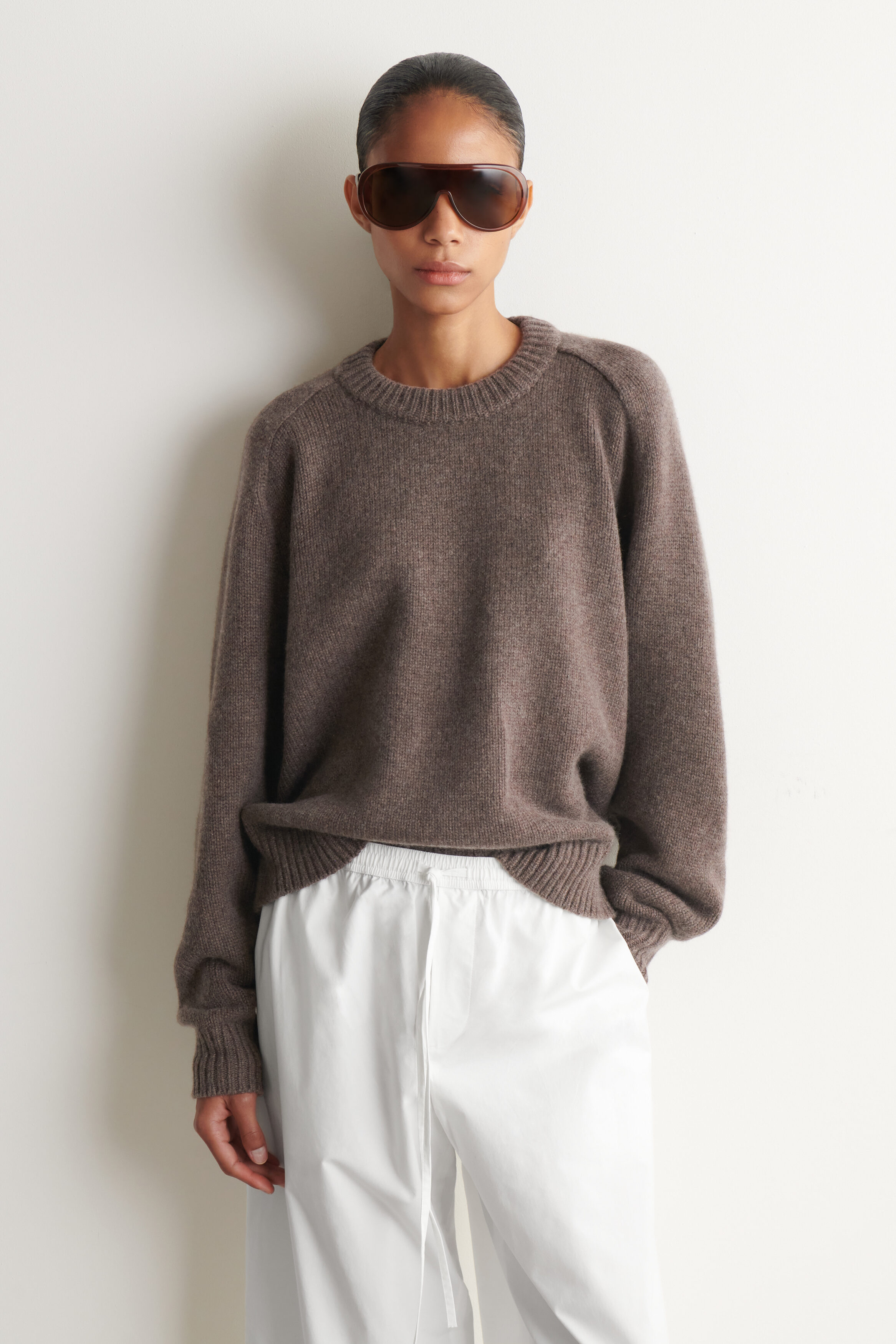
There is a particular kind of confidence that arrives when a woman knows exactly where to spend her money. Not in the sense of splurging, but in the quiet discernment of choosing pieces that whisper rather than shout. Autumn, with its promise of layering and structure, has always been the season for this sort of considered dressing. The article's focus on Zara, COS, and Reformation as the arbiters of this refined aesthetic feels almost subversively correct. These are not labels that demand attention; they are the ones that reward the woman who wears them with an innate sense of self. It is the same energy found in Sculpted Silhouettes: Victoria Beckham’s Fall Collection Finds Quiet Strength, where tailoring becomes a form of personal armor, not for show, but for the profound comfort of feeling entirely oneself.
We often mistake luxury for ornament, but true quiet luxury is an internal state projected outward. It is the absence of a visible logo, replaced by the presence of a perfect shoulder line or a fabric that falls with an ease that cannot be forced. This is why The Row-coded finds resonate so deeply; they are not about mimicking a designer's label, but about adopting a philosophy. It is a philosophy that prioritizes the feeling of a garment on the skin over the reaction it might elicit from a stranger. This is the standard we hold our own wardrobes to, and it is refreshing to see the high street rise to meet it. For our reader, the takeaway is simple and liberating: you do not need a four-figure budget to buy into the ideology of restraint. You need a sharp eye and a willingness to edit. The same editorial lens that captures the emerging style notes in Madrid’s Quiet Confidence: Emerging Style Notes for Considered Dressing applies here; it is about the attitude, not the price tag.
What we appreciate most about this particular edit is its lack of desperation. There is no frantic chasing of a trend, no loud prints demanding a narrative. Instead, there is a curated calm. The pieces selected are the ones you will reach for on a Sunday morning and wear through a boardroom presentation without a second thought. They are the building blocks of a personal uniform, which is the ultimate expression of self-awareness. It is a form of dressing that aligns with the idea that less is never really less, but rather, more deliberate. The practical advice we would offer a reader who asks about this story is to resist the urge to buy the whole look. Buy the feeling. Invest in one exceptional piece, perhaps a beautifully cut trouser or a heavy-weight cotton shirt, and let it anchor your week. The magic is not in the acquisition, but in the discernment.
The real question we are left with is not *what* to buy, but *how* we want to feel when we wear it. This story confirms that the most expensive thing you can wear is your own self-assurance, and thankfully, it is also the most accessible. We would tell you to watch for how this quiet confidence influences not just your outer layers, but your inner dialogue. The detail to watch for is the shift in your own perception; when you stop dressing for the audience and start dressing for the muse within, you have truly mastered the art of the quietly chic. That is the only luxury that matters.