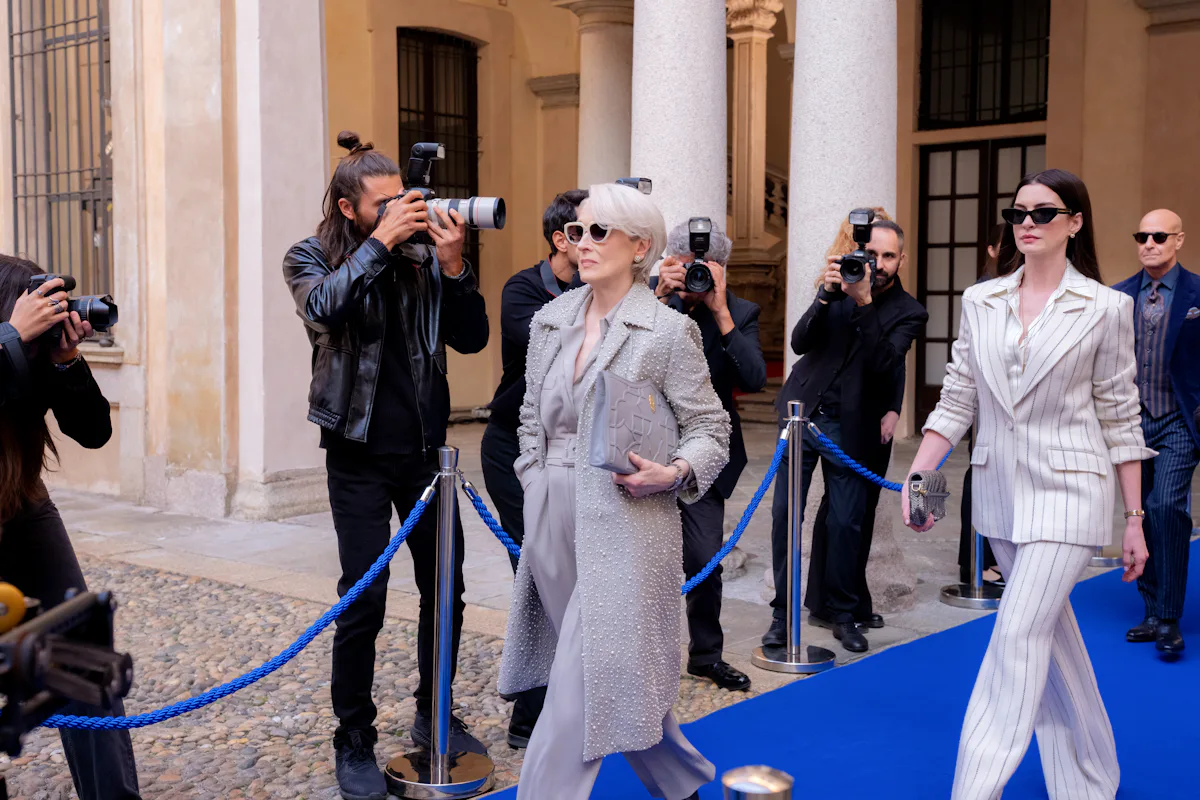
In the world of fashion, the role of a costume designer often transcends mere garment selection; it embodies the spirit and evolution of characters onscreen. Molly Rogers, who has stepped into the spotlight with her recent work on *The Devil Wears Prada 2*, exemplifies this transformative power of fashion in film. Having honed her craft under the legendary Patricia Fields on *Sex and the City* and the original *The Devil Wears Prada*, Rogers’ ascent to creative control marks a significant moment in her career and the industry at large. As she discusses her journey and her new collaboration with Macy's, her insights are not just about the clothes but about the narratives they weave. For more on the relationship between fashion and character development, check out Meryl Streep's Stylist Micaela Erlanger Talks Method Dressing For 'The Devil Wears Prada 2', where the importance of authenticity in styling is explored.
Rogers' approach to costume design is a harmonious blend of artistry and intention, reflecting a deep understanding of how visual aesthetics can amplify storytelling. In *The Devil Wears Prada 2*, she embraces the essence of each character while interlacing contemporary trends that resonate with today’s audience. This delicate balance of homage and modernity is crucial, especially in a sequel that carries the weight of its predecessor's legacy. As seen in the *The Devil Wears Prada 2* Press Tour Is In Full Swing, where Anne Hathaway and Meryl Streep showcased their sartorial elegance, the fashion choices made by Rogers are not merely about visual appeal; they serve as extensions of the characters' growth and journeys.
The significance of Rogers' work lies in how it cultivates a deeper connection between the audience and the film. Fashion is inherently an expression of identity, and in crafting the wardrobes for *The Devil Wears Prada 2*, Rogers has created a canvas that speaks to the evolution of personal style and empowerment. The costumes mirror the characters' internal transformations, allowing viewers to engage with their narratives on a more intimate level. As we reflect on the impact of these design choices, it is essential to recognize the role of costume design as a form of storytelling that invites audiences to not only witness but feel the story unfolding before them.
Looking ahead, the fashion landscape within film will continue to evolve, as will the voices of visionary designers like Molly Rogers. As she forges new collaborations and expands her creative horizons, it raises a compelling question: how will the next generation of costume designers further push the boundaries of storytelling through fashion? The intersection of style and narrative is rich with potential, and as audiences, we are invited to witness this unfolding dialogue. The world of costume design is not just a backdrop to the narrative but a vital component in how we understand and connect with the characters we adore. As we anticipate the future of fashion in cinema, let us remain attuned to the stories that are yet to be told through the art of costume design.