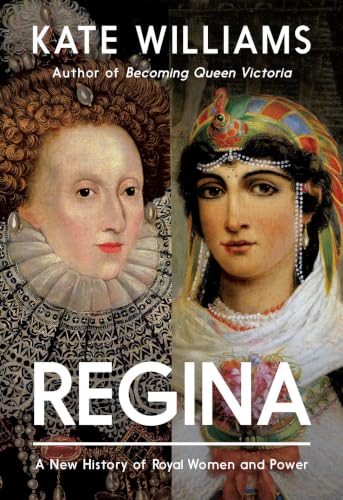
There is a quiet authority in knowing exactly what to reveal and what to withhold, and royal women have understood this long before the modern muse made a career of it. In her new book *Regina: A New History of Women and Power*, historian Kate Williams traces how figures from Cleopatra to Princess Diana strategically shaped their public images to command influence, and her analysis of Queen Elizabeth II as the undisputed master of brand-building resonates deeply with the way we think about presence today. This is not about spectacle for its own sake, it is the same intentional curation we see in Alex Prager frames distorted identities for Maison Margiela and Gentle Monster, where every frame and gesture is a deliberate choice. The late Queen understood that perception is as real as fact when you are a woman operating within a system that expects you to be seen but not heard.
What Williams makes plain is that the most effective female monarchs did not fight the constraints of their eras; they worked within them, turning limitation into leverage. Queen Victoria used portraiture to project domestic contentment, while Elizabeth I styled herself as a secular Virgin Mary. But Elizabeth II's genius was quieter still. She weaponised silence and service, making duty her defining image during a post-war period that demanded women return to the home. Her coronation, the first ever televised, was a deliberate exercise in magic, a golden fairy tale broadcast to a nation still recovering from rationing and poverty. This is the same instinct we observe in Two Muses Step Into Prada's Quiet Holiday Dream, where atmosphere and restraint do the heavy lifting. The Queen did not need to shout her authority; she let the Gold State Coach and the Imperial State crown speak for her, and in doing so, she built a brand of monarchy that endured for seventy years.
For our readers, the takeaway is unmistakable: quiet power is not passive. It is a deliberate, disciplined practice of knowing what to show and when to stay silent. Williams notes that male monarchs can display different facets of personality freely, but a female ruler must filter every public moment through what society deems acceptable. Queen Elizabeth II turned that filter into a political tool, and her judicious silence became an extraordinary weapon. This is not a relic of the past, it is the same calculus that defines the royal insider reveals the monarchy's quiet new magnetism, where a single asset is reshaping the institution's appeal. The lesson is concrete: when you curate your image with intention, you do not diminish your power, you concentrate it.
The specific consequence to watch is how this legacy informs the next generation. If Elizabeth II mastered television, and Diana understood the press, what medium will the current royal women use to project their own version of quiet authority? The tools change, but the principle remains: a woman's image, when wielded with precision, is never just decoration. It is strategy.