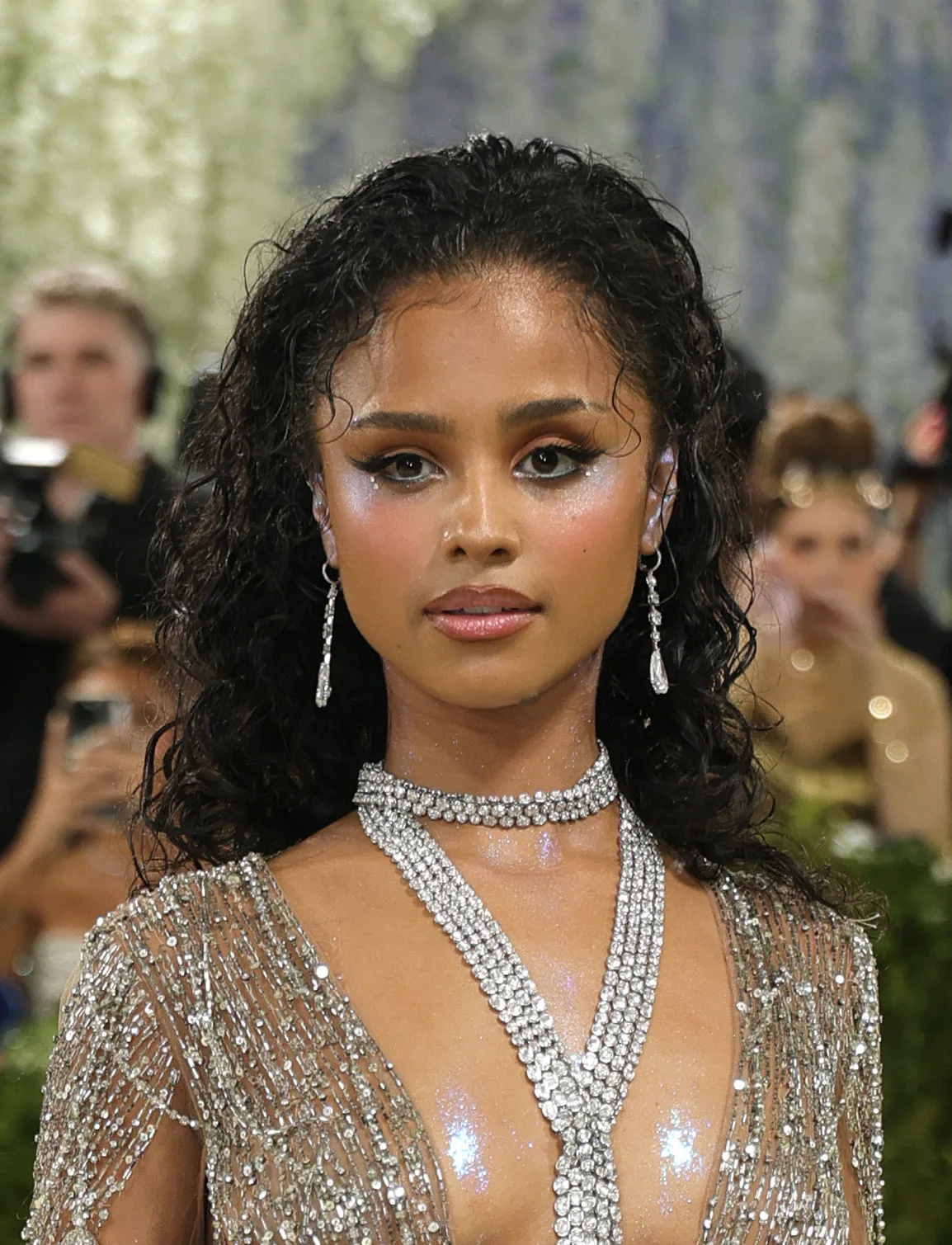
The Met Gala never ceases to be a laboratory for high‑concept beauty, and this year Tyla’s “wet‑look” makeup offered a masterclass in translating runway narrative into skin‑deep storytelling. As the South African singer stepped onto the red carpet in a cascading Valentino gown, the glossy sheen of her complexion echoed the blue‑toned ripples that ran along the train’s hem. The effect was not merely a surface gloss; it was a deliberate conversation between fabric and face, a visual echo that amplified the collection’s aquatic inspiration. In the same spirit, her earlier “Slept‑In” smoky eye at Valentino was praised for its ethereal, spring‑kissed vibe, while the current wet‑look pushes the envelope further, turning hydration into high drama. The seamless link between these moments underscores Tyla’s evolving aesthetic—one that balances effortless glow with precise, avant‑garde execution.
What makes this look particularly resonant is its quiet confidence. The wet‑look is not a flash‑in‑the‑pan trend but a subtle re‑imagining of the perennial “dewy” finish that has dominated summer beauty for years. By intensifying the reflective quality of the skin, Tyla’s team—led by makeup artist Esther Edeme—creates a tactile illusion of moisture that feels both intimate and expansive. The choice to align the makeup with the dress’s chromatic accents demonstrates an aspirational yet grounded approach: luxury is implied through harmony rather than overt sparkle. This restraint speaks to a broader shift in high‑fashion beauty, where the power of a look lies in its cohesion with the surrounding narrative, not in isolated excess. For followers who crave a refined aesthetic without the noise of over‑embellishment, this serves as a blueprint for achieving runway polish in everyday life.
From an editorial perspective, the wet‑look also signals a deeper cultural moment. In an era where wellness and self‑care are woven into the fabric of beauty, the emphasis on “glowing, hydrated skin” transcends mere visual appeal; it becomes a metaphor for inner vitality. The makeup’s shimmering surface mirrors the modern feminine ideal of softness paired with strength—an understated power that radiates rather than shouts. By opting for a look that feels almost tactile, Tyla invites us to consider how our own skin can be a canvas for storytelling, a place where mood, freedom, and confidence converge. This aligns with the current dialogue around beauty as an extension of personal narrative, where the act of applying makeup is an intimate, introspective ritual rather than a performance.
Looking ahead, the wet‑look may well become a seasonal staple, but its true legacy will be measured by how it influences the dialogue between fashion and beauty. Will designers continue to craft garments that inspire complementary skin finishes, or will the trend inspire a new wave of makeup artists to experiment with reflective textures that blur the line between fabric and flesh? As we watch the next wave of runway shows and red‑carpet events, the question remains: can the quiet luxury of a dewy, almost liquid complexion sustain its momentum without becoming another fleeting fad? The answer will shape not only the aesthetics of summer 2026 but also the way we conceive beauty as an intimate, intentional extension of self.