There is a quiet dignity in taking control of your financial life, and it has nothing to do with deprivation or spreadsheets that shame you for buying a latte. The seven books in this roundup understand something that the louder corners of personal finance often miss: money anxiety is rarely about the numbers themselves. It is about the story we tell ourselves about scarcity, worth, and the future. We appreciate this list precisely because it refuses to treat finances as a moral test. Instead, it offers a toolkit for realignment, a way to rebuild a routine that feels intentional rather than punishing, much like the quiet shift we see in A Quiet Shift in Manicure Mood for the Refined Season or the purposeful clarity of The Foundations Makeup Artists Use for Clear, Celebrity Skin. The same principle applies: refinement comes from knowing what works for you, not from following a rigid formula.
What makes this collection feel so aligned with a calm, feminine approach to life is the emphasis on relationship over rulebook. Tiffany Aliche's *Get Good With Money* frames financial health as a practice rooted in honesty, she shares her own experience with scams and debt not to elicit pity, but to normalize the messy start that so many of us face. Ellyce Fulmore's *Keeping Finance Personal* goes further, acknowledging that a queer, neurodivergent brain will not thrive on advice written for a neurotypical man in his forties. This is not about lowering standards; it is about building a system that actually supports your reality. Morgan Housel's *The Psychology of Money* cuts straight to the emotional core, bypassing tactics entirely to ask why we feel shame around our decisions. For anyone who has ever felt that their financial life is a reflection of their worth, that book is a quiet exhale.
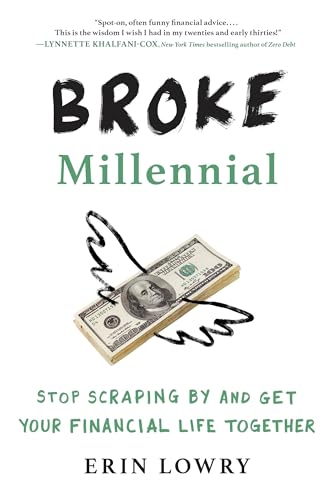
The practical takeaway here is simple but often elusive: start with the book that matches your emotional entry point, not the one that promises the highest return on investment. If systemic inequality has left you skeptical of the entire personal finance industry, *Fixed* by John Y. Campbell and Tarun Ramadorai offers policy-level perspective without dismissing your frustration. If you are blending a household with a partner, Ramit Sethi's *Money for Couples* is less about budgeting and more about communication, a skill that carries far more weight than any percentage allocation. And for the complete beginner who never learned the basics, Erin Lowry's *Broke Millennial* remains a decade later the kind of gentle primer that treats financial literacy as a birthright, not a luxury.
We end on a specific observation: the most powerful thread running through these seven titles is permission. Permission to start late, to have debt, to feel anxious, to build a financial practice that looks nothing like your mother's or your neighbor's. The realignment this list offers is not about earning more or cutting more, it is about quieting the noise so you can hear what you actually need. That is the kind of luxury that no purchase can buy, and the only routine worth refreshing.