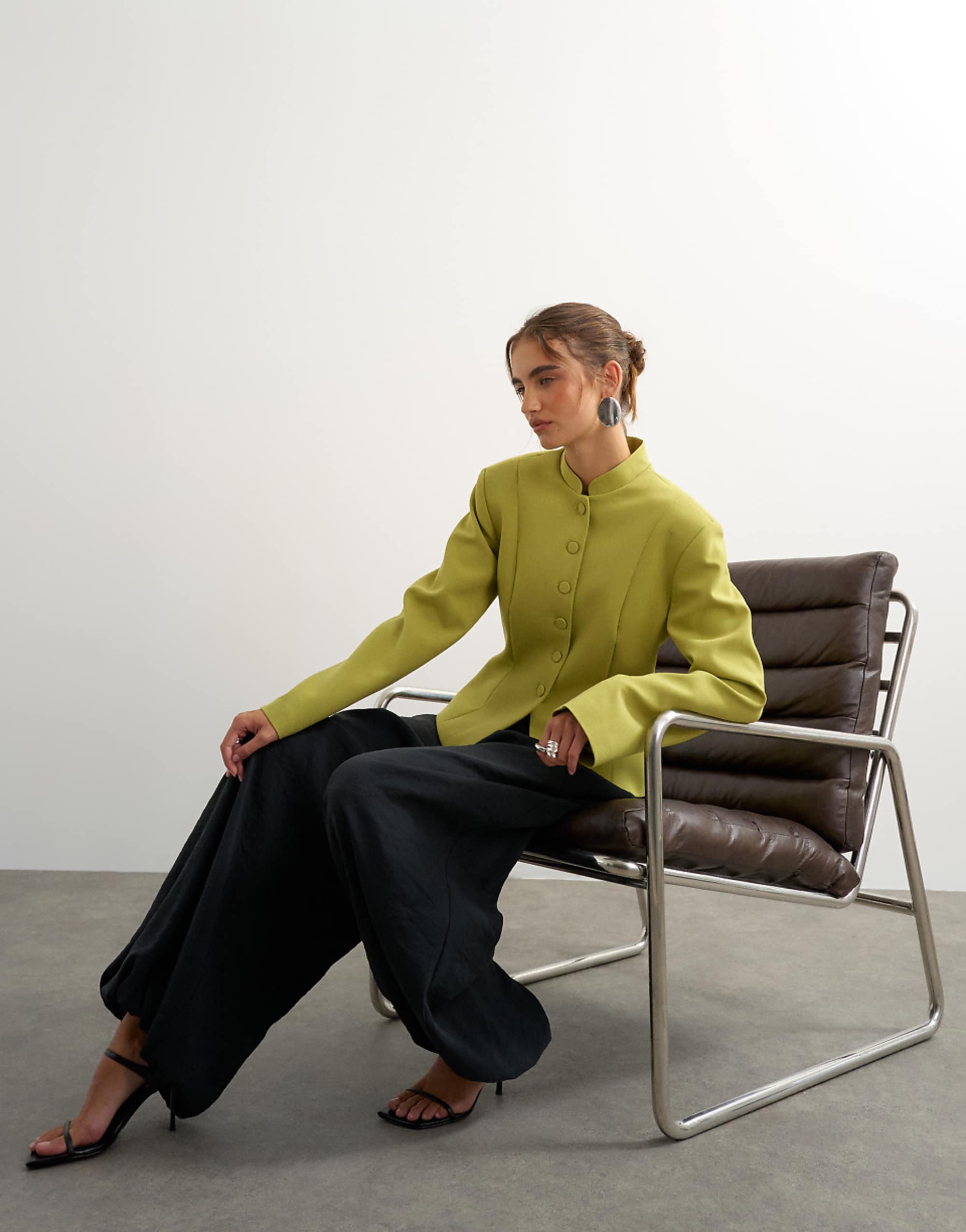
There is a particular irony in dressing for the season of decay. The world outside performs its most dramatic act, a spectacle of burnt umber and amber, while our instinct is to fold inward, to simplify, to retreat into a uniform of familiar neutrals. This piece on the seven hues of an autumn wardrobe speaks to that tension, but it refuses the lazy path of monotony. It suggests that our autumnal retreat from color is not a surrender but a form of curation, a deliberate narrowing of the lens so that what remains carries more weight. This is not about hiding; it is about choosing what to let speak.
The article's premise, that a wardrobe refresh can be an act of quiet intention, resonates because it aligns with a broader cultural mood. We are tired of noise, of the performative excess that defined previous seasons. This is a slower, more considered approach, one that echoes the sentiment found in The Ritual of an Effortless Face, Guided by Intuition, where the focus is on process over product, on the feeling a routine evokes rather than the result it achieves. Similarly, this palette is not about the individual shades themselves, but the atmosphere they create. It is a shift from looking at clothes as costumes to seeing them as extensions of an internal state. For our reader, this is the invitation: to stop treating your closet as a stage and start treating it as a sanctuary. The practical takeaway is not to rush out and buy these seven specific colors, but to audit your current pieces against this emotional register. Ask not "Is this trendy?" but "Does this quiet my mind or agitate it?"
What is most compelling here is the implicit rejection of the fashion cycle's frantic pace. This is not a trend report in the traditional sense; it is a meditation on consistency. It reminds us that style, at its most powerful, is a tool for self-connection, not a performance for others. This idea of rewriting your own narrative through personal style is a thread we see elsewhere, such as in Act III: Megan Thee Stallion Rewrites Her Own Timeline, where the artist takes control of her own story on her own terms. While the contexts could not be more different, the underlying principle is the same: true authority comes from internal alignment, not external validation. When you dress from a place of calm certainty, you are not following a rulebook; you are writing your own. The palette becomes a language for that inner authority, a way of saying more by showing less.
So, what do we tell a reader who asks about this? We tell her that this is permission to find beauty in restraint. The consequence of this approach is not a boring wardrobe, but a more potent one. Every piece you own must earn its place by contributing to a cohesive narrative of self. The specific detail to watch is how this palette interacts with texture, because when you strip away color, the tactile becomes paramount. A chunky knit in a muted olive, a sleek leather in deep chocolate, a fluid silk in cream; these are the elements that will give the look its quiet luxury. The concrete point to hold onto is this: the most intentional thing you can wear this season is not a particular shade, but the clarity of your own choices. Let the leaves outside be loud; your wardrobe can be the whisper that follows.