There is something quietly radical about a woman who refuses to be likable, and the literary canon has always known it. With Netflix's *East of Eden* reintroducing Cathy Ames to a generation raised on redemption arcs, we find ourselves revisiting a truth that never needed updating: women have always behaved badly, and thank goodness for that. Zoe Kazan's miniseries reframes Steinbeck's notorious antiheroine not as a monster but as a woman misunderstood, a lens that feels both timely and overdue. We explored this recalibration in our piece on Netflix's East of Eden Recasts a Villain as a Woman Misunderstood, and it is this same complexity that binds the sixteen novels we have gathered here. These are not cautionary tales. They are portraits of women who refuse to be contained, and they demand a reader willing to sit in the discomfort of their choices.
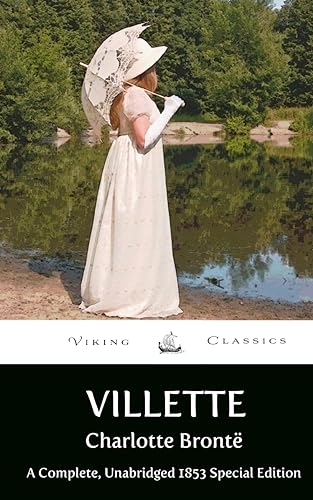
What unites Lucy Snowe's quiet defiance in *Villette* and Maria Wyeth's unraveling on the Los Angeles highways in *Play It As It Lays* is not a shared plot but a shared interiority. These women are not striving for our approval. Edna Pontellier in *The Awakening* takes up painting and lets everyone assume she has fallen ill, because the alternative, staying home and being a mother, is a kind of death. Lily Bart in *The House of Mirth* navigates the gilded snare of 1920s New York with a sophistication that makes her downfall all the more devastating. And then there is Joana in Clarice Lispector's *Near to the Wild Heart*, whose interior monologue shaped at twenty-three earned its author the nickname "Hurricane Clarice" for good reason. These are not heroines we are meant to save. They are women we are meant to witness, and in witnessing, recognize parts of ourselves we rarely name aloud.
There is a particular pleasure, too, in the novels that refuse moral instruction altogether. Jessie Redmon Fauset called *Plum Bun* a "novel without morals," and it is precisely that freedom, to let a light-skinned Black woman choose passing as white in pursuit of her art, while her sister stays rooted in Philadelphia, that makes the book feel as urgent now as it did in 1928. Shirley Jackson's *We Have Always Lived in the Castle* offers witchcraft and arsenic-laced sugar as a kind of sisterly sanctuary, while Dorothy Baker's *Cassandra at the Wedding* (soon to be adapted by Florence Pugh herself) gives us a lesbian grad student so determined to sabotage her twin's wedding that the novel becomes a study in devotion disguised as destruction. These are characters who unsettle not because they are villains, but because they refuse to apologize for wanting what they want.
For the woman who craves Brontë but needs something darker, sharper, and less forgiving, this list is an invitation to read with intention. The specific takeaway is this: the next time you find yourself drawn to a flawed female character, resist the impulse to explain her away or justify her choices. Let her remain complicated. Let her be the woman who dyes her hair blonde in a cheap Paris hotel room, who practices witchcraft on a family estate, who drives the freeway until she forgets why she started. As Florence Pugh's diamond manicure reminded us in our coverage of Florence Pugh's Diamond Manicure Refines the Art of Quiet Opulence, refinement is not about erasure. It is about knowing exactly what you are choosing to wear, on your nails, on your bookshelf, or in the privacy of your own story. These novels ask only that you show up without judgment. The rest is between you and the page.