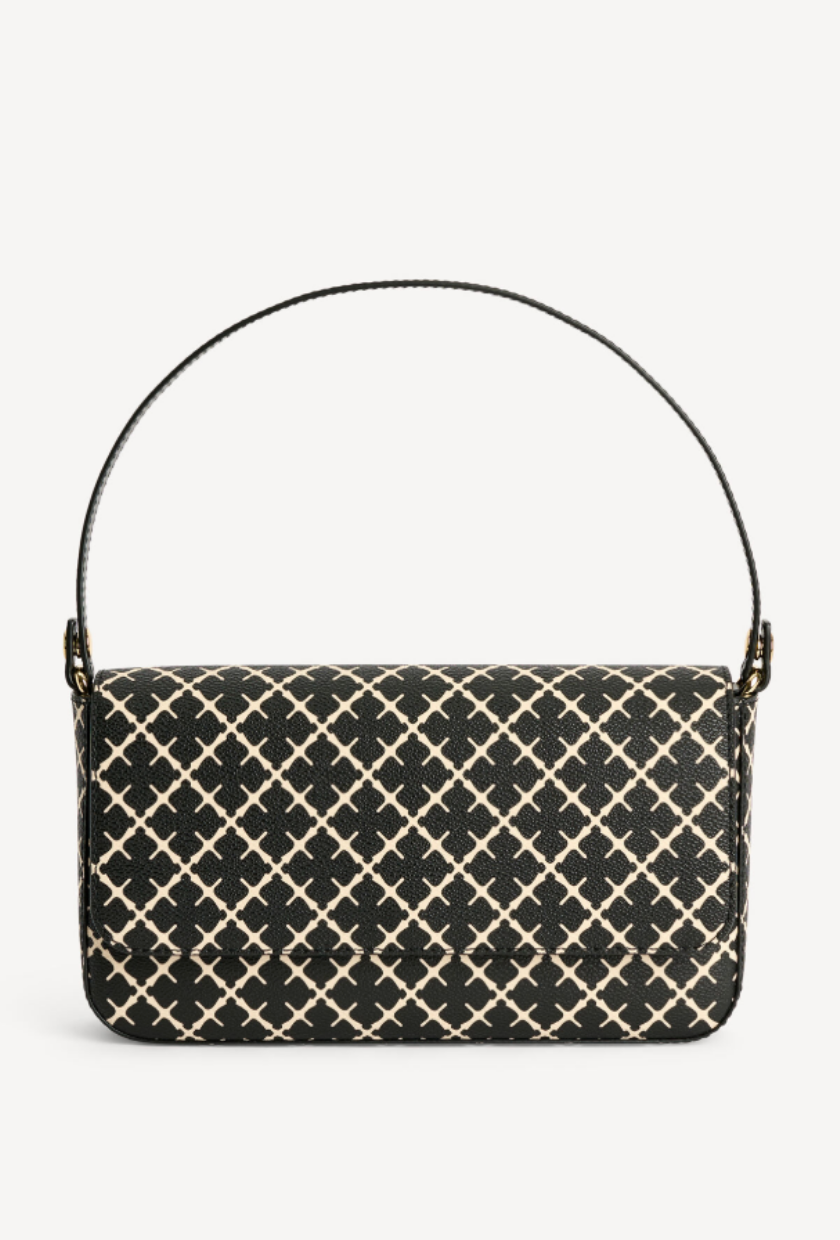
There is a particular kind of confidence that doesn't need to raise its voice, and that is the energy surrounding the return of logo-driven style. The article frames this not as a revival of the loud, head-to-toe logomania we have seen in past decades, but as something far more deliberate. It is the difference between announcing your presence and simply being noticed. For our readers, this is not about owning a status symbol; it is about wearing a piece of your own narrative. This quieter approach feels less like a trend and more like a personal language, one that aligns with the way we already think about dressing: as an extension of how we feel, not a costume for who we want to impress. It is a subtle shift, but a profound one, and it changes the way we interact with the pieces we choose to live in.
This perspective feels like a natural evolution of the conversations we have been having about personal style. It is the same instinct that draws us to a single, perfect bag that anchors an entire look, much like the one Katie Holmes's Milan Look Finds Quiet Perfection in a Single Bag demonstrates, where a monogram becomes a familiar signature rather than a shout. It is also reflected in the curated approach of The Quiet Edit: 26 Pieces Our Editors Are Wearing Now, which focuses on pieces that carry weight through their quality and intention rather than their volume. We are seeing a generation of women who understand that a logo, when applied with restraint, can act as a subtle nod of recognition. It is a wink between the wearer and the observer, a shared understanding that you are part of a certain world without having to explain it. This is not about being flashy; it is about being in on the secret.
Our take is that this movement is less about the return of branding and more about the return of discernment. The practical takeaway here is to look for logos that are integrated into the design, not placed on top of it. A small emblem on a leather good, a subtle pattern woven into a fabric, or a discreet metal detail on a shoe, these are the markers of the new logomania. It feels less like a tribute to a house and more like a tribute to your own taste. We would tell a reader who is curious about this trend to stop worrying about whether a piece is "on brand" and start asking if it feels like *them*. The most compelling style is always the one that feels self-possessed, and a logo, when chosen with intention, can be a part of that. It is a detail that speaks to your understanding of quality and your comfort with your own choices. Just as we look for the perfect sneaker in Elevated Footwear: Defining Fall's Quietly Stylish Sneaker Selection, the quiet return of the logo asks us to consider what makes something feel right, not just recognizable.
The real question this raises is about the nature of aspiration in a world that is increasingly saturated. When everyone has access to the same images and the same brands, the differentiator becomes how you wear them. It is not about the logo itself, but the context in which you place it. The most compelling detail to watch is not the size of the branding, but the confidence with which it is worn. The women who will define this moment are those who treat their clothes as a form of self-expression, not as a billboard. They are comfortable in their own skin, and the logo merely becomes an accent to that comfort. So, the next time you reach for a piece with a label, ask yourself if you are wearing it, or if it is wearing you. The answer to that question will tell you everything you need to know about whether you have truly mastered the art of the subtle statement.