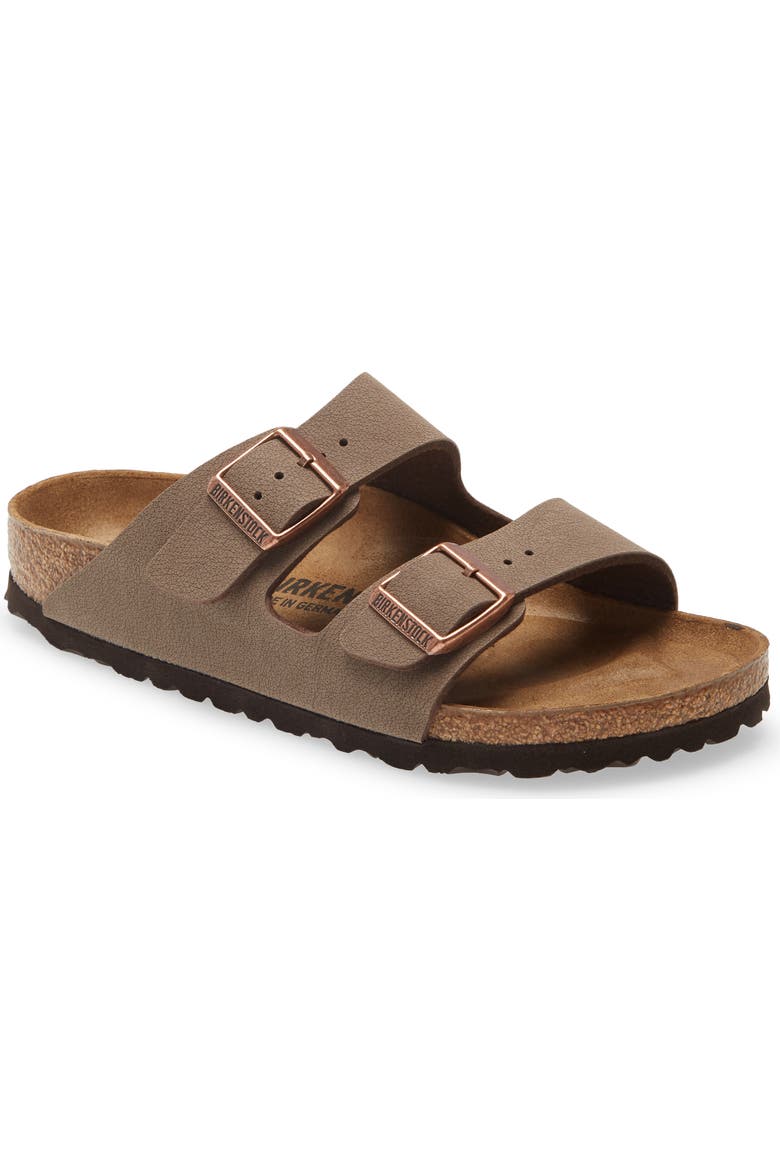
There is something quietly radical about the $115 flat shoe that New York's most stylish women refuse to stop wearing with jeans. The Birkenstock Arizona sandal has survived the trend cycle not because it shouts, but because it refuses to. Year after year, the same debate resurfaces, are they in or out?, and year after year, the answer from those who truly understand effortless style is a simple, unbothered yes. This is not a revival or a comeback; it is a continuation. And for our readers who value pieces that hold their ground, that is precisely the point.
The Arizona sits in a category that fashion often struggles to define: it is neither trendy nor timeless in the conventional sense. It is simply *right*. Worn by Ashley Olsen, Kendall Jenner, Kaia Gerber, and Gigi Hadid, the sandal has become a quiet uniform for women who move through the world with intention rather than performance. There is a through line here that connects to what we have observed elsewhere, Parisians know the jean companion color that quiet luxury whispers, and it is the same instinct that reaches for a shoe under $120 that never feels like a compromise. This is not about price point alone; it is about the confidence to choose something that serves your life rather than your feed.
What makes the Arizona endure is not its design alone, but the emotional space it occupies. It is a shoe that asks nothing of you. You do not break it in; it breaks into your rotation. You do not style it; it styles itself. For the woman who wears it with jeans, it signals a refusal to overcomplicate. That same refusal appears in Jennifer Lawrence stepping into quiet authority with khaki, a shared understanding that the most commanding presence often comes from the most restrained choices. The Birkenstock does not compete for attention. It simply exists, and that existence is enough.
The practical takeaway for our reader is this: stop asking if something is fashionable and start asking if it earns its place in your life. The Arizona has earned its place for over fifty years. It costs $115. It works with jeans, with dresses, with the kind of wardrobe that prioritizes ease over effort. The question is not whether the trend cycle will turn on it again, it will, and it already has, many times. The question is whether you trust your own eye enough to keep wearing it anyway.