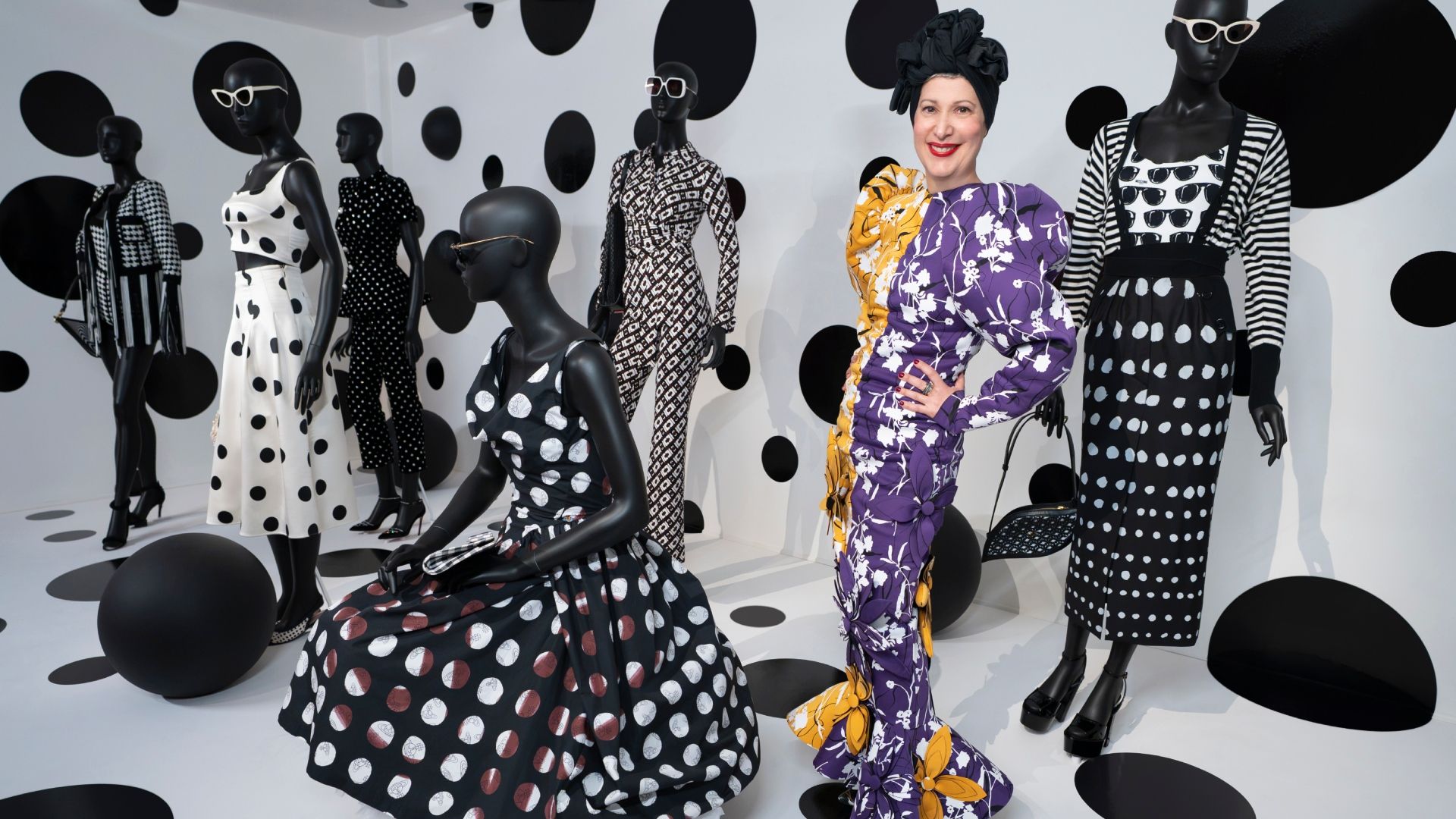
Fashion's most enduring power move is not being right, it is being defiant, and Marylin Fitoussi understood that long before a single red beret hit the cobblestones. The SCAD FASH Museum exhibition of *Emily in Paris* costumes confirms what those of us who never mistook conformity for elegance already suspected: the clothes that divided critics were never about taste; they were about permission. Permission to be joyful, to be wrong in public, to let a gingham shorts suit say what a trench coat never could. In a cultural moment that often rewards safe minimalism, Fitoussi's refusal to edit herself feels less like a wardrobe choice and more like a philosophy. It echoes what we saw in The Peekaboo Bra Emerges as Red Carpet Refinement, the idea that intimacy and exposure can be wielded with precision, not apology. Both stories remind us that confidence is not about blending in; it is about knowing exactly what you are doing and letting the world catch up.
What makes Fitoussi's story quietly radical is that she never needed the museum validation to keep going. She kept the beret when the French hated it. She kept the clashing prints when the style arbiters winced. She kept the impractical heels because Emily Cooper was never meant to be practical, she was meant to be a declaration. The designer's admission that she spent seasons collecting pieces for a single Miu Miu coat, waiting for the right velvet socks to "tie everything together," reveals something essential about the creative process: good style is often patient. It does not rush to be understood. This is the same patient confidence we saw in Fashion transforms when the familiar faces disappear, where absence itself became a kind of statement. Fitoussi's work argues that a wardrobe can be both a love letter and a refusal to apologize, and that these are not contradictory impulses.
The most instructive detail, however, is not the exhibition itself but what came before it. Lily Collins refused the offer to dress like Sylvie. She chose to remain the fish out of water. That single decision, to stay uncomfortable, to stay visible, is what turned a Netflix series into a cultural phenomenon and what eventually landed those costumes behind glass. For anyone building a creative identity, the takeaway is bracingly specific: do not abandon the thing that makes you look naive or loud or too much, because that is precisely the thing that will become your signature. The beret that critics sneered at is now a tourist uniform. The coat that took three seasons to style is an exhibition highlight. Fitoussi's museum moment is not a victory lap; it is a quiet confirmation that the people who laughed were never the ones who mattered. The only question worth asking is whether you will still be wearing your version of the red beret when the laughter finally stops.