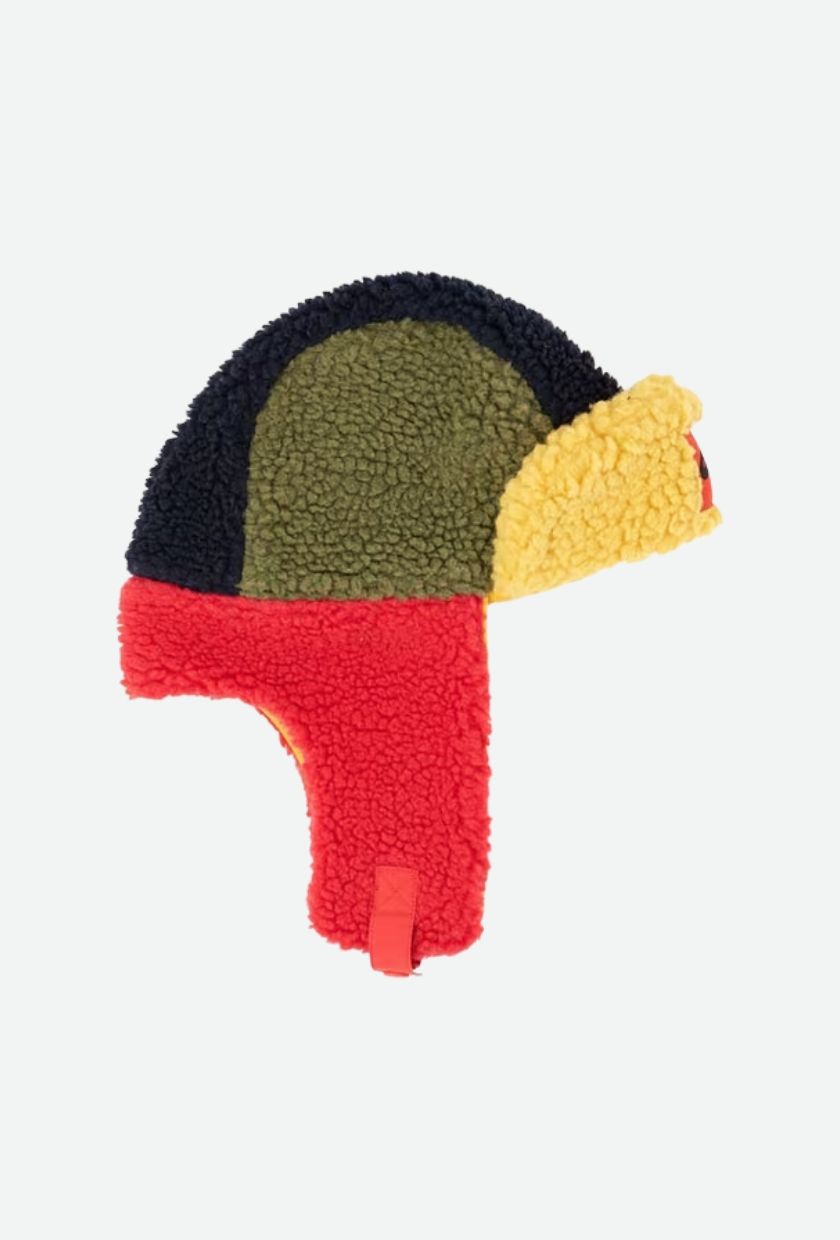
There is something quietly subversive about a children's gift guide that refuses to include a single blinking, battery-operated plastic toy. This edit, curated for the most discerning little ones, makes a clear statement: the objects we give children are not mere distractions but the first artifacts of a world they will learn to inhabit. We have long argued that refinement begins early, and this collection proves that a child's playroom can possess the same intentionality as a well-edited wardrobe, much like the quiet authority we explored in The Quiet Authority of Accessories That Elevate Winter's Essentials, where the right piece transforms an entire look. Here, the principle applies to a Le Toy Van doll's house, a Maileg castle, or a pair of Donsje leather boots: these are not toys that shout, but objects that invite.
What distinguishes this guide is its refusal to condescend. The Toniebox Story Set, the Yoto Player, and the Samriddhi alphabet wall hanging treat a child's mind as worthy of thoughtful design, not merely bright colors and noise. The inclusion of Roald Dahl's *The BFG* in a clothbound edition and Tove Jansson's *A Year in the Moominhouse* signals that the aesthetic pleasure of a book matters as much as its story. This is quiet luxury for the youngest generation, a sensibility that mirrors the refined essentials we celebrated in The Quiet Allure of Winter's Most Refined Essentials, where the emphasis fell on enduring quality over seasonal novelty. A Stella McCartney striped cotton jacket, a Birkenstock shearling Boston for small feet, and a Konges Sløjd teddy jacket are not disposable; they are heirlooms in waiting.
The practical takeaway here is clear: the most lasting gift you can give a child is the permission to develop their own taste. A Jellycat Larry Lobster, a Sylvanian Families home, or a PlanToys DJ mixer board each offers a narrative, not a preset one. They ask the child to complete the story. For the adult shopping, the pleasure is twofold, you are selecting something beautiful, and you are trusting a small person to meet it with imagination. That is a far more intimate exchange than the dopamine hit of an unboxing video.
Watch for how the child interacts with a Sabre Bistrot solid cutlery set or a Zara Home toy breakfast set. These objects do not entertain; they invite participation. The real gift, then, is not the object itself but the quiet confidence it instills: that a child belongs in a world of beautiful things, not as a visitor but as a curator in training.