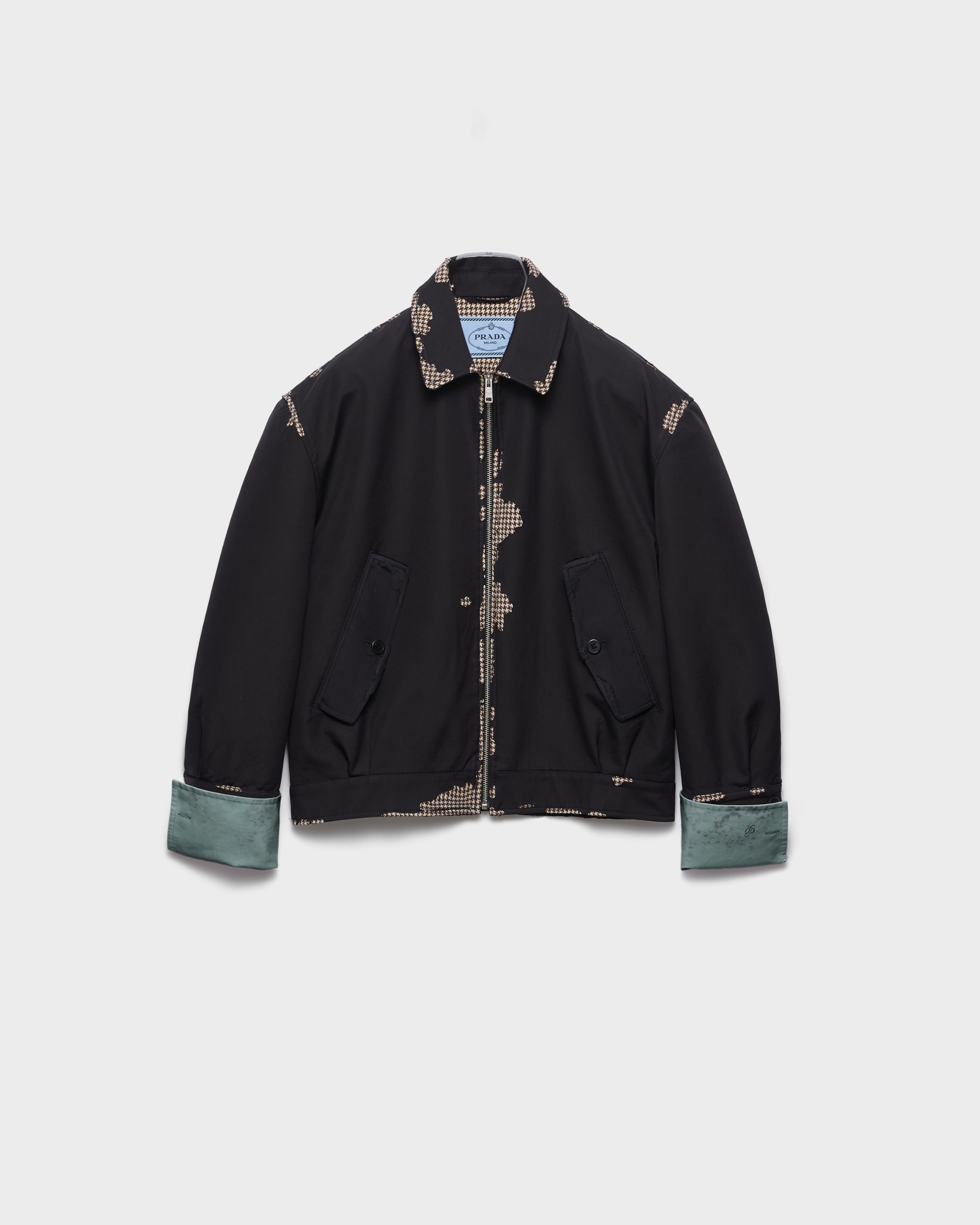
Somewhere between the sketch and the stitch, Prada stopped trying to perfect a garment and started trying to perfect a feeling. The jacket from Look 10 of the F/W 26 collection is not a trophy of immaculate tailoring; it is a study in controlled decay, a piece that took 21 hours to make and an eternity to feel lived-in. We think this is the most honest luxury we have seen in years, because it finally admits that perfection was never the point. The point is presence, the kind that comes from a thing that looks like it has already been part of your life, not just your wardrobe.
For our readers, this is a quiet but radical shift in how to evaluate what you buy. The collection's broader theme celebrates garments that are layered, lived-in, and undone, and this jacket is its ultimate expression. The zippers are oxidized, the cuffs stained, and the forest-green trim treated to mimic years of wear. A special devoré technique wears away the bonded cotton poplin to reveal the wool houndstooth beneath, meaning no two jackets will ever erode the same way. This is not about buying a product; it is about buying a story that has already begun. It asks you to stop chasing the untouched and start respecting the mark of the hand, the friction of time. That is a far more intimate relationship with clothing than the sterile promise of "new" ever offered.
What strikes us most is the deliberate collision of masculine and feminine, utility and erosion. The structure is sharp, almost severe, but the surface is soft, stained, and human. Prada has taken the binary of hard and soft and blurred it into something that feels intuitive rather than designed. The process, from the initial drawings to the patternmaking and fittings, is a reminder that this kind of intentional imperfection is the hardest thing to manufacture. It is easy to make something clean; it is much harder to make something that looks like it has a soul. The bonding of cotton poplin and wool houndstooth into a single double-faced textile, followed by the precise cutting and assembly, is craftsmanship at its most disciplined, yet the outcome is anything but rigid.
The specific takeaway here is that imperfection is becoming the ultimate luxury signal, and we should pay attention to what that means for our own closets. When a house like Prada spends 21 hours on a single garment to make it look undone, it is telling us that authenticity cannot be mass-produced, only artfully faked. The practical consequence? Start looking for the evidence of process in what you wear, the irregularities, the tonal variations, the signs of a human hand. The jacket on Bella Hadid's shoulders is not a fleeting trend; it is a benchmark. The question we are left with is not whether you will buy it, but whether you will ever look at a pristine piece of clothing the same way again.