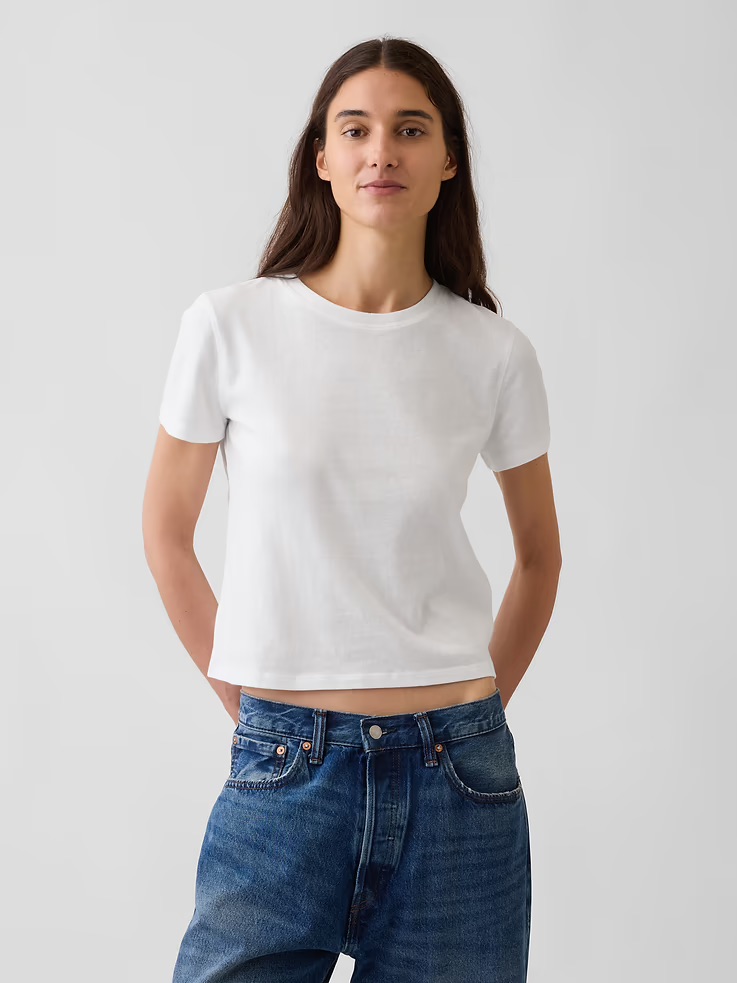
There is something quietly radical about buying the same white T-shirt in bulk. In an era that rewards novelty, new drops, new silhouettes, new micro-trends every few weeks, the decision to stock multiples of one unembellished cotton tee feels less like a shopping habit and more like a personal manifesto. The fashion editors at Who What Wear have spent years dissecting the perfect basic, from neckline to drape to sleeve length, but the most recent editorial on the subject zeroes in on a single, non-negotiable criterion: composition. One hundred percent cotton, nothing less. It is a refreshingly narrow focus that cuts through the noise, and it aligns neatly with the broader seasonal conversations we have been following, namely, how to build a wardrobe that feels both intentional and enduring. Consider the recent guide to Fall Trends That Feel Intentional: 40 Zara Pieces for a Chic Fall Wardrobe, which championed opulent outerwear and pops of purple without losing sight of a cohesive foundation. Or The Quiet Art of Styling a Fair Isle Sweater This Season, which elevated a single knit to cold-weather hero status. Both pieces, like this one, understand that true style is built on a handful of trusted shapes, repeated and refined.
What makes this particular story worth pausing over is not the list of retailers, Gap, H&M, Madewell, J.Crew, all familiar names, but the philosophy underneath. The editor admits she favors three natural fibers (linen, cashmere, cotton) and wears cotton basics year-round because the other two are seasonal. So she buys at least two at a time, especially the T-shirt. That is not hoarding; it is foresight. It is the calm, assured recognition that the most worn piece in your wardrobe deserves redundancy. When you find a cut that works, a crewneck that sits correctly on the shoulders, a v-neck that flatters without revealing too much, a men's slim fit that skims rather than clings, you buy it again, in black, white, and navy, and you stop looking. There is a soft confidence in that decisiveness, a refusal to be seduced by the next thing. The editorial even notes that not all crewnecks are created equal and points to a thicker neck band as a subtle differentiator. These are the details that matter when you are not dressing for attention but for the quiet pleasure of a shirt that feels right from the moment you pull it over your head.
For the reader, the practical implication is clear: stop treating the classic tee as an afterthought. It is the literal base of nearly every outfit, yet we often grab the cheapest, thinnest option without considering its composition or longevity. The recommendation to wash on cold to prevent shrinkage is not a footnote; it is the final piece of a system built to last. And the inclusion of a graphic tee, Gap's Roy Lichtenstein collaboration with the Whitney Museum, reminds us that even a 100% cotton top can carry personality without sacrificing integrity. The takeaway, stated plainly, is this: buy the best cotton T-shirt you can find, buy it in multiples, and treat the search for your perfect fit as a serious, one-time investment rather than a recurring compromise. The question left hanging, the one worth sitting with, is whether you know your fit well enough to commit to it.