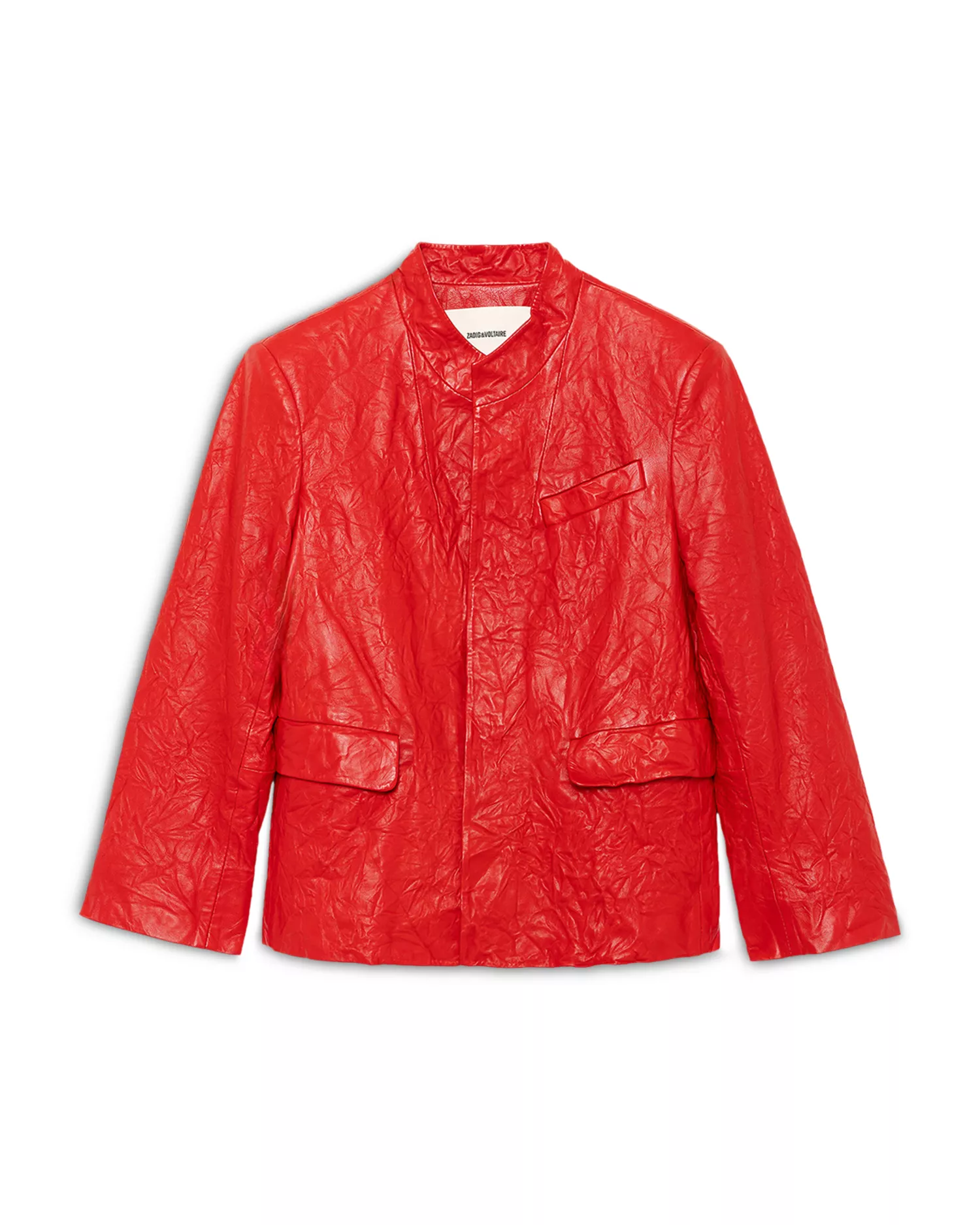
The F1 Las Vegas Grand Prix is no longer just about who crosses the finish line first. This year, the real competition happened trackside, and the winner was decided before the engines even cooled. Leather has become the unofficial uniform of the paddock, and that quiet authority, the choice to wear something that signals belonging without shouting for attention, is exactly what made this weekend's style circuit so compelling. It is a reminder that luxury, at its most refined, is about knowing exactly what to say without saying much at all. For those of us who have been watching, this is not a new instinct. We explored something similar in The Quiet Power of Leather Worn Twice Over, where the material itself becomes a second skin of confidence, and in The Quiet Endurance of Dakota Johnson's Signature Tank Top, where repetition and restraint build a more lasting personal style.
What made this year's race different was the intentionality behind each look. Kim Kardashian, cheering for Lewis Hamilton, chose a custom Ferrari-red leather set from Chrome Hearts, the same label behind her 2025 Met Gala gown. That continuity matters. It suggests a wardrobe built on relationships, not trends. Lisa went a step further, pairing a $9,000 Ferrari blazer with a $50 baby tee from her own F1 collaboration, Pretty Fast. That high-low tension is the hallmark of someone who understands that luxury is permission, not prescription. Venus Williams, ten years into her F1 attendance, traded tennis whites for a grunge-glam trench with an orange-trimmed neckline, proving that even long-time spectators can evolve their trackside vocabulary. Each woman treated the paddock as a stage for self-expression, not performance. The result was a shared visual language, leather, structure, and a deliberate lack of excess, that felt both exclusive and accessible.
For the reader, the practical takeaway is this: the most powerful statement you can make at an event of this scale is not how much you spent, but how well you understand your own preferences. Every look here, from Rachel Brosnahan's boho-chic leather pencil skirt to McKenna Grace's structured corset dress, worked because it was internally consistent. There was no borrowed identity, no costume. These women wore leather not because it was the dress code, but because it matched the way they wanted to feel: grounded, present, and in control. That is the difference between dressing for the cameras and dressing for yourself. The leather jacket is just the vehicle; the confidence is the destination.
The question that lingers, then, is not who wore it best, but how this moment will reshape the way we think about race-day dressing going forward. If leather can become the new baseline for paddock style, what other materials are waiting to be redefined? For now, the most interesting detail to watch is whether this quiet uniformity will inspire more individuality or more imitation. The best-dressed list has already been written. The next chapter belongs to those who take this language and make it their own.