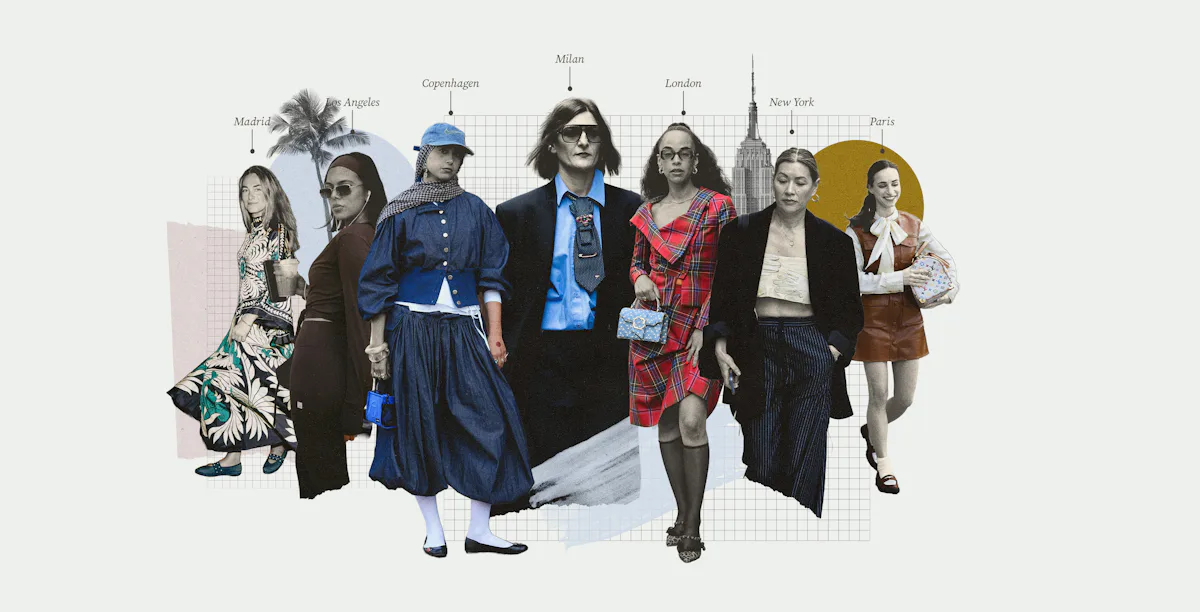
The evolving landscape of global fashion is fascinating, and this piece on fashion archetypes across cities beautifully illustrates a shift we've been observing for some time. It's no longer solely about the established powerhouses of New York, London, Milan, and Paris dictating trends. While those cities remain significant, the rise of cities like Copenhagen, Shanghai, and Seoul as style capitals demonstrates a democratization of influence and a growing appreciation for diverse aesthetics. This resonates with the broader cultural movement towards celebrating individuality and moving away from homogenous trends. The article’s recognition of these emerging hubs acknowledges a reality where personal style, rather than rigid adherence to a prescribed aesthetic, is increasingly valued. We’ve seen this reflected in our own community’s embrace of curated, considered choices, as highlighted in [Luxury All-Inclusive Experiences Have Never Felt More Personal], where personalization and bespoke experiences are paramount, mirroring the way individuals now approach their wardrobes. It’s a move away from mass consumption and towards mindful acquisition, and a desire to express oneself authentically.
The concept of a "fashion archetype" for a city is particularly intriguing. It’s not simply about what people wear, but the underlying cultural values, climate, and history that shape their style choices. The article rightly points out that Copenhagen's archetype might be defined by a quiet confidence and functionality, born from its Scandinavian design heritage and pragmatic climate, while Shanghai’s is likely bolder and more experimental, reflecting its dynamic economic growth and rapid cultural change. This understanding goes beyond surface-level observation and delves into the deeper societal forces at play. The focus on feeling and atmosphere—the elements we strive to capture in our own communication—is key. It’s about recognizing that fashion is a language, and the vocabulary differs depending on the speaker. The recent spotlight on Kylie Jenner’s Jacquemus swim skirt, [Kylie Jenner's Ruffled Swim Skirt Was Kylie Cosmetics Pink], further illustrates this point—a seemingly simple garment becomes a statement, amplified by the context of her personal brand and the current desire for playful, nostalgic aesthetics.
This broader decentralization of fashion influence has a significant impact on the luxury market, which we’ve explored in detail with Bottega Veneta’s new fragrance collection [Bottega Veneta’s Alta Fragrance Collection Pays Homage To Its Woven Leather]. Luxury brands are now increasingly attentive to regional nuances and adapting their offerings to cater to the specific sensibilities of different markets. It’s no longer enough to simply offer high-quality products; brands must also understand the cultural context in which those products will be consumed. The emphasis on heritage and craftsmanship, as seen in Bottega Veneta's homage to its iconic woven leather, resonates with a global audience seeking authenticity and longevity over fleeting trends. This shift requires a more nuanced and sensitive approach to marketing and branding, one that prioritizes building genuine connections with local communities rather than imposing a standardized global image.
Ultimately, the rise of distinct fashion archetypes in cities around the world signals a more inclusive and dynamic era for fashion. It’s a move away from a top-down, dictated system and towards a more organic, bottom-up evolution of style. The question now is: how will the fusion of these diverse influences shape the future of global fashion? Will we see a convergence of styles, or will these distinct archetypes continue to evolve independently, creating an increasingly rich and varied tapestry of self-expression? It’s a fascinating development to watch, and one that promises to reshape the very definition of style in the years to come.