There is something quietly radical about a woman who refuses to be the victim of her own story. The feminist thrillers stacking up this season understand that chaos is not something to be survived, it is something to be wielded. We are not merely reading about women who endure; we are reading about women who plan, who strike, who walk away from the wreckage with blood under their fingernails and a sense of satisfaction. This is not horror for horror's sake. It is a reframing of fear as fuel, and we find ourselves deeply drawn to it.
The list reads like a catalog of identities we have been trained to dismiss: a murderous understudy, a femme fatale food critic, a CIA-trained sex worker, a college dropout drowning in medical debt. But these women are not waiting for rescue. In *A Certain Hunger*, Chelsea G. Summers gives us a food critic who plunges an ice pick into a man's neck on Fire Island with the same precision she might use to critique a tasting menu. In *Murder Bimbo*, Rebecca Novack's protagonist is tapped by the government because they assume she is disposable, and she responds by seeking revenge on an investigative podcast. There is a through-line here that feels bracing rather than bleak. These characters do not ask for permission to be dangerous. They simply are. For readers who have spent years watching women on screen apologize for taking up space, this genre offers something else entirely: the permission to be unapologetically formidable. It is the same energy that runs through The Final Act of Season 4 Pits Kate and Hal Against Grace Penn, where power is no longer something to be politely requested but something to be seized.
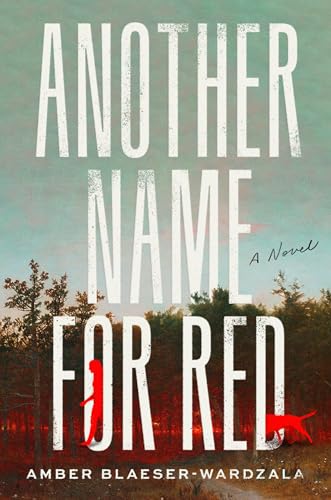
What makes these stories feel urgent rather than gratuitous is how many of them are rooted in real erasures. Amber Blaeser Wardzala's *Another Name for Red* is set against the humanitarian crisis of missing and murdered Indigenous women. Megan Giddings' *Lakewood* draws from the history of medical experimentation on Black bodies. Jessica Knoll's *Bright Young Women* re-centers the survivors of a 1978 sorority attack, refusing to let the killer remain the protagonist of his own myth. These novels do not use trauma as decoration. They use the thriller structure to say something about who gets to be remembered and who gets to be believed. It is the same impulse that drives An $8 Dress and the Haunting Question of What We Leave Behind, the idea that what we choose to carry forward, and what we choose to bury, defines us. These authors are choosing to dig up the bodies that society has tried to forget, and they are handing the shovels to their heroines.
The practical takeaway for readers is this: the feminist thriller is not a niche subgenre for October only. It is a lens through which to examine the fears we are told to internalize. When a woman in a novel picks up a weapon, she is not simply acting out a fantasy. She is rejecting the script that says she must be gentle, forgiving, and small. We are entering a season where the world outside feels heavy with uncertainties, grocery prices, the creep of artificial intelligence, the slow unraveling of institutional trust. These books offer a different kind of comfort. They remind us that agency is not a given; it is something we practice. And if a woman in a story can walk into a nursery with a knife in her hand, as Ruth Rendell's Vera does in *A Dark-Adapted Eye*, or negotiate with the devil for a good New York apartment, as Rosemary does in Ira Levin's classic, then perhaps we can learn to stop apologizing for the parts of ourselves that refuse to be passive. The question these novels leave us with is not whether we are afraid, but whether we are ready to act.