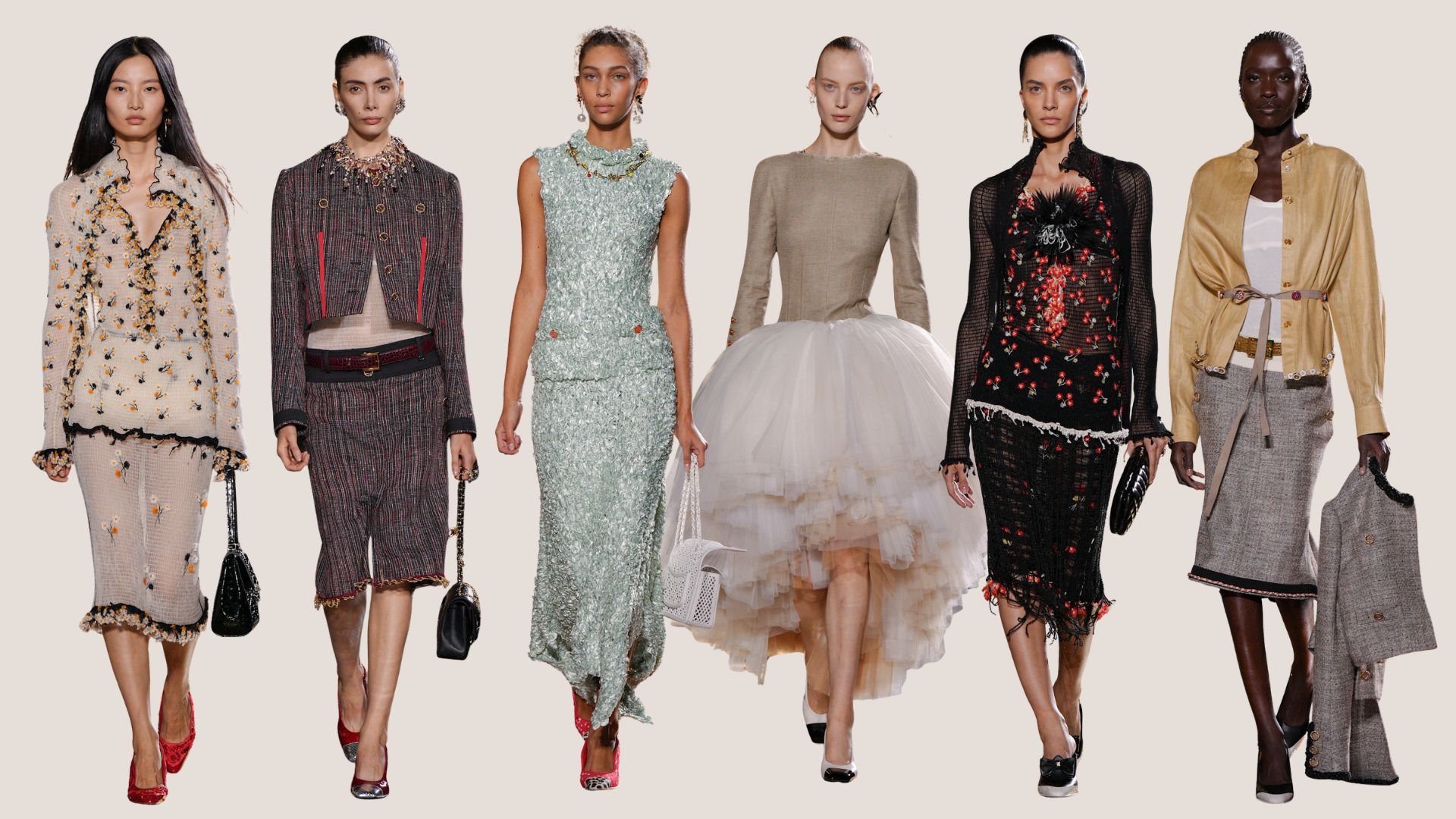
We're not in the habit of declaring eras, but the Spring/Summer 2027 collection Matthieu Blazy presented for Chanel feels like a quiet watershed. This is fashion that understands something many brands forget: the most powerful luxury doesn't demand your attention; it earns your gaze. Blazy's Chanel girl is not a relic of archival reverence or a vessel for nostalgic marketing. She is a woman who knows her own story, and in this telling, Gabrielle Chanel's story is allowed to be many things at once. The opening look, a pared-back corsetry-inspired silhouette, introduced us to "Gabrielle before Chanel," and that single gesture reframed the entire house. It suggests that the future of quiet luxury isn't about erasing history, but letting its chapters coexist without hierarchy. This is the same sensibility that made Zoë Kravitz unwraps a quiet purple statement she began wearing last winter feel so intentional, a color, a mood, adopted slowly, worn with purpose.
What makes Blazy's vision so compelling is its refusal to choose between refinement and playfulness. Knee-length pencil skirts in gauzy silks and hardy tweeds sat alongside high-volume tulle skirts that moved with buoyant joy. Printed shoes in unexpected forest green grounded looks that also featured tummy-grazing necklaces with beaded scenes. Pop-art eccentricity coexisted with tweed skirt suits, Chanel's most demure signature, and neither felt like a compromise. This is the same psychological sophistication we see in Costume as accomplice the psychology of blood-red Versace, where attire becomes a silent narrator of identity. Blazy understands that the Chanel girl has always lived somewhere between fashion and pop culture: polished, elegant, but never entirely serious. She is playful without being frivolous, confident without being loud. That balance is harder to strike than it looks, and it is precisely what makes this collection feel like a natural evolution rather than a reinvention.
For our readers, the takeaway is direct: the future of quiet luxury is not about minimalism as a default, but about intentionality as a practice. Blazy's collection proves that whimsy and restraint can coexist when every choice is deliberate. A silk slip dress with a camellia, accessorised with Gabrielle Chanel's own 2.55 from the Patrimoine archives, that is not heritage dressing. That is a dialogue between the woman who built the house and the woman who wears it now. The front row, with guests like Dua Lipa, Ayo Edebiri, and Nicole Kidman, felt less like celebrity placement and more like a communal recognition: this is a world people want to belong to because it feels expansive, energetic, and full of possibility. The same thread runs through The Designer Behind Taylor Swift's Fall Style Joins a Quiet Birthday Moment, where understatement becomes the most memorable statement.
The question Blazy leaves us with is not whether Chanel can remain relevant, it clearly can, but whether we, as observers and participants, are ready to embrace a luxury that asks us to feel rather than consume. This collection invites us into a mood, not a checklist. The final detail worth watching is how the printed shoes and tulle skirts translate into everyday wardrobes. Quiet luxury that dares to be buoyant is a risk. But if any house can make eccentricity feel inevitable, it is the one that always understood that elegance is not about being serious. It is about knowing exactly who you are.