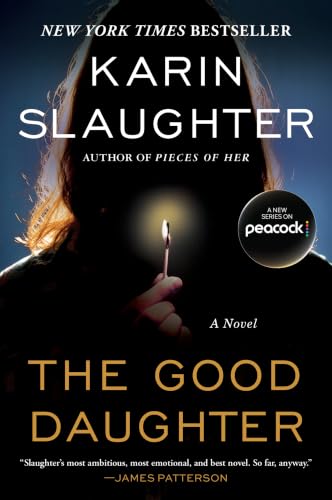
There is something profoundly unsettling about a story that refuses to let the past stay buried, and Peacock's *The Good Daughter* understands that tension better than most. Based on Karin Slaughter's novel, this six-episode thriller is not merely a crime procedural; it is a study in how silence calcifies into estrangement. The Quinn sisters, played by Rose Byrne and Meghann Fahy, are forced back into their small Georgia hometown not by nostalgia, but by another act of violence that mirrors the one they have spent twenty years trying to outrun. Our take is simple: this is a narrative about the cost of protection, and it asks us to consider whether keeping a secret to spare someone else is an act of love or a slow betrayal. In a world that often equates luxury with surface-level polish, there is a certain quiet luxury in watching characters finally choose truth over comfort, much like the restrained elegance we explored in Fendi's Roman villa glows with heritage and holiday light, where family history is illuminated rather than hidden.
The show's two timelines weave together with deliberate restraint, never over-explaining the trauma that defines Sam and Charlie. Young Sam takes a bullet to the head so her sister can run; young Charlie is caught, raped, and then chooses never to tell anyone, not even Sam. That single choice becomes the architecture of their adult relationship: Sam believes she sacrificed everything for Charlie's freedom, while Charlie carries a violation she was told she could talk about "when she was ready." She never is. The estrangement that follows is not loud or dramatic; it is the quiet erosion of two women who love each other but cannot see the full picture. This is where the series excels, not in the shocking reveal of who attacked the farmhouse (it is Huck, the charming teacher with a revenge motive), but in the slower, more painful revelation that the sisters' estrangement was built on a misunderstanding of love itself. Charlie's miscarriage, hidden behind a locked bathroom door, becomes a metaphor for everything the Quinns fail to say. As we noted in Intimate gestures of taste, wrapped small and unforgettable, the smallest details often carry the most weight, and here, a locked door and a withheld confession carry more narrative power than any courtroom scene.
For the viewer, the practical takeaway is not about solving the mystery, but about recognizing the patterns of silence in our own lives. The show does not offer a neat resolution: Rusty's stabbing is never explicitly solved, and the question of who sent the threatening letters remains ambiguous. That ambiguity feels intentional. It suggests that some truths are less important than the act of finally speaking them aloud. When Charlie finally tells Sam about the rape, it is not during a climactic confrontation, but in a quiet moment before their father's funeral, a scene that lands with the same emotional precision as a carefully chosen gift, much like the one described in The Quiet Gift That Spoke Louder Than Any I'd Given Before. The specific detail to watch is not who pulled the trigger at the school, but the way Sam and Charlie sit in the aftermath of their confession. They do not embrace. They do not forgive instantly. They simply sit, together, in the truth they have avoided for two decades. That is the hardest work, and the show trusts us to recognize it.