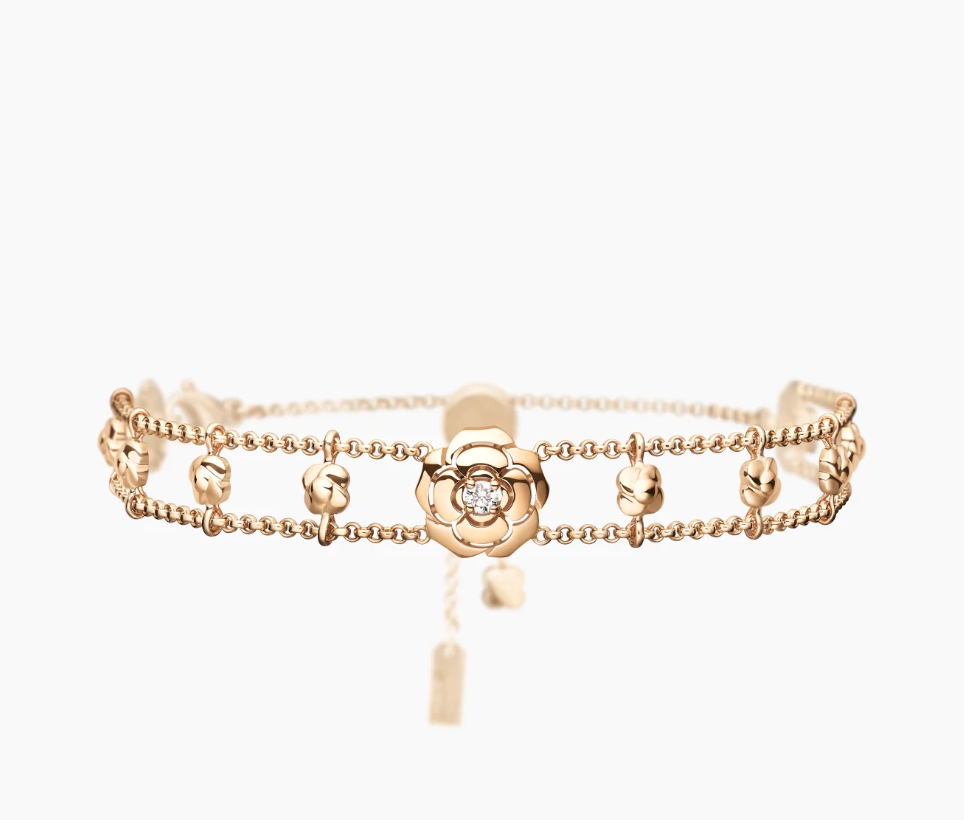
There is something quietly radical about buying jewelry with the full intention of never owning it. Not in the way that matters, anyway. When my grandmother handed me a brooch I had admired for years, I understood that the true owner of an heirloom is not the person who wears it first, but the one who remembers it last. Chanel's Camélia Collection, with its sculptural petals and deliberate restraint, asks us to think along these same lines. In a season built around immediate gratification, the house is quietly crafting pieces meant to outlive us. It is an invitation to shift our relationship with luxury from acquisition to inheritance. This is not about what you want today. It is about what you want your grandchildren to remember. We have written before about The Quiet Power of an Unassuming Top and the value of pieces that do not shout, and the same philosophy applies here: the most lasting luxury is the kind that whispers across generations.
The camellia has been part of Chanel's visual language since 1913, when Gabrielle Chanel first pinned the flower to her waist. That is over a century of continuity. In an era where trends cycle faster than seasons, there is profound confidence in a motif that refuses to be hurried. The Extrait de Camélia Supple Bracelet and the Bouton de Camélia Ring do not rely on novelty. They rely on form, material, and the quiet authority of a symbol that has already proven its endurance. What makes these pieces heirlooms is not just the gold or the diamonds, but the story they carry forward. A granddaughter who receives a camellia ring is not just inheriting jewelry. She is inheriting a reference point, a piece of cultural memory, and a woman's choice to invest in permanence rather than performance.
For the reader considering a gift this season, the practical takeaway is direct: choose objects that will still feel relevant when they are no longer yours. The Camélia Collection, alongside pieces from the Coco Crush and Première lines, offers a rare alignment between personal taste and long-term value. But the deeper question is one of intention. Are we buying for the person we are now, or for the person we hope our descendants will become? There is a subtle shift in power when you purchase something with the explicit understanding that you are merely its first custodian. It changes how you wear it, how you care for it, and eventually, how you let it go. This is the quiet luxury of thinking beyond yourself.
We are not suggesting that every purchase must be an heirloom. But if you are going to invest in fine jewelry, consider whether it will hold meaning beyond its sparkle. The Camélia Collection does. It asks nothing of the wearer except to be worn, and to be remembered. That is a rare and specific kind of grace. The next time you fasten a bracelet or slide a ring onto your finger, ask yourself: will this still feel true in fifty years? If the answer hesitates, keep looking. If it does not, that is the piece your grandchildren will thank you for.