The Hidden Price Tag of Menopause
Our take
The conversation surrounding menopause has undeniably shifted in recent years, moving beyond hushed tones and dismissive attitudes towards a burgeoning wellness industry promising relief and understanding. We've seen a proliferation of products and services aimed at easing symptoms, from cooling fabrics to hormone replacement therapies, as evidenced by the recent exploration of Menopause. Yet, the Pivotal survey, revealing the significant financial and professional toll menopause takes on women, underscores a critical and often overlooked truth: the cost of navigating this transition extends far beyond the price of supplements and skincare. This isn't simply about managing hot flashes; it's about the systemic devaluation of women's contributions in the workplace, a consequence of a society that isn’t equipped to support them through a natural life stage. It's a stark reminder that while the conversation is evolving, the underlying structures haven’t caught up.

The data highlighting the career impact—lost promotions, reduced hours, even outright job loss—is deeply concerning. It speaks to a pervasive lack of workplace accommodations and a persistent stigma surrounding menopause, forcing women to choose between their health and their livelihoods. This resonates with a broader cultural pressure we often discuss within our community, the feeling that we must constantly project an image of effortless control and unwavering productivity, as explored in I think we put so much pressure on ourselves to know exactly where our life is going…. Menopause, with its inherent uncertainties and fluctuating symptoms, can challenge that carefully constructed façade, leading to unfair judgment and professional setbacks. The fact that women are disproportionately bearing this financial burden—sacrificing income and career progression—is a reflection of deeper societal inequalities and a need for more empathetic and supportive systems.
The survey’s findings are a call to action, demanding a more nuanced and proactive response from both employers and policymakers. We need to move beyond superficial wellness trends and address the root causes of this inequity. This includes advocating for menopause-friendly workplace policies—flexible work arrangements, access to healthcare and support services, and a culture that normalizes conversations about menopause. It also requires challenging the prevailing narrative that equates femininity with perpetual youth and productivity, recognizing that women's experiences and contributions evolve throughout their lives. The creative expression and legacy of figures like Bob Mackie, whose work celebrated the female form in all its stages, reminds us of the power and beauty of embracing life’s transitions, as thoughtfully reflected in RIP Bob Mackie.
Ultimately, the hidden price tag of menopause isn’t just about lost wages or career opportunities; it’s about the erosion of women’s well-being and potential. It's about the silencing of voices and the perpetuation of a system that fails to value the full spectrum of female experience. As we continue to navigate this cultural shift, a crucial question emerges: How can we foster a society that not only acknowledges the challenges of menopause but actively supports women in thriving through it, ensuring that this natural transition doesn't become a barrier to their professional and personal fulfillment?
Menopause comes with a long list of things women are told to brace for: hot flashes, brain fog, night sweats. There are books, podcasts, supplements with soothing pastel labels, and entire wellness verticals dedicated to helping women navigate the transition. Far less discussed is what menopause can cost a woman at work.
New data shared exclusively with Marie Claire—from a survey of more than 5,200 U.S. adults conducted by Gallup and commissioned by Pivotal, the group of organizations founded by Melinda French Gates—quantifies that cost and shows just how unevenly it falls.
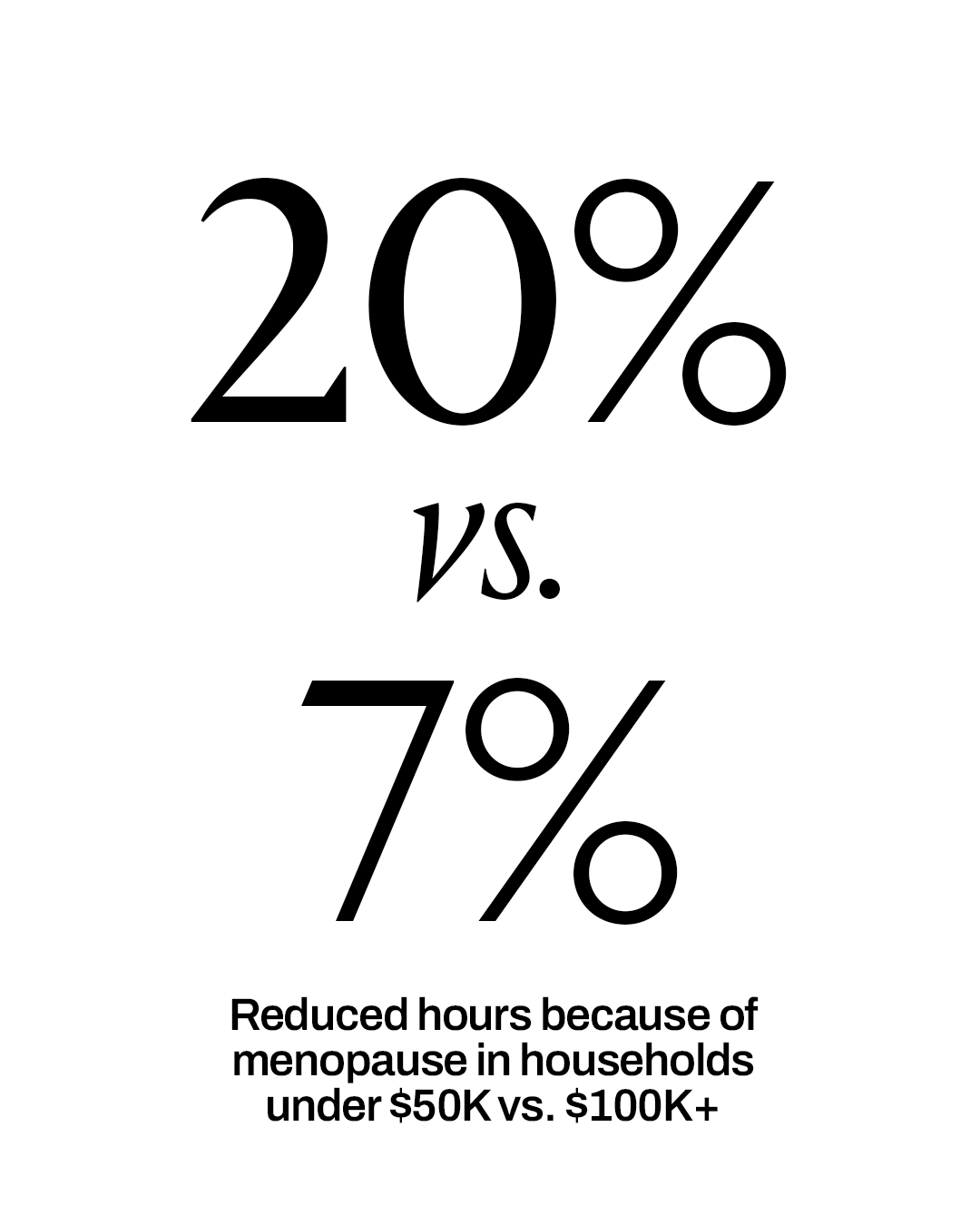
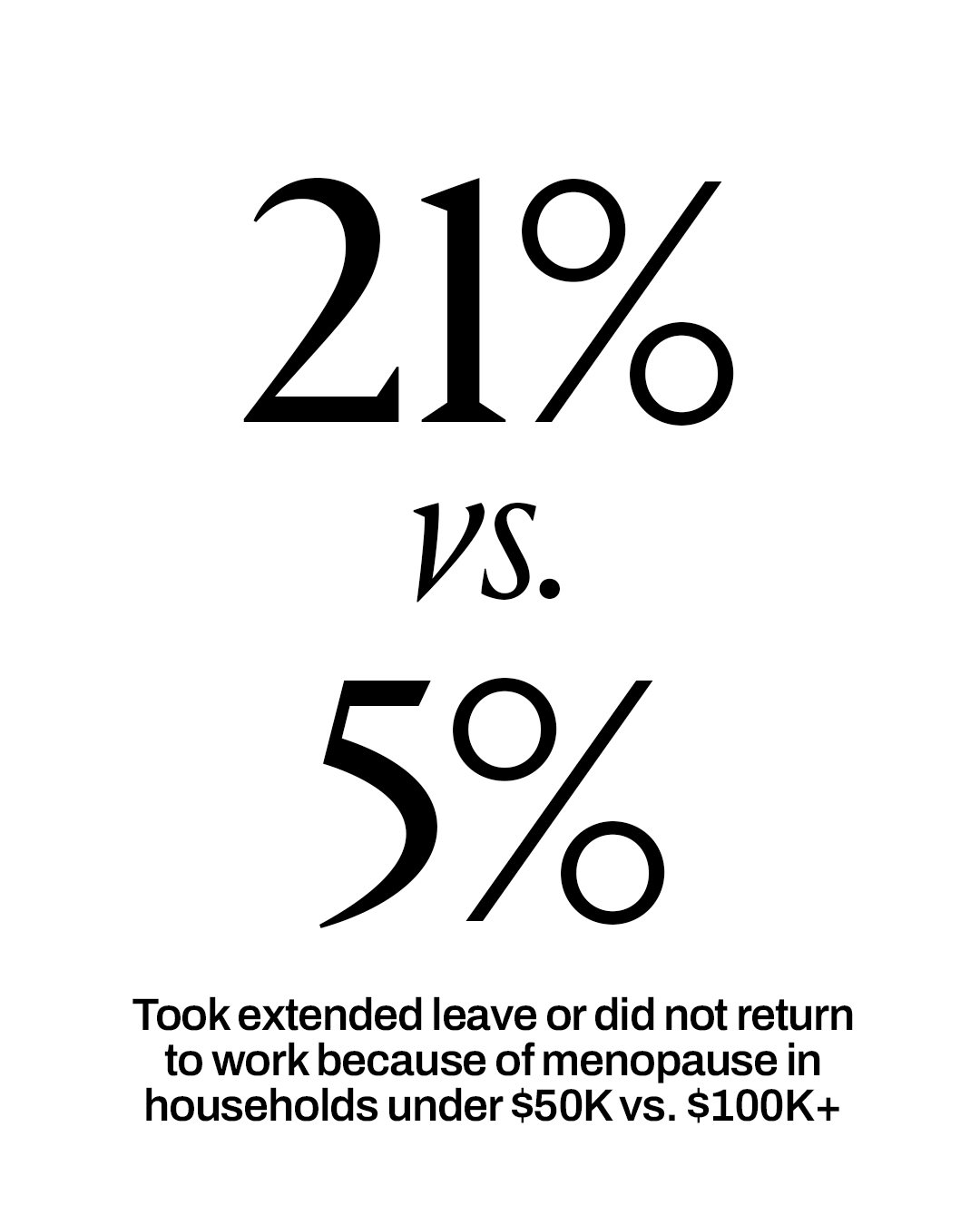
Among women who have experienced menopause, those in households earning less than $50,000 a year are nearly three times as likely as those earning $100,000 or more to have cut their hours because of menopause: 20 percent versus seven percent. They are almost four times as likely to have changed jobs, 19 percent versus five percent, and more than four times as likely to have taken an extended leave or not returned to work, 21 percent versus five percent.
In other words, the women with the least financial cushion are absorbing the steepest career costs. “It tells us that menopause isn’t just a health issue, it’s also an economic issue,” French Gates tells Marie Claire. “When a woman has access to good care, paid leave, and flexible work arrangements, she has more ability to get the support she needs when she needs it. But lower-income women often have less flexibility at work and less paid time off, which makes it harder to find the time to manage their symptoms or go to the doctor. That can mean they spend more time living with symptoms and the consequences hit them harder.”
The broader findings suggest that the career effects of menopause can be less obvious, too. Twenty-eight percent of women who have experienced menopause symptoms said that related physical or mental health challenges constrained the effort they were able to give at work. Fifteen percent said they had passed on pursuing a promotion or leadership role, and one in 10 reported stepping away from work for an extended period or not returning.
For French Gates, those numbers fit into a larger argument she has been making about women’s health: it follows them into their careers and rewrites their financial futures. In June, she announced $215 million in new funding for women’s health through Pivotal. With the announcement, her commitments to women’s health over two years topped $600 million. The commitment also extended that work into midlife health, menopause included. Pivotal directed $10 million to The Menopause Society for clinician education and efforts to reach communities where menopause care is harder to access.
The timing matters. Menopause tends to arrive in midlife, often after women have spent decades building careers, incomes, and responsibilities. A rough morning is one thing, but a job change, an extended leave, or a departure from the workforce can echo much further into a woman’s career.
French Gates knows this firsthand. “Like a lot of women, when I was going through perimenopause, I had chronic insomnia,” she says. “It led to brain fog that left me walking into important meetings wondering if I could be as sharp as I needed to be. That shook my confidence. And I say that as someone with enormous privilege, who had access to great doctors and flexibility with my work.” That awareness, she explains, is part of what drives the work. “I think about all of the women who don’t have the same kind of flexibility to adjust their schedules or keep going from doctor to doctor to get answers.” “They can end up having to step back because of their health right when they are at the peak of their careers, when they could be stepping into senior leadership roles.”
There is also something of a menopause reckoning happening outside the workplace. On Wednesday, the Senate Special Committee on Aging held what was billed as Congress’s first-ever hearing devoted entirely to menopause. It was led by Chairman Rick Scott and Ranking Member Kirsten Gillibrand, who also announced a bipartisan letter to the Government Accountability Office asking it to identify gaps in menopause research and care. Scott pointed to the FDA’s removal of the black box warning on hormone replacement therapy last November as a step in the right direction, adding that more women have been using HRT since the change.
The Gallup data gives an unsparing view of that care gap from the patient’s side. Among women ages 45 to 54, 74 percent reported current or past symptoms of menopause or perimenopause, but just 51 percent of those women had received a diagnosis. Thirty-seven percent of women who had gone through menopause said they first learned about it only once their own symptoms began. And 43 percent of women ages 45 to 54 said they had received no information about menopause from a medical professional.
No woman should have to choose between managing her health and keeping her job.
Melinda French Gates
Menopause happens to virtually every woman who lives long enough, yet the healthcare system still seems to be playing catch-up. Even women who actively seek help can find themselves running an obstacle course: Nearly one in four said they had to push to be taken seriously or receive treatment, while 23 percent said they had to see multiple providers before their symptoms were addressed or diagnosed. One in five said they tried and still could not get the care they believed they needed.
The survey can’t tell us precisely why lower-income women are experiencing such dramatically different career consequences, but it does offer clues. Nearly one in three women said they had skipped or delayed needed healthcare because of cost in the previous year. The figure was higher among Black and Hispanic women.
“It’s both a healthcare problem and a workplace problem,” French Gates says. “Women need better information and better-trained providers—particularly when it comes to menopause—but they also need workplaces that recognize the realities of their lives, and government policies that help do both. No woman should have to choose between managing her health and keeping her job.”
Menopause isn’t just a health issue, it’s also an economic issue.
Melinda French Gates
It’s easy to classify menopause under “personal health matter” and move on. But every one of those career concessions—from reduced hours to lateral moves and job exits—costs money, and the women most likely to make them are the ones with the least of it.
When asked what one thing she would change about how workplaces handle menopause, French Gates says she’d “want workplaces to recognize that leaving women to hide their menopause symptoms or manage them alone doesn’t help their employees or their bottom line.” And recognition alone isn’t enough, she adds. “Companies also need to live out that culture through policies like paid leave, flexible work, benefits that cover the right care, and reasonable accommodations. If more companies offered women the support they needed, they could continue to do their best work, and everyone would benefit.”
Menopause may be a near-universal stage of women’s lives, but the price of getting through it is anything but. That, French Gates says, should be a “wake-up call.”
Read on the original site
Open the publisher's page for the full experience