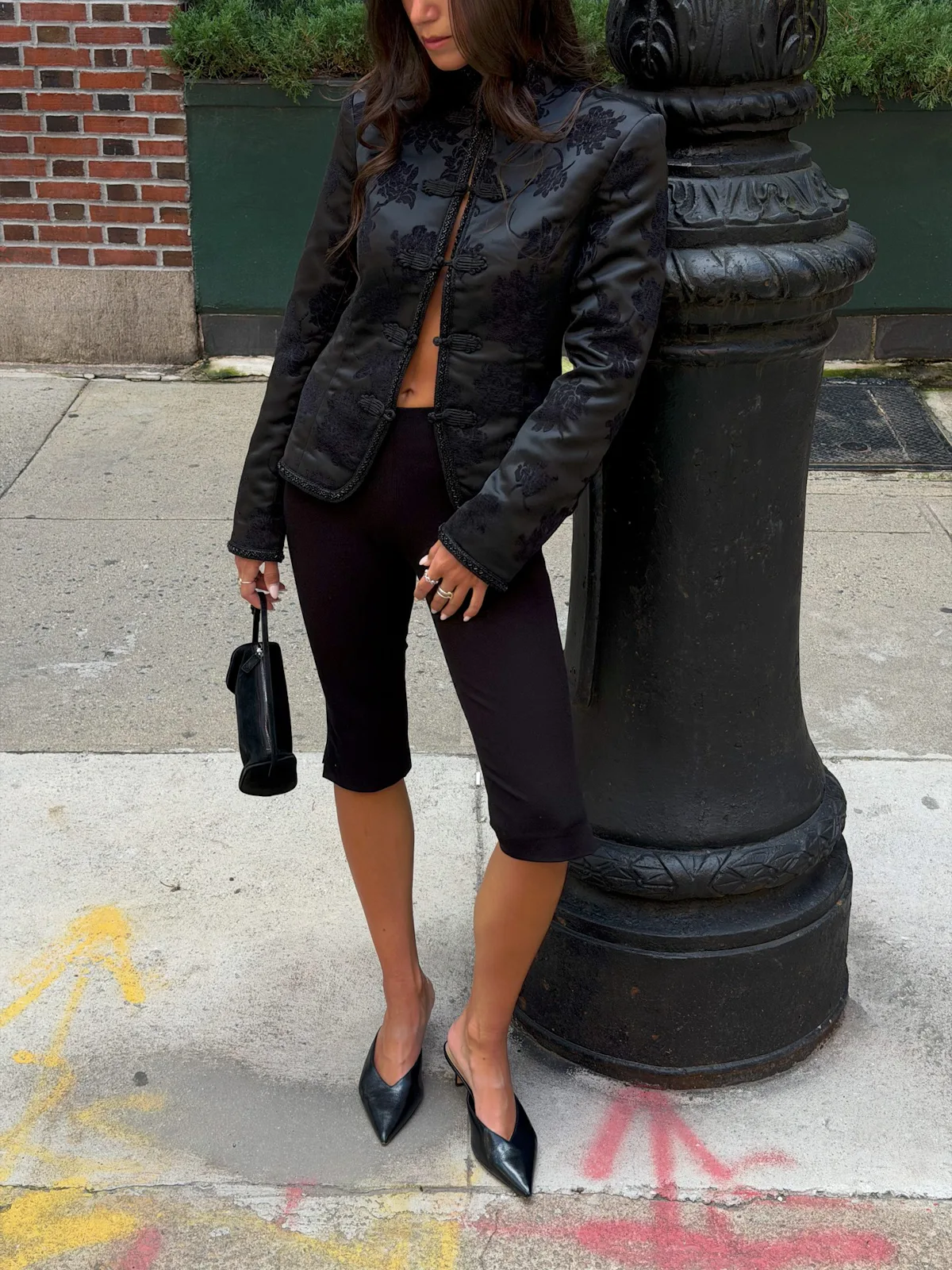
There is something quietly arresting about a fabric that refuses to be rushed. Brocade and jacquard have returned this season not as a revival but as a recognition, a collective pause toward texture, history, and the kind of luxury that asks you to look closer rather than glance away. The numbers confirm what the eye already sees: searches for jacquard are up 200 percent this year, and the question of what separates brocade from jacquard has climbed 250 percent in just three months. People want to understand, not just own. This is not the fabric of fast consumption. It is the fabric of intention, and that distinction matters. We have written before about The quiet winter staple signaling refined taste without a label, and brocade and jacquard are its natural extension, textiles that announce themselves through weight and weave rather than logos.
What makes this moment feel different is how the trend is being worn. Stylist Ana Tess notes that volumes are coming down, corsets remain, and the key to wearing these fabrics well is restraint. A brocade skirt with a light knit during the day; the same piece with velvet at night. The rule is balance, not excess. This is where the quiet luxury of the season reveals itself: the woman who chooses a jacquard top from Zara and pairs it with baggy jeans and kitten heels is not dressing for the costume, she is layering a story into her own. The Conner Ives fur-adorned jackets seen on Kendall Jenner and Zoë Kravitz are the headline, but the real shift is in the wardrobe beneath them. A Reformation Eleanor jacket or a St. Agni strapless midi dress in floral jacquard works because it asks nothing of the wearer except presence. In that sense, the trend aligns with what we explored in The Unbothered Art of Calling a Makeup Bag a Purse, the confidence to define an object by how you carry it, not by its assigned category.
The deeper pull here is emotional. Brocade dates back to ancient China's Warring States period. Jacquard takes its name from a French inventor of the early 19th century. To wear either is to drape yourself in centuries of craft, and that weight is felt. The trend is fueled by period dramas like *The Gilded Age* and *East of Eden*, but the longing is not for a specific era, it is for texture as a form of self-expression. In a world that moves fast, these fabrics demand slow. They resist the flatness of digital life. A pouch from La DoubleJ or a metallic brocade flare pant from Ann Taylor becomes a small act of resistance against the ordinary. This is not about nostalgia as escape. It is about choosing pieces that hold memory in their weave, that ask to be touched, that reward the woman who dresses for herself first.
The practical takeaway is this: start with one piece, and let it do the work. A Hill House Home skirt worn with a cardigan by day and a velvet top by evening teaches you more about personal style than a full jacquard ensemble ever could. The rest of the wardrobe should be quiet, lighter fabrics, neutral tones, clean lines. The brocade or jacquard piece becomes the anchor. Watch how the industry responds when the season turns: if the fabric holds its place beyond winter, it will signal that we are ready to dress with memory again, not just speed.