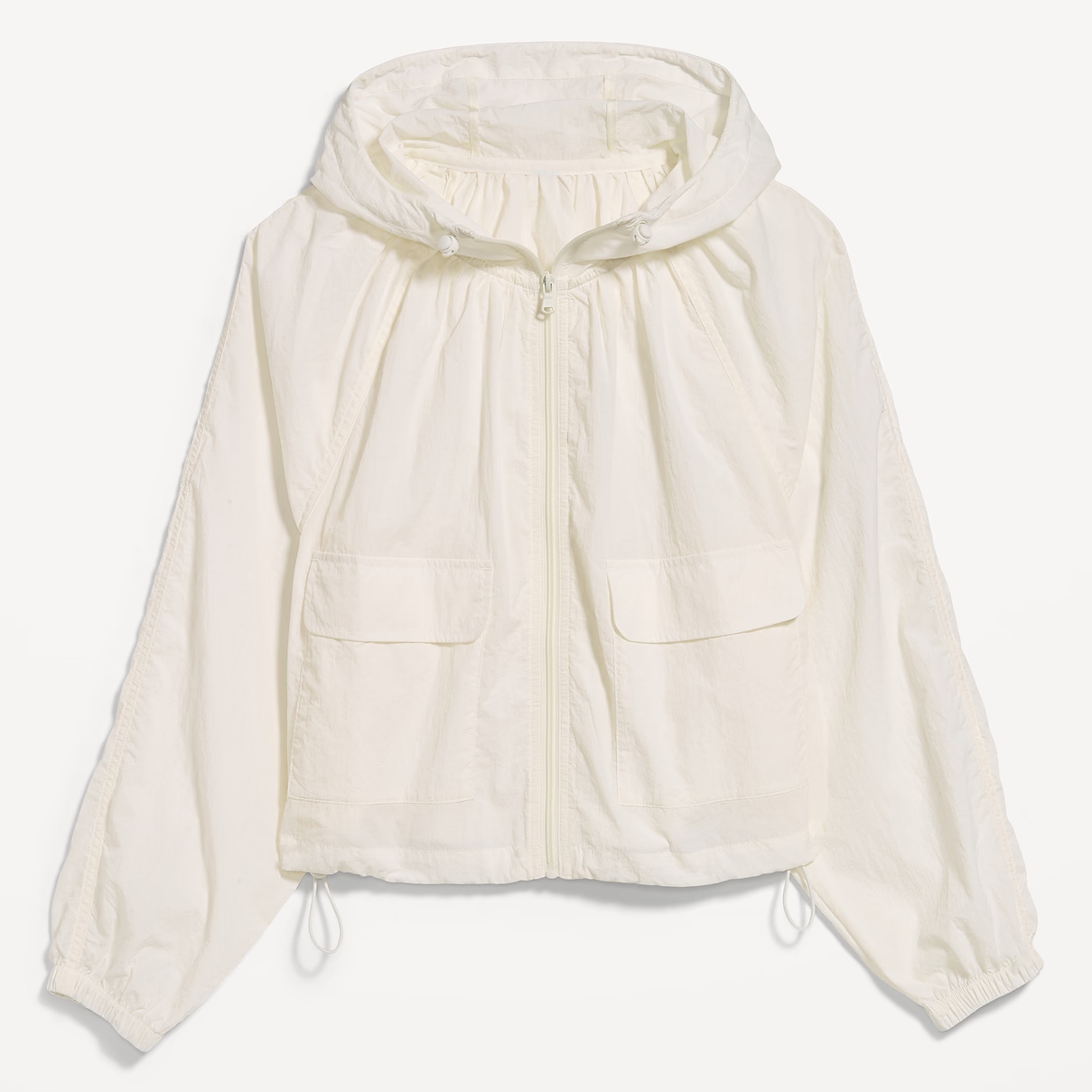
There is a particular grace in admitting what one is not. The article's author begins with a confession that will resonate with many of our readers: she has never been an athletic girl. Her relationship with sportswear, she tells us, is limited to the curated pieces she chooses for a workout or the sneakers she wears as a statement. This honesty is the foundation of the piece's quiet appeal, and it is exactly why it matters. So many style guides assume a baseline of gym membership and a wardrobe of performance fabrics. This one does not. It speaks to the woman who finds her windbreaker not on the track, but in the way it catches the light on a coastal walk or slips over a silk dress for an evening that is still unfolding. We have written before about The Quiet Art of Tying a Single-Ring Wrap Dress and the precision of a single gesture, and this feels like a sibling story: the windbreaker, too, is a piece that asks for a certain intentionality in how it is worn, not a list of features.
What the article understands, and what we admire, is that the windbreaker has become a symbol of something larger than utility. It is the outerwear equivalent of the confidence that does not need to prove itself. The non-athletic editor is not borrowing from sportswear culture; she is redefining the garment on her own terms. This is where the piece offers a practical truth for our readers. The windbreaker is not a concession to comfort or a lazy Sunday afterthought. It is a deliberate choice, one that signals a woman who knows her environment and dresses for the mood of it, not the activity. We are reminded of The quiet ease of a vacation look reserved for those who know, a piece about an unspoken understanding of when to appear effortless. That same knowing applies here. The windbreaker is not a uniform; it is a layer of permission. It says that you are comfortable enough in your own taste to wear something that could be practical, but is instead poetic.
The most compelling takeaway from the article is this: the windbreaker's appeal lies in its refusal to be categorized. It is not retro, not sporty, not strictly minimalist. It is a canvas for personal style, and that is exactly what makes it a luxury item in the emotional sense. For a reader who asks us whether she can wear a windbreaker without looking like she is heading to a spin class, the answer is a confident yes, but only if she treats it as an intentional piece. Pair it with a slip skirt and a heeled boot. Let it be the only casual element in an otherwise refined silhouette. The specific consequence to watch is how this trend will evolve as more women who do not identify with athleticism claim it for themselves. The windbreaker will either become a staple of quiet luxury, or it will be co-opted back into the gym. The outcome depends on women like the author, who wear it not because they are running, but because they are standing still and looking exactly where they want to be.