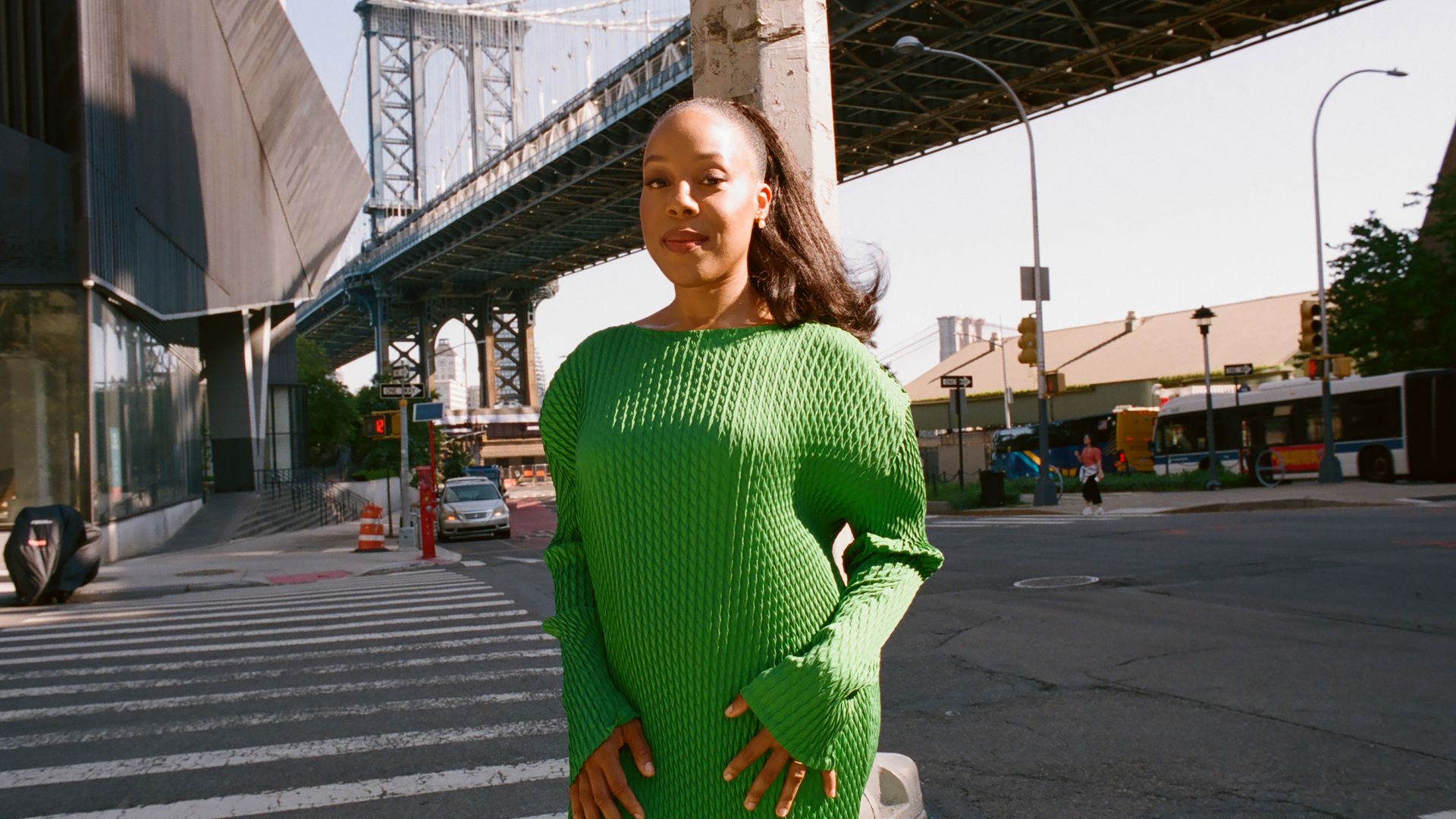
There is a particular kind of power that does not announce itself. It moves through rooms with the quiet assurance of someone who knows exactly what she is building, and why. Alana Mayo, president of Orion Pictures, embodies this energy with a rare, grounded precision. In an industry that often mistakes volume for impact, she is proof that the most profound shifts happen not through noise, but through intentional, sustained action. Her work, championing underrepresented filmmakers and original stories that Hollywood has long deemed too risky, is not a campaign or a pivot. It is a philosophy, one that mirrors the same thoughtful restraint we admire in the deliberate layering of a Woven Workwear, Quiet Styling: Denim, Corduroy, and Intentional Layers look: nothing is accidental, and every choice carries weight.
Mayo's ascent from interning for Lee Daniels to steering a studio that has delivered back-to-back Best Adapted Screenplay Oscars is not a story of luck, but of deep preparation. Her parents, a radio executive who built and sold a company, a legal nonprofit leader who inspired her values, gave her an early education in the intersection of culture and business. What stands out is not just her résumé, but her refusal to treat inclusion as a trend. In a landscape where chief-level studio roles were 91 percent white and 82 percent male in 2020, and where many diversity promises have quietly faded, Mayo has made Orion a home for films like *Women Talking*, *American Fiction*, and *Bottoms*. These are not safe bets. They are cultural statements. Her approach feels less like a corporate directive and more like the patient craft of The Quiet Architecture of Indigo Layering, each layer chosen not for spectacle, but for texture, meaning, and longevity.
What resonates most is her relationship to the work itself. Mayo speaks of her role with a reverence that is increasingly rare in an era of transactional content. "A lot of my job is business stuff," she says, "but ultimately, my job is to be a part of making movies that people hopefully see to a large extent and love." There is no performative zeal here, only a calm confidence in the process. She describes the most fulfilling part of her job as that first conversation with a filmmaker, when everything is still speculation and dreaming. That is a distinctly feminine kind of leadership, one that trusts the intangible, that values the arc of a relationship over the instant gratification of a deal. She is building a legacy not by chasing awards, but by trusting that excellence, when cultivated with intention, will find its own recognition.
The concrete takeaway here is simple and quietly radical: inclusion, when executed with the same rigor as any other business strategy, produces both critical acclaim and commercial viability. Mayo's Orion has proven that films reflecting the diversity of their audiences do not just survive, they win. The question her tenure leaves us with is not whether this model can work, but how many more studios will have the patience and conviction to follow it. For those of us who believe that style, like storytelling, is a form of self-expression that should feel both intentional and inclusive, Mayo offers a blueprint worth watching.