The quietest authority often carries the most weight. On a topic as fraught as laser hair removal for dark skin, Dr Tego Kirnon-Jackman has given us something more valuable than another product list: a framework for safety that feels as considered as the way we choose a winter coat or a signature scent. Her Safe Laser Checklist is not a marketing tool; it is an invitation to treat our bodies with the same discernment we apply to everything else in our lives. This is the kind of knowledge that transforms a beauty routine from a transaction into an act of self-respect, much like the Four widths, one refined silhouette for the modern woman that understands fit is not one-size-fits-all, or the quietest notes leave the longest impression that prove power does not need to shout. What Dr Tego makes clear is that safety in this space is not about luck; it is about information.
Her core message is deceptively simple: darker skin has more melanin, which competes with the hair follicle for laser energy. When the wrong wavelength or settings are used, that energy burns the skin instead of the follicle, leading to hyperpigmentation. The gold standard, she explains, is the 1064nm Nd:YAG laser, which bypasses surface melanin entirely. This is not a footnote; it is the fundamental truth that most at-home devices, particularly IPL devices designed for lighter skin, fail to address. Many newer IPL units now include skin-tone sensors that block treatment on unsuitable complexions, which is a step forward, but Dr Tego's warning is unmistakable: if a device does not clearly state it has been designed and tested for your skin tone, do not use it. This is not a suggestion; it is a boundary.
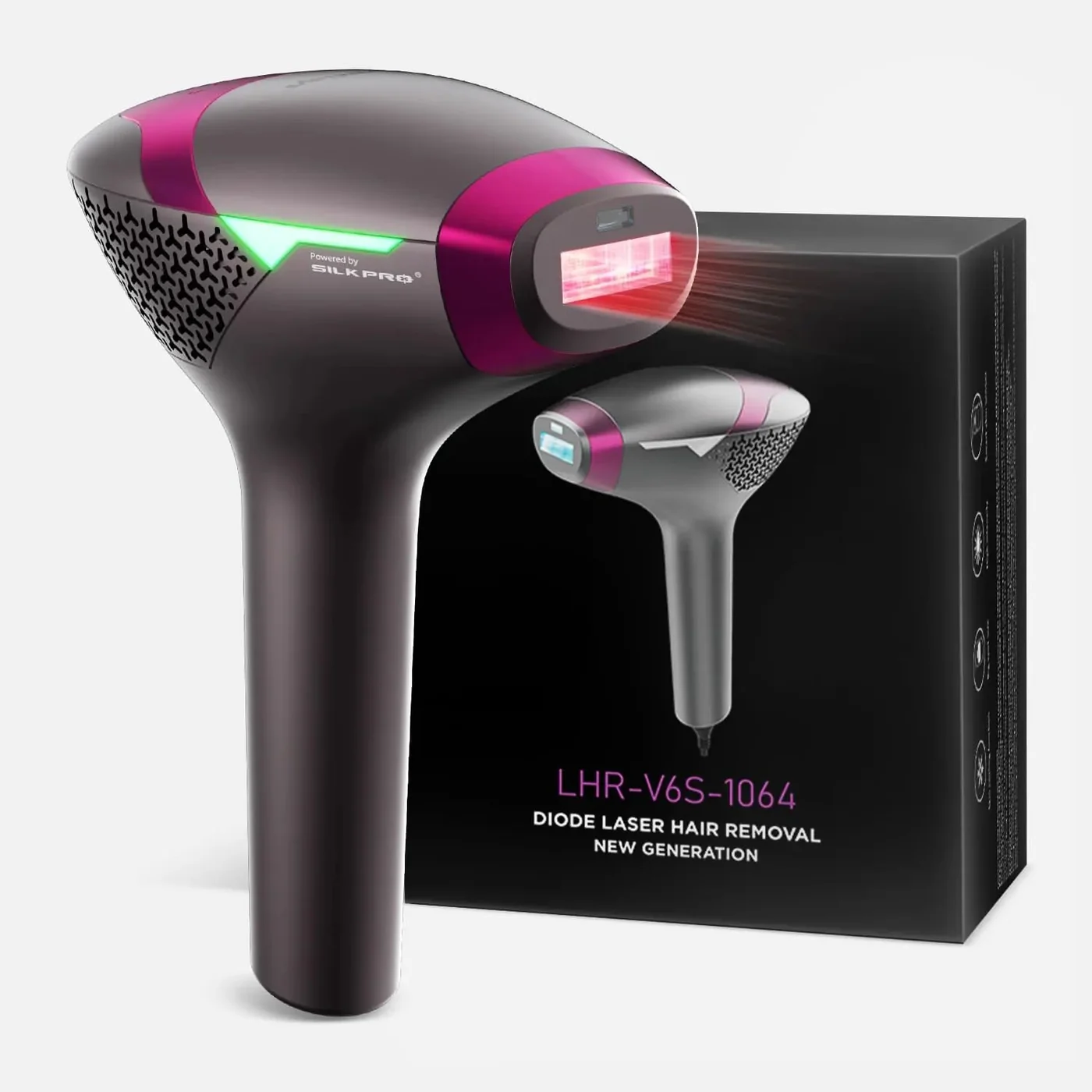
What we appreciate most is that Dr Tego refuses to let us off the hook with a simple brand recommendation. Even a device using the correct 1064nm wavelength carries risks if the pulse duration, energy level, and cooling system are not precisely calibrated. The device itself is not a guarantee; the knowledge of how to use it is. This is where the conversation becomes truly empowering. The Fitzpatrick scale is not just a dermatologist's tool; it is a personal reference point that every woman with melanin-rich skin should know. If your skin never burns and tans very easily, you are a Fitzpatrick type 6, and you should only choose a device that explicitly states it is suitable for that type. The DermRays V6S and Silk'n 7 both meet this standard, but the takeaway is the principle, not the product.
The most concrete consequence of this story is a single question every reader should ask before purchasing any at-home device: what is the wavelength, and has it been tested on my Fitzpatrick type? If the website cannot answer both clearly, the device does not belong in your home. This is not about fear; it is about the quiet authority of knowing exactly what you are putting on your skin. Dr Tego has given us the language to demand that clarity, and that is a gift that outlasts any single treatment session.