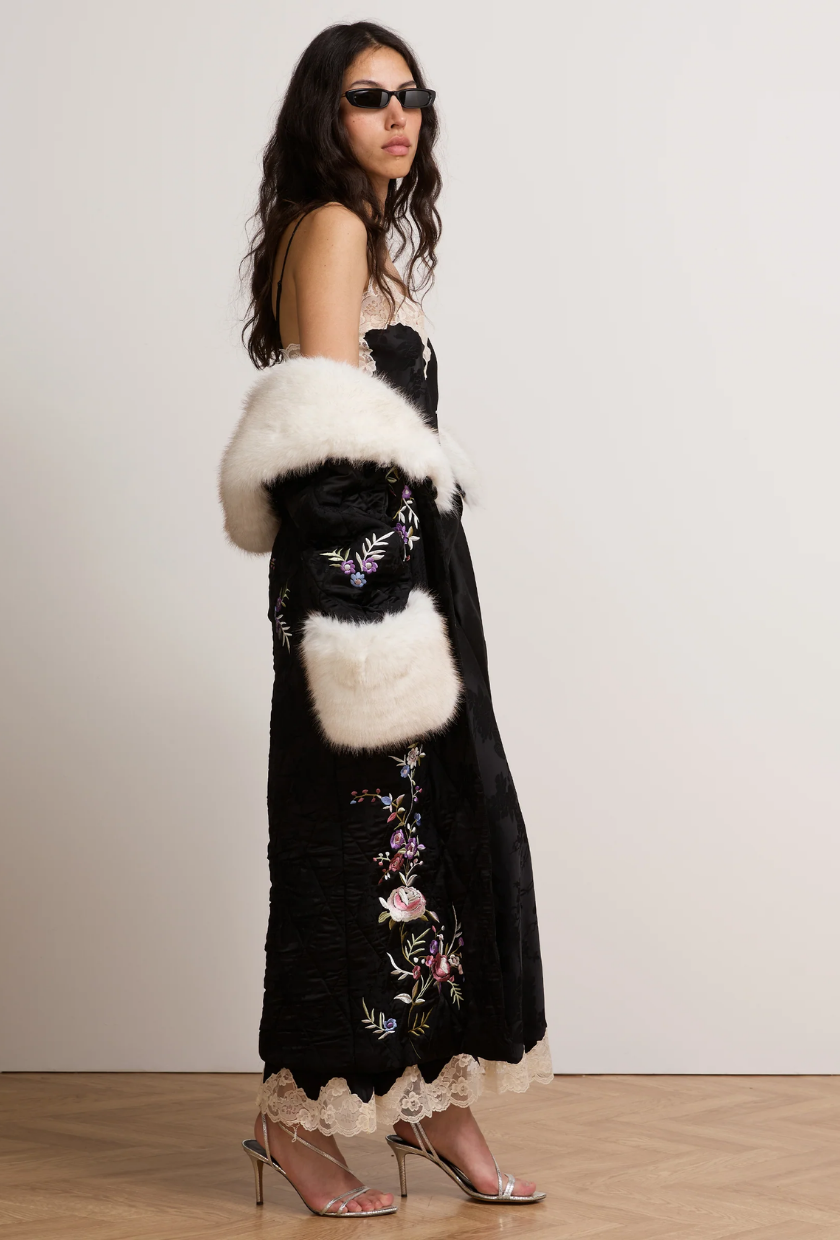
The question of whether you are a Mary-Kate or an Ashley has quietly outlasted every other personality quiz of our era, and finally, we have an answer that matters more than the label itself. The eternal split is not about which twin you resemble, but about how you see clothing as a language, and whether your vocabulary leans toward the pared-back or the layered. As The Quiet Return of the Boot That Defines This Season reminds us, the most enduring pieces are the ones that let you decide their meaning; the Olsen twins have simply built their entire empire on that principle. To know whether you channel Ashley's clean minimalism or Mary-Kate's bohemian maximalism is to understand that style is not a fixed identity but a tool for self-inquiry.
What makes this framework so compelling is that it rejects the very idea of a static personality type. The beauty of the Olsen twins as muses is that they allow for fluctuation, some days you crave the crisp architecture of an Ashley silhouette, and others you reach for the layered, textured chaos that defines Mary-Kate. This is not about picking a side and defending it; it is about recognizing that your wardrobe can hold both impulses. Rachel Roberts, founder of the fan account @olsenologyy, distills the difference with remarkable precision: Ashley is "boho chic," Mary-Kate is "boho grunge," and their individual aesthetics have gradually converged toward the refined, understated language of The Row itself. The real lesson here is that refinement does not cancel out eccentricity; it simply gives it a proper foundation. As The Quiet Art of Pairing Skirts With Boots suggests, the most compelling outfits are built on tension, and the Olsen twins have made a career out of teaching us how to hold that tension gracefully.
The practical takeaway is simpler than any personality test could deliver. Pay attention to the details you leave behind, because that is where your true inclination lives. Ashley carries Cartier and carries Chopra cards; Mary-Kate collects Hermes ashtrays and admires Kubrick. These are not trivia, they are the quiet architecture of a personal aesthetic. The next time you stand before your wardrobe, ask yourself whether you are reaching for the pristine white T-shirt that Ashley built a brand around, or the layered, textural chaos that Mary-Kate wears like a second skin. The answer will shift, and that is precisely the point. Style is not a diagnosis; it is a conversation you keep having with yourself.