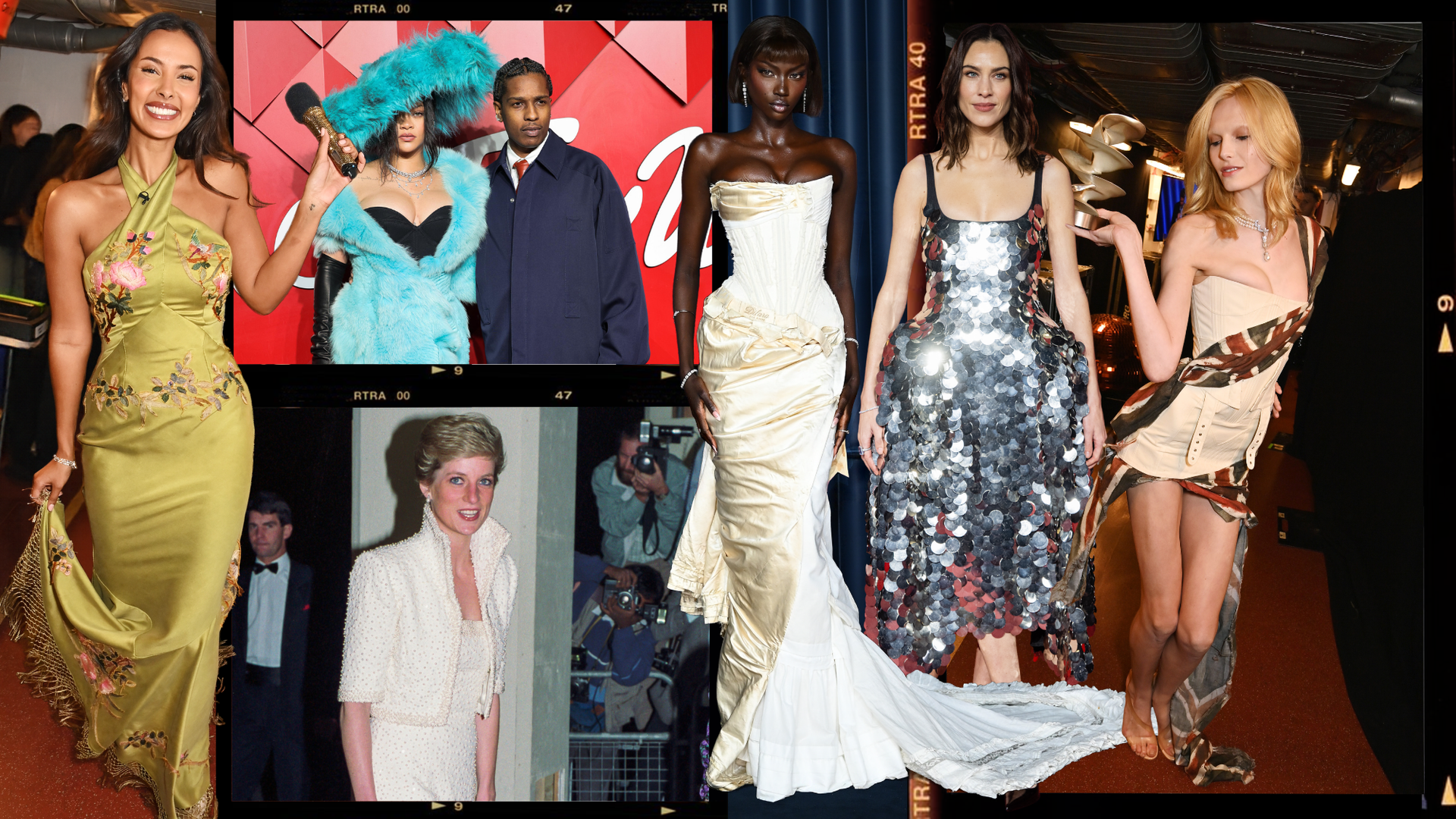
There is something quietly radical about a red carpet that refuses to shout. The Fashion Awards in London, held each year beneath the ornate dome of the Royal Albert Hall, have long understood what other events forget: that true style does not compete for attention; it simply commands it. From Princess Diana's sculptural Catherine Walker gown at the very first ceremony in 1989 to Sienna Miller's razor-sharp Sarah Burton for Givenchy in 2025, the thread that ties these moments together is not excess but intention. This is not the brash glamour of a global premiere; it is British sartorial confidence at its most refined, and that distinction matters for anyone who cares about dressing with purpose.
For our readers, the takeaway is both practical and aspirational. The Fashion Awards offer a masterclass in Quiet curation: the only three sales worth your attention this season, not because the looks are understated, but because each one is chosen with the same deliberate calm that marks a well-edited wardrobe. Consider Rihanna and A$AP Rocky in 2019, wearing custom Fenty that felt like an extension of her own creative identity rather than a costume borrowed for the night. Or Alex Consani in 2025, whose Alexander McQueen corset and ruffled skirt referenced the house's SS03 'Irere' collection with the ease of someone who knows exactly what she is saying. These are not outfits designed to trend; they are statements of self-knowledge. And in a moment when fast fashion cycles blur the line between expression and noise, that restraint feels like the ultimate luxury.
What elevates the evening further is its quiet refusal to be contained by a single aesthetic. The beauty of the Fashion Awards is the amalgamation of posh refinement, haunting glamour and gothic deconstruction, a description that could apply equally to the way The Playgirl Heel Returns: Effortless, Refined, and Entirely Now blends vintage sensibility with modern edge. Harry Styles in 2013 wore Saint Laurent by Hedi Slimane with the insouciance of a young rock star; Jodie Turner-Smith in 2024 wore Burberry with the grounded elegance of a woman who understands that power and softness are not opposites. The event hosts emerging designers alongside legendary stalwarts, and that juxtaposition, the up-and-coming rubbing shoulders with the established, creates a tension that keeps British fashion alive. It is not about hierarchy; it is about dialogue.
And yet, for all its grandeur, the evening never loses its sense of intimacy. The red velvet-covered royal circle, the South Kensington setting, the possibility of a run-in with an aristocrat, these details root the spectacle in a specific place and time. That is what makes the Fashion Awards worth revisiting ahead of the 2026 edition on November 30. The looks we remember are not the loudest; they are the ones that felt most true to the person wearing them. Lila Moss in 2024, wearing a Nensi Dojaka slip that echoed her mother's 1993 naked dress, understood that legacy is not about imitation but about reclamation. That is the lesson worth carrying forward: style is not a costume for the night. It is a reflection of who you already are.