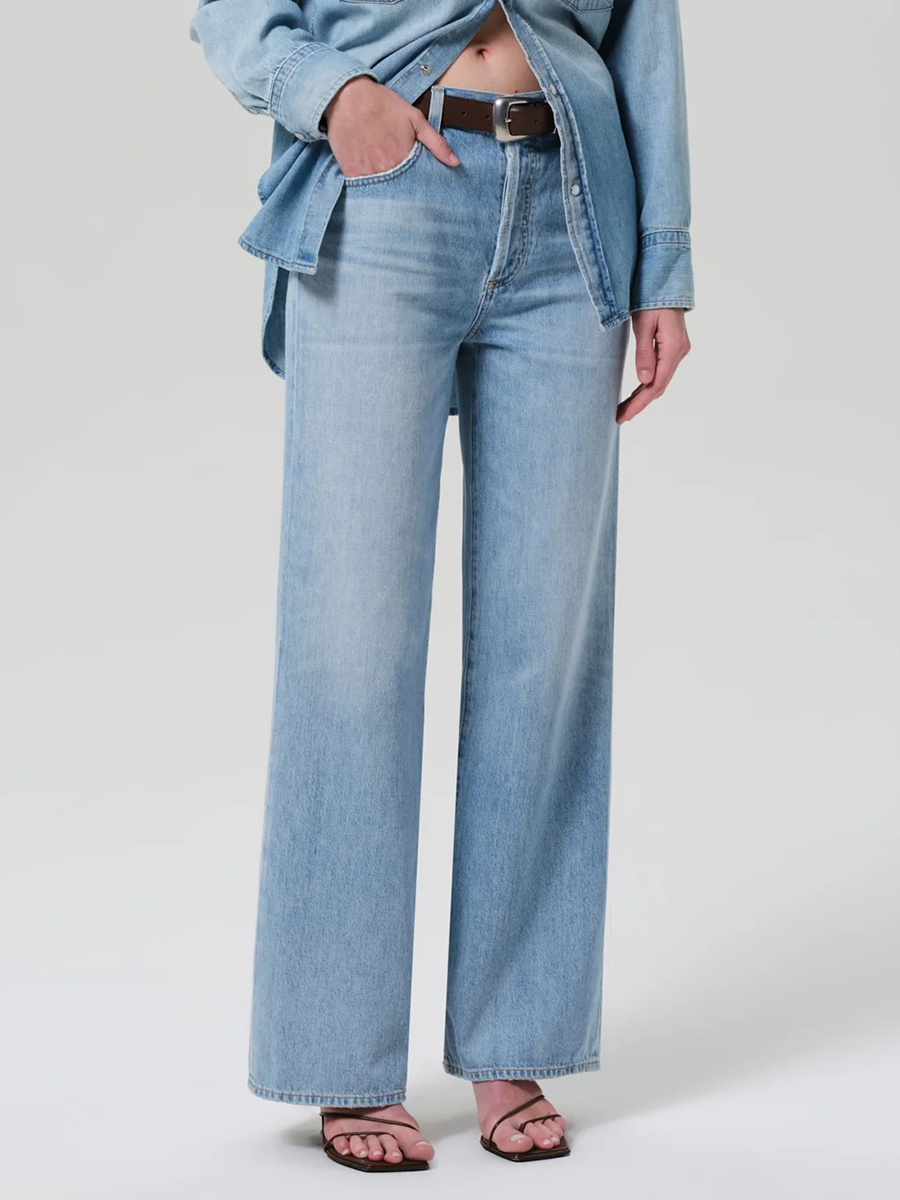
We have long admired the hands that make things beautiful, but we have not always looked closely enough at whose hands they are. The quiet infrastructure of Los Angeles denim, the pattern cutters, the wash technicians, the sewers who arrive before dawn, is the very thing that gives premium jeans their weight, their drape, their particular shade of indigo. And yet, as Alyssa Hardy argues in *Worn Out*, most of us have never learned a single name from that world. This is not a supply chain story dressed up in sentiment. It is a reckoning with what we mean when we say we value craft. The same city that gave us Twenty years of Pat McGrath's quiet alchemy in motion also holds the workers who turn a sketch into a pair of jeans that will hang in your closet for years. The alchemy is different, but the reverence required is the same.
What strikes us most is the precision of the invisibility. A single pair of jeans passes through dozens of specialists, each making decisions about fit, fade, stretch, and finish that no machine can replicate from a blueprint. Gloria Miguel, who arrived in Los Angeles at seventeen and spent two decades mastering industrial sewing, describes her work as art, creation, and love. She sews the identity and dignity of the people who wear her clothes. That is not a metaphor she reached for; it is how she understands what her hands do. Yet the industry has spent decades shrinking under the pressure to produce faster and cheaper, and the expertise Miguel describes has been passed from parent to child, coworker to coworker, without formal recognition. The community of L.A. garment workers has also been organizing, through the Garment Worker Center, through the fight for the Garment Worker Protection Act, to insist that better clothing requires better jobs. That is the other side of the story Hardy refuses to romanticize but refuses to ignore: resilience and skill, side by side with the knowledge that the system has not been built to honor either.
For our readers, the practical takeaway is not about where to buy your next pair of jeans. It is about recalibrating what you look for when you do. The "Made in L.A." label carries real weight, not just as a marker of origin, but as a declaration that a garment was produced under local labor laws, by workers whose expertise is the result of accumulated generational knowledge. That is not a guarantee of perfection, but it is a foundation. The next time you consider a pair of premium denim, ask yourself: do I know the name of a single person who could have sewn it? If the answer is no, you are not alone. But you are also not off the hook. The quiet hands that shape Los Angeles denim have been shaping American fashion for decades. The least we can do is learn to see them.