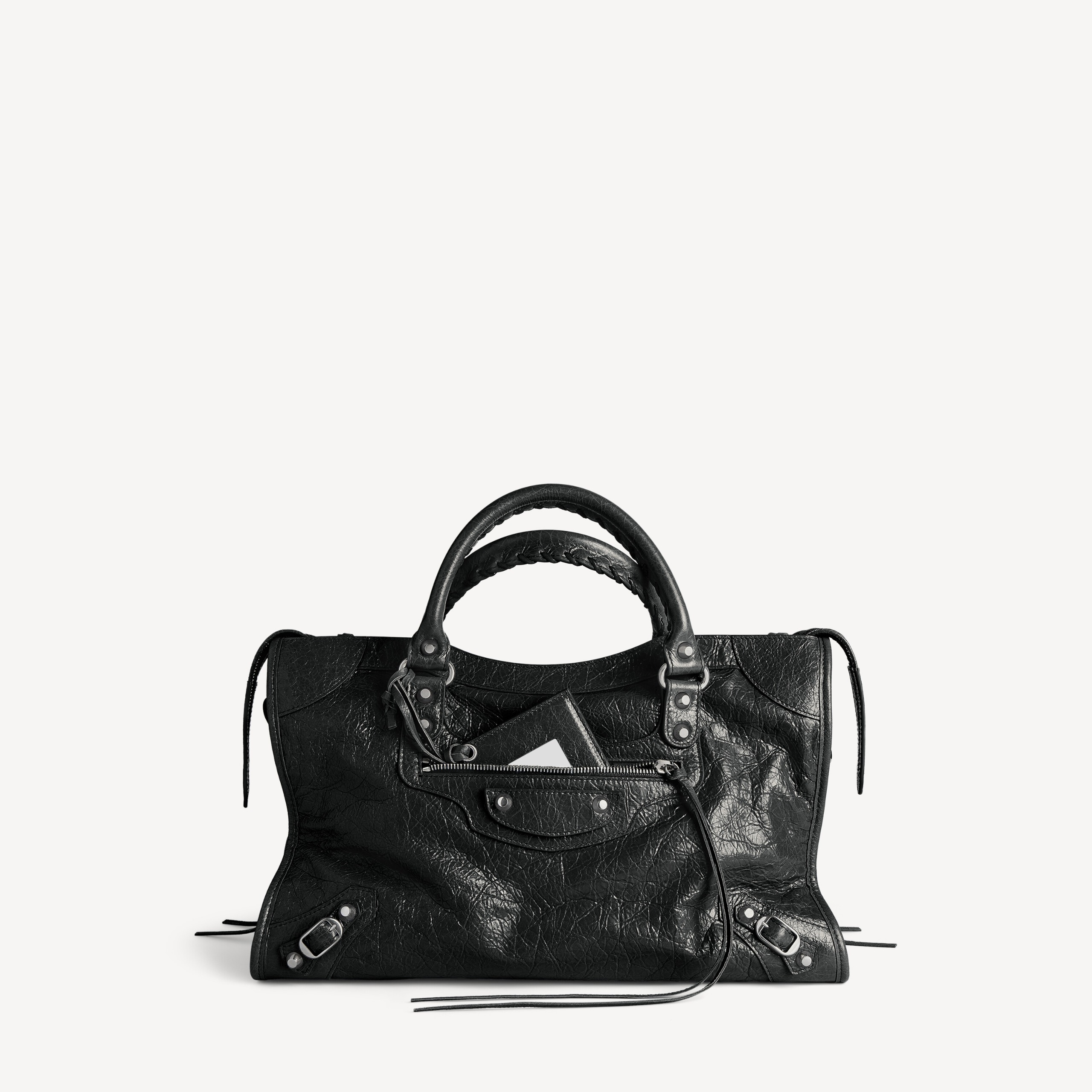
Twenty-five years is a long time for a handbag to remain relevant, especially one that was almost never made. The Balenciaga Le City has not merely survived the fashion cycle; it has rendered the cycle irrelevant. Our take is simple: this is the rare object that earns its icon status not through hype, but through character. The slouchy, studded silhouette with its tassel-adorned zippers entered the world in 2001 as an outlier, a logo-free, distressed-leather anomaly in an era of polished structure. It was never meant to be a bestseller, Balenciaga produced only twenty-five units initially. Then Kate Moss saw it backstage and ordered one for herself, and the quiet revolution began. The Le City became the uniform for women who understood that ease is a form of confidence, a sentiment that resonates deeply with the same instinct that draws us toward pieces that feel like an extension of self rather than a performance of status. For more on that philosophy, we recently explored how The Coach Tabby Bag Becomes Madelyn Cline's Quiet Statement Piece and why certain accessories transcend trend cycles entirely.
What makes the Le City's twenty-fifth anniversary feel genuinely significant is not the nostalgia, but the continuity. Nicole Richie, who owned the bag in nearly every color, stars in the campaign with a fitting line: "My Balenciaga bags have been with me through every era of my life. They've only gotten better with age, and you know what? So have I." That is not marketing copy; it is the emotional reality of a bag that ages gracefully alongside its owner. The distressed leather that once seemed rebellious now reads as intentional, a material that tells a story. A new generation of women, including Bella Hadid, Sarah Pidgeon, and Tate McRae, has adopted the silhouette without irony, proving that the Le City was never a period piece. It was always an attitude. The Damien Hirst collaboration, with its multicolored dots forming a simplified butterfly, feels like a natural next chapter rather than a gimmick, and the global exhibitions, including one in Paris showing the first prototype alongside Richie's personal collection, treat the bag with the reverence it has earned. This is not a relic being revived; it is a living object being honored.
For our reader, the practical takeaway is unmistakable. The Le City is not a bag you chase; it is a bag you live with. Its longevity is not a marketing achievement but a design truth: a slouchy, logo-free silhouette that prioritizes wearability over trendiness will always find its audience. The same logic applies to how we curate our own wardrobes. We have written about the power of A Curated Holiday Edit Under $100, Wrapped in Quiet Intention and why the best investments are often the most understated. The Le City reinforces that principle on a grander scale. It asks nothing of you; it simply holds your life. That is the quiet luxury that matters, not the logo, not the price tag, but the way a thing becomes inseparable from the person carrying it.
The detail worth watching is not the anniversary campaign or the celebrity appearances. It is the fact that Balenciaga chose to exhibit the first prototype alongside collector pieces. That decision signals that the brand understands the Le City as a cultural artifact, not just a product. It tells us that the next twenty-five years will be defined not by reinvention, but by continued devotion. The question for us is not whether the bag will endure, it already has. The question is whether we will treat the objects in our own lives with the same patience, allowing them to age and deepen rather than discarding them at the first sign of a new season. That is the real legacy of the Le City.