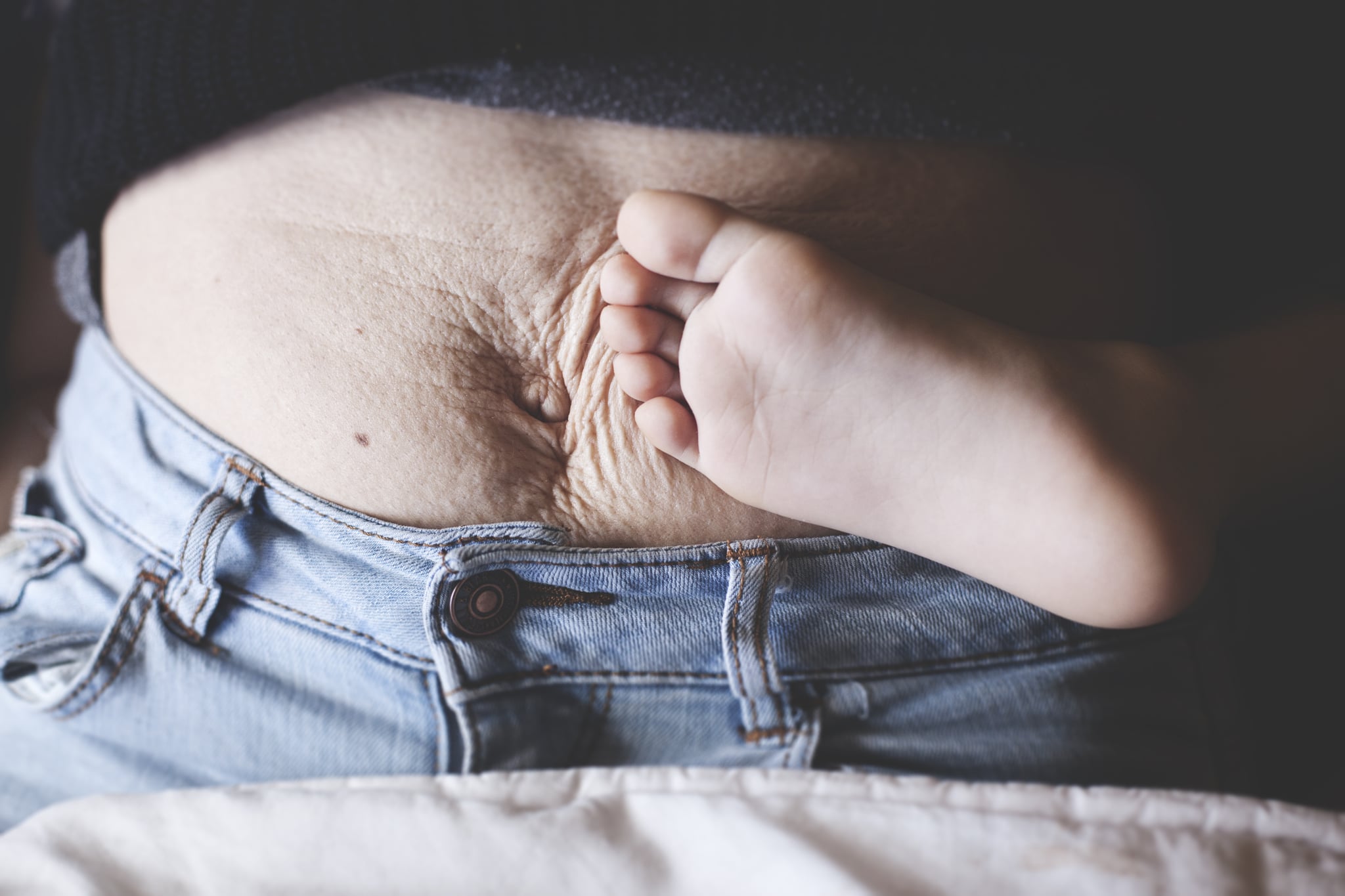
We have been here before. The postpartum body has always been a public text, written and rewritten by whoever holds the cultural pen, and just when the conversation began to soften toward grace, toward patience, toward the quiet truth that a body that grew a human does not owe the world a timeline, a new chapter arrived. GLP-1s entered the chat, and with them, a familiar pressure dressed in new packaging. Our take is this: the rise of postpartum GLP-1 prescriptions, up from 0.08 percent of women in early 2018 to 1.9 percent in early 2025 according to the *JAMA* study led by researcher Sih‑Ting Cai, is not inherently troubling. What troubles us is the atmosphere. The constant stream of ads, the social media timelines, the unspoken question that follows a new mother everywhere: *You could be doing something about this. Why aren't you?*
This is not a story about medication. It is a story about intention, and intention is something we think about often. In An Evening of Quiet Refinement, Fit, and Graceful Compliments, the pleasure was in the wearing, not the proving. In ARQ's Sizing Shift A Quiet Evolution Worth Noting, the observation was about fit as a personal truth, not a number on a tag. Both pieces share a quiet ethos: the body is not a problem to be solved. Yet the postpartum GLP-1 moment asks mothers to treat the period after birth as a problem to be solved, and quickly. Sarah McGowan, a 41‑year‑old mother of two, started Zepbound when her youngest was five months old, and her framing is honest and layered. She did not want to look model thin. She wanted to fit back into her old jeans, to reclaim mental space, to stop feeling irritable from hunger when she finally sat down to eat. That is not vanity. That is a woman navigating the gap between how she feels and how she wants to feel. But the gap is now commercialized. Clinical psychologist Christine C. Call worries about what happens when a vulnerable postpartum period is marketed as a cosmetic emergency, and we share that concern.
The nuance, and it matters, is that the prescription data cannot tell us why. Dr. Cai's study makes this clear: women with type 2 diabetes were the most likely to start a GLP‑1 after delivery, and some women were simply restarting a treatment they paused for pregnancy. Endocrinologist Jody Dushay sees this return‑to‑treatment pattern in her own practice. The medication is not the villain. The question is whether the option becomes an obligation. When the cultural air is thick with messages that you *should* be shrinking, the decision to stay where you are requires a kind of quiet resistance. For McGowan, the choice was hers, and she describes the result as more energy for her family, not a smaller dress size. That is the difference between intention and pressure, and it is a difference we should name clearly.
Here is the concrete takeaway: the presence of a tool does not erase the question of whether you needed it in the first place. Dr. Pooja Gidwani reminds us that postpartum exhaustion, irritability, and feeling off can also be anemia, thyroid issues, or unresolved blood sugar problems, conditions a GLP‑1 will not address and should not replace a proper evaluation for. The most intentional choice a new mother can make is not a choice about medication at all. It is the choice to ask *why* she wants to change, and to trust that the answer, whatever it is, deserves to be heard without a chorus of advertisements telling her she is falling behind. The quiet intention of postpartum was never about the timeline. It was about the woman inside it, deciding for herself what comes next.